

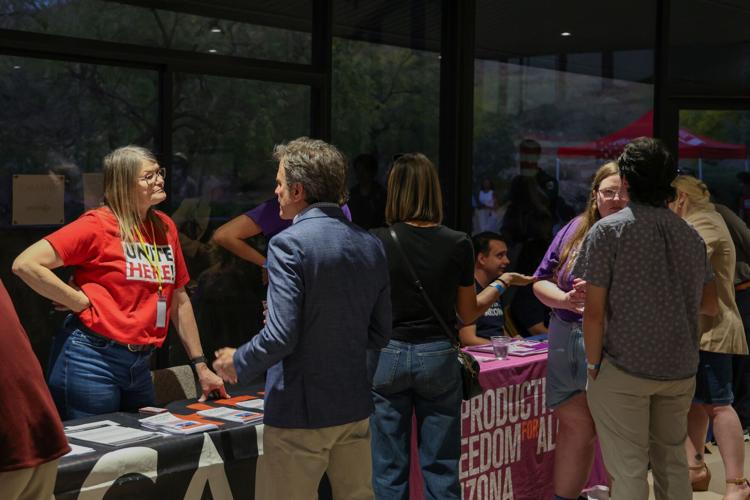

As the sun dipped at the end of another week marked by record-breaking heat and rising gas prices in the Valley, Paul Jenkins spent his Friday evening weaving through Shadow Rock Congregational United Church of Christ, proudly showcasing his “Vets Against Trump” shirt.
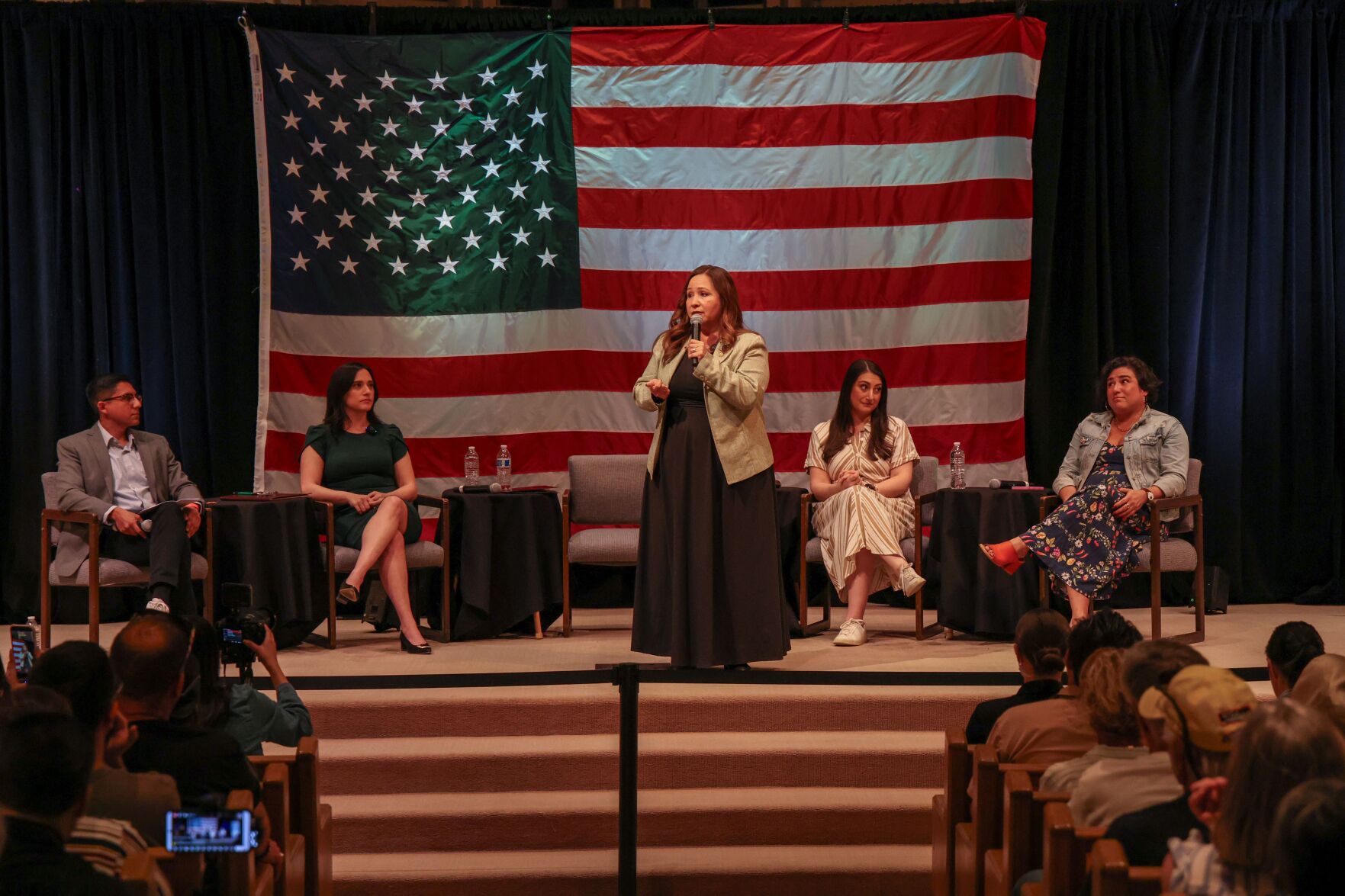
He was volunteering at the Progress for the People Townhall put on by the Progressive Caucus Action Fund on March 20. The event was an opportunity for local community members to meet progressive members of Congress and enjoy a free meal from Tacos Calafia.
“It's nice to be in a place where people think like we do and have the same goals, hopes and aspirations for this country,” Jenkins said.
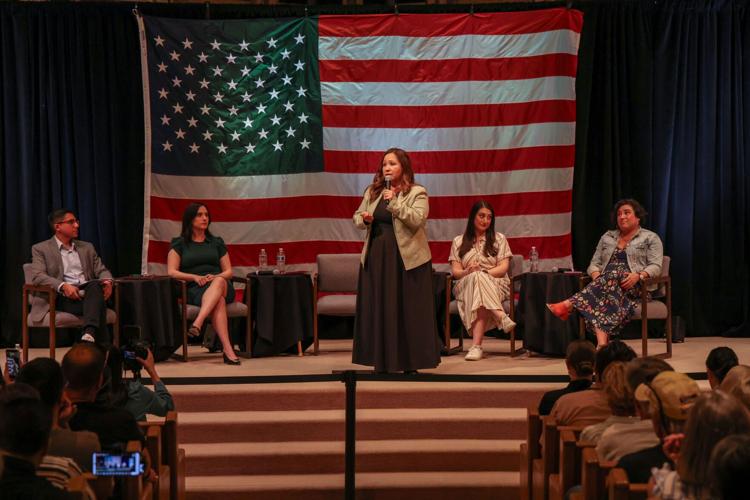
The event, moderated by Arizona House Minority Leader Oscar De Los Santos (D-Laveen), was headlined by four U.S. congresswomen: Yassamin Ansari (D-Ariz.), Adelita Grijalva (D-Ariz), Sara Jacobs (D-Calif.) and Emily Randall (D-Wash.). The conversation centered around issues of affordability, immigration enforcement and collective action.
Collectively, the four legislators have backed hundreds of pieces of legislation they say address the country's increasingly aggressive immigration enforcement, affordability crisis and “systemic attacks” on minority communities.
Ansari opened by describing conditions inside Eloy Detention Center, while Grijalva framed the moment as one of shared frustration and urgency. Jacobs emphasized civic engagement, arguing change will come from communities rather than Washington, and Randall focused on continued action and collective organizing as the path forward.

“Whether you're from California, Washington, Arizona, we are all struggling,” Grijalva said. “We are all angry. We are all scared. And we are all ready to fight.”
Jenkins, along with other attendees, echoed that sentiment. He served eight years in the Marine Corps and completed three tours in Iraq. During his time in uniform, he said he had to sacrifice his ability to speak against the things he disagreed with.
Now 15 years removed from service, he said he wants to challenge the assumption that all military veterans are comfortable with the Trump administration. Jenkins said events like the town hall serve as both a place to learn and a way to bring information back to others.
“When I come to these events, I educate myself and I feel like I gain more knowledge to try to pass on,” he said, “whether they're open to receiving it or not.”
That emphasis on sharing information extended beyond attendees and into the over a dozen organizations helping shape the event. Groups like Honest Arizona lined the back wall of the event, aiming to turn conversations into broader public awareness.
“We also want to make sure that we're providing people an understanding of what the policies do, what pieces of legislation do,” said Andre Moreno, executive director of Honest Arizona.
The organization focuses on the intersection of political accountability and public education, aiming to break down complex federal policies and connect them to the people they affect. Moreno said the group’s presence was about building connections while also educating the community on what is happening at the legislature.
“People are, I think, more aware of the issues despite there being a lot of noise,” Moreno said, “I think we have a lot more commonality than we do differences.”
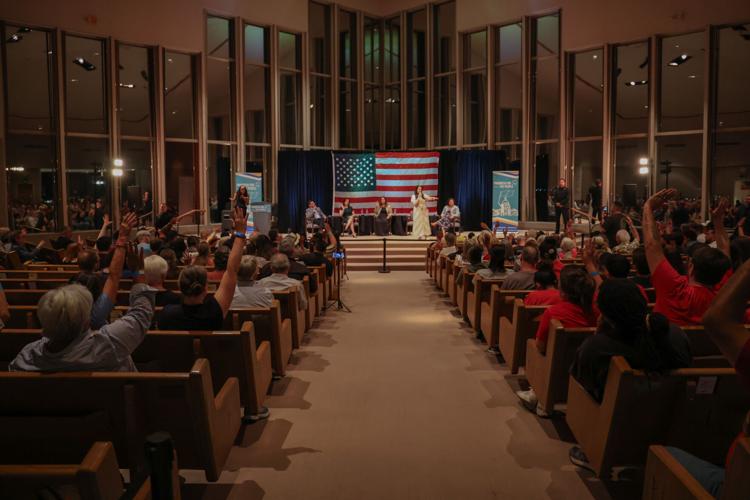
Throughout the night, raffle ticket numbers handed out by Jenkins and other volunteers were called over the microphone, inviting selected attendees to step forward and ask the speakers questions directly.
During the question-and-answer portion, one attendee shifted the conversation from policy to personal stakes, sharing the challenges he faces raising children on the autism spectrum.

He described the strain of navigating gaps in the social safety net, telling lawmakers he had gone months without receiving benefits his son qualifies for.
“I've been not able to pay my bills,” he said, “it's been very hard for me.”
He pointed to the importance of early intervention noting that access to care had changed the trajectory of his children’s lives.
“If it wasn't for preventative care, they wouldn't be as far as they are,” he said, adding that one of his children, who once struggled to speak until age six, is now a high school graduate.
Moments like that underscored what speakers returned to throughout the evening— that while policy debates may begin in Washington, their consequences are felt in rooms like this.
For many in attendance, the town hall served as a reminder that their frustrations were shared. Lawmakers urged them to stay engaged beyond the room, emphasizing that change would not come from elected officials alone.
They pointed to the role of local communities in shaping what comes next.
“The answer isn’t going to come from Washington,” Jacobs said. “It's gonna come from neighbors looking out for neighbors, community by community, block by block.”
As the evening came to a close and attendees filtered out into the warm Phoenix night. The sense of community Jenkins described earlier lingered as people prepared to return to their daily lives.
“Because, let's face it,” he said, “when we go out there, when we leave places like this, we're right back in the thick of it.”








(0) comments
Welcome to the discussion.
Log In
Keep it Clean. Please avoid obscene, vulgar, lewd, racist or sexually-oriented language.
PLEASE TURN OFF YOUR CAPS LOCK.
Don't Threaten. Threats of harming another person will not be tolerated.
Be Truthful. Don't knowingly lie about anyone or anything.
Be Nice. No racism, sexism or any sort of -ism that is degrading to another person.
Be Proactive. Use the 'Report' link on each comment to let us know of abusive posts.
Share with Us. We'd love to hear eyewitness accounts, the history behind an article.