
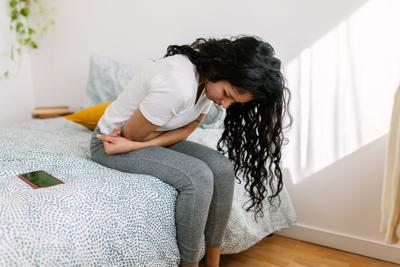

Latinx women often face the challenge of enduring excruciatingly painful menstrual periods that last for several weeks or even a month. This prolonged, severe menstrual pain can later be accompanied by unexplained fertility issues, both of which are potential indicators of Endometriosis, a condition that can significantly impact their reproductive health and overall well-being.
Endometriosis is a chronic medical condition in which tissue similar to the lining inside the uterus, called the endometrium, starts to grow outside the uterus. This abnormal growth can occur on the ovaries, fallopian tubes, the outer surface of the uterus and other organs. Every month during the menstrual cycle, this tissue responds to hormones. “It will do the same thing as the lining inside the uterus when we have a cycle every month. It will thicken, shed, and bleed,” said Dr Marisol Flores, OB/GYN and Assistant Area Medical Director for women's and children's care at the Kaiser Permanente Fontana Medical Center. “When those small implants of Endometriosis are in other parts… they don’t go anywhere. They get reabsorbed and [create]… inflammation processes that cause pain.”
This condition is defined by abdominal pain that can be severe and debilitating, frequently described as sharp, burning or stabbing. Endometriosis symptoms can vary, but some common ones include pain during or after intercourse, with bowel movements or urination, lower back pain, fatigue, diarrhea, nausea, constipation and bloating, particularly during menstrual periods.
According to the World Health Organization, “Endometriosis affects roughly 10% (190 million) of reproductive age women and girls globally,” it also affects transgender and nonbinary persons with uterus. Yale Medicine noted that “On average, there is a four-to-11-year delay between the onset of symptoms and diagnosis...” This fact translates as a lengthy and painful time when patients are not receiving appropriate care, an issue that is more alarming in the Latino community. In an interview for the Cleveland Clinic, Dr Linda Bradley, co-author of a recent study named “Racial and ethnic disparities in surgical care for endometriosis across the United States,” said that “Black and Brown women are under-diagnosed for endometriosis. It is often diagnosed as pelvic inflammatory disease instead.”
“As a child, I had severe abdominal cramping and very painful periods. When I became a young teenager, I would faint just from the pain, and I think too my anemia was really bad from having such heavy periods… a lot of vomiting and severe abdominal cramping. I miss school every month… I took a lot of over-the-counter pain medications...I was told [that] this is a part of becoming a woman,” shared Ciji Castro CEO & Founder of Domestic Gourmet and Ambassador for the Endometriosis Foundation of America in the Tampa Bay Area.
The Latino community encounters distinct obstacles, with severe menstrual pain commonly perceived as a normal part of the menstrual cycle. “When people turn to people in their community or their family, especially because endometriosis can run in families, if someone doesn’t have a diagnosis, their grandma doesn’t have a diagnosis, or their mother… but they know that they had severe pain with their periods it becomes normalized.” Said Dr. Jeanette Lager, Associate Director of the Multidisciplinary Endometriosis Center at the Department of Obstetrics, Gynecology and Reproductive Sciences at UC San Francisco. “Most people that I see will say, you know, ‘ever since I started having really heavy periods, everybody told me that it was fine.’ And that it was just normal periods, and you just have to deal with it.”
When diagnosing Endometriosis, doctors usually start by taking a detailed medical history and conducting a pelvic exam. Tests such as ultrasound and MRI can also be helpful, but “the gold standard for diagnosis is laparoscopy,” said Dr Lager. It is a minimally invasive surgery where a camera is inserted into the pelvic cavity to look for endometrial tissue. “Many people, when they present with the symptoms of endometriosis, will often treat patients without surgery to help address the symptoms because even without a surgical diagnosis, if they have all the symptoms, it definitely warrants treatment,” indicated Lager.
“At around 20 [years old], I started getting painful periods, really bad cramps. My mom took me to her OB/GYN, and they did an ultrasound and said, ‘Maybe you have a cyst. No, you don’t have a cyst.’ That was it. Then, when I became more sexually active, painful intercourse became a symptom. I went back for an appointment and added that, and I remember the nurse was going through my list and suddenly, ‘Oh, painful intercourse,’ it sure sounds like Endometriosis. Nobody ever said Endometriosis before even as a possibility… we didn’t know about that word growing up. Then, we did a laparoscopy to confirm that that’s what it was. And I was given the diagnosis from there,” shared Nicole Moreno, Culture Lead at the Angel City FC in Los Angeles.
Currently, there’s no cure for Endometriosis, but there are treatments that can help manage the symptoms and improve the patient’s quality of life. Treatment options vary from case to case but may include over-the-counter painkillers, hormone therapy, surgery to remove the extra endometrial tissue and pelvic floor physical therapy. It’s crucial to consult a specialist for an accurate diagnosis and effective management of the condition.
Lifestyle changes are also essential, including diet, exercise, and stress management. A recent study published by theAmerican Journal of Obstetrics & Gynecology established that women consuming two or more servings a day of red meat had a 56% higher risk of Endometriosis compared to those consuming one serving a week.
A whole food plant-based diet is a great alternative, “[it] encompasses everything that would be necessary for helping you out with endometriosis,” said Dr Regina Bianca Ragasa, Kaiser Permanente Chief of Obesity Medicine in Los Angeles. She encourages patients to follow a 90-10% rule that makes the commitment to this diet less challenging. The rule suggests that 90% of the time, “your food should be made up of whole grains, vegetables, fruits, legumes, things like that. [The 10%] means about one or two meals a week you can have your steak, fish, sushi, whatever you love... I’ve seen so many people’s lives completely transformed for the better when they take that leap of faith.” Dr Ragasa explained.
Endometriosis doesn’t just affect the body; it takes a toll on mental health, too. Living with chronic pain can lead to depression, anxiety, and a sense of isolation. The Endometriosis Foundation of America offers necessary tools like The Endometriosis Resource Portal for People of Color, while the LGBTQIA Resource Hub for Endo Patients provides essential information about the condition, testimonials and links to support groups. Addressing Endometriosis requires a multifaceted approach; increasing awareness and fostering open dialogues can improve the lives of countless persons suffering in silence.







(0) comments
Welcome to the discussion.
Log In
Keep it Clean. Please avoid obscene, vulgar, lewd, racist or sexually-oriented language.
PLEASE TURN OFF YOUR CAPS LOCK.
Don't Threaten. Threats of harming another person will not be tolerated.
Be Truthful. Don't knowingly lie about anyone or anything.
Be Nice. No racism, sexism or any sort of -ism that is degrading to another person.
Be Proactive. Use the 'Report' link on each comment to let us know of abusive posts.
Share with Us. We'd love to hear eyewitness accounts, the history behind an article.