
(NAPSI)—You can’t see them but they can harm you and the people you care about with every breath you take.
No, it’s not some new horror movie. It’s the particles and pollutants hidden inside your home.
The Problem
Many homeowners know about cleaning surfaces or vacuuming when they want a healthier home, but some of the biggest factors affecting indoor air quality are in places most people probably never think about at all: inside your heating and cooling system.
The Reason
Because such systems circulate air throughout the house, particles of dust, pollen, pet dander, and mold spores can move through the home’s airflow.
Why It’s Important
Experts at the American Society of Heating, Refrigerating and Air-conditioning Experts (ASHRAE) estimate Americans spend nearly 90 percent of their time indoors, making the quality of indoor environments a major factor in overall exposure to air pollutants.
In fact, according to the Asthma and Allergy Foundation of America (AAFA), eight out of ten people in the United States are exposed to dust mites and six out of ten are exposed to cat or dog dander, two of the most common indoor allergy triggers. What’s more, the AAFA reports, over 28 million Americans—about 1 in 12 people—have asthma and these indoor triggers can worsen their symptoms.
An Answer
ASHRAE members and other experts across public health, building science, and environmental health increasingly emphasize that ventilation, airflow, moisture control, and HVAC system performance all influence the air people breathe indoors. Having regular maintenance—such as changing filters, controlling moisture, and having HVAC systems inspected—as part of your healthy home checklist, they note, can help manage these pollutants and support cleaner indoor air.
What You Can Do
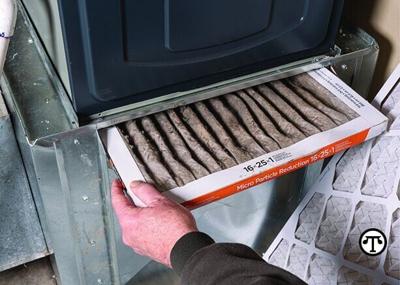
- Change the air filters. Dirty filters can restrict airflow and allow particles to recirculate throughout the house.
- Manage moisture and humidity in the house. Excess humidity can contribute to mold growth and other indoor air concerns.
- Maintain proper bathroom and kitchen ventilation. Exhaust fans help remove moisture, cooking particles, and pollutants from indoor air.
- Keep vents and air pathways clear. Blocked vents can interfere with airflow and reduce ventilation effectiveness.
- Watch for excess dust and debris. Visible buildup near vents or registers may signal the need for system maintenance.
- Have regular professional inspections of your HVAC system to help ensure components are functioning properly and airflow remains unobstructed.
Who Can Help
Qualified HVAC professionals, such as the members of the National Air Duct Cleaners Association (NADCA), can evaluate and improve your home’s system performance.
Learn More
For further facts and to find a qualified HVAC company near you, visit www.BreathingClean.com.
Word Count: 415
 "Experts across public health, building science, and environmental health increasingly emphasize that ventilation, airflow, moisture control, and HVAC system performance all influence the air people breathe indoors."












(0) comments
Welcome to the discussion.
Log In
Keep it Clean. Please avoid obscene, vulgar, lewd, racist or sexually-oriented language.
PLEASE TURN OFF YOUR CAPS LOCK.
Don't Threaten. Threats of harming another person will not be tolerated.
Be Truthful. Don't knowingly lie about anyone or anything.
Be Nice. No racism, sexism or any sort of -ism that is degrading to another person.
Be Proactive. Use the 'Report' link on each comment to let us know of abusive posts.
Share with Us. We'd love to hear eyewitness accounts, the history behind an article.