

Editor's Pick Spotlight
Actress Melissa Duprey expressed excitement about her breakout role as Tamika in the new series "How to Die Alone."
Actress Melissa Duprey expressed excitement about her breakout role as Tamika in the new series "How to Die Alone."

I grew up practicing Candomblé, an Afro-Brazilian spiritual tradition that is Afro-indigenous at its core, practicing Capoeira at my parent’s Brazilian arts and culture center, and eating foods that were distinct to a Latinx blackness that I didn’t see represented in the world immediately around me. I don’t think you can ever truly strip yourself of who you are, but when I reflect back on that period of my life, I’m aware of how much of myself I did not express because I did not feel that it would be legible to others. I didn’t fit neatly into any category, and it was confusing for a long time to understand. Growing up Afro-Latina in LA asked me to shed parts of myself in order to be comprehensible to others. In a city that is predominantly Black American and Chicano, there were only a handful of Afro-Latinx folks that I knew, and the majority of them were my own family. Recently, I had the opportunity to spend time at LACMA in the incredibly powerful exhibition, Afro-Atlantic Histories. Walking in, you are immediately thrown into a timeless space that connects you across waters. To my left, a map of the transatlantic slave trade, and a brief account of the histories. As the daughter of an Afro-Brazilian immigrant, I knew that Brazil was the last country to abolish slavery (In 1888, just 135 years ago), but to see that represented here in the city that raised me, felt important.
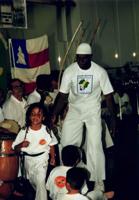
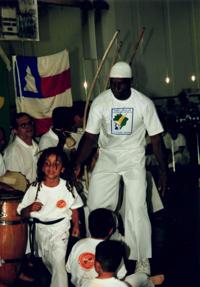
Reva pictured with her father in a Capoeira (Afro-Brazilian martial art) training uniform.
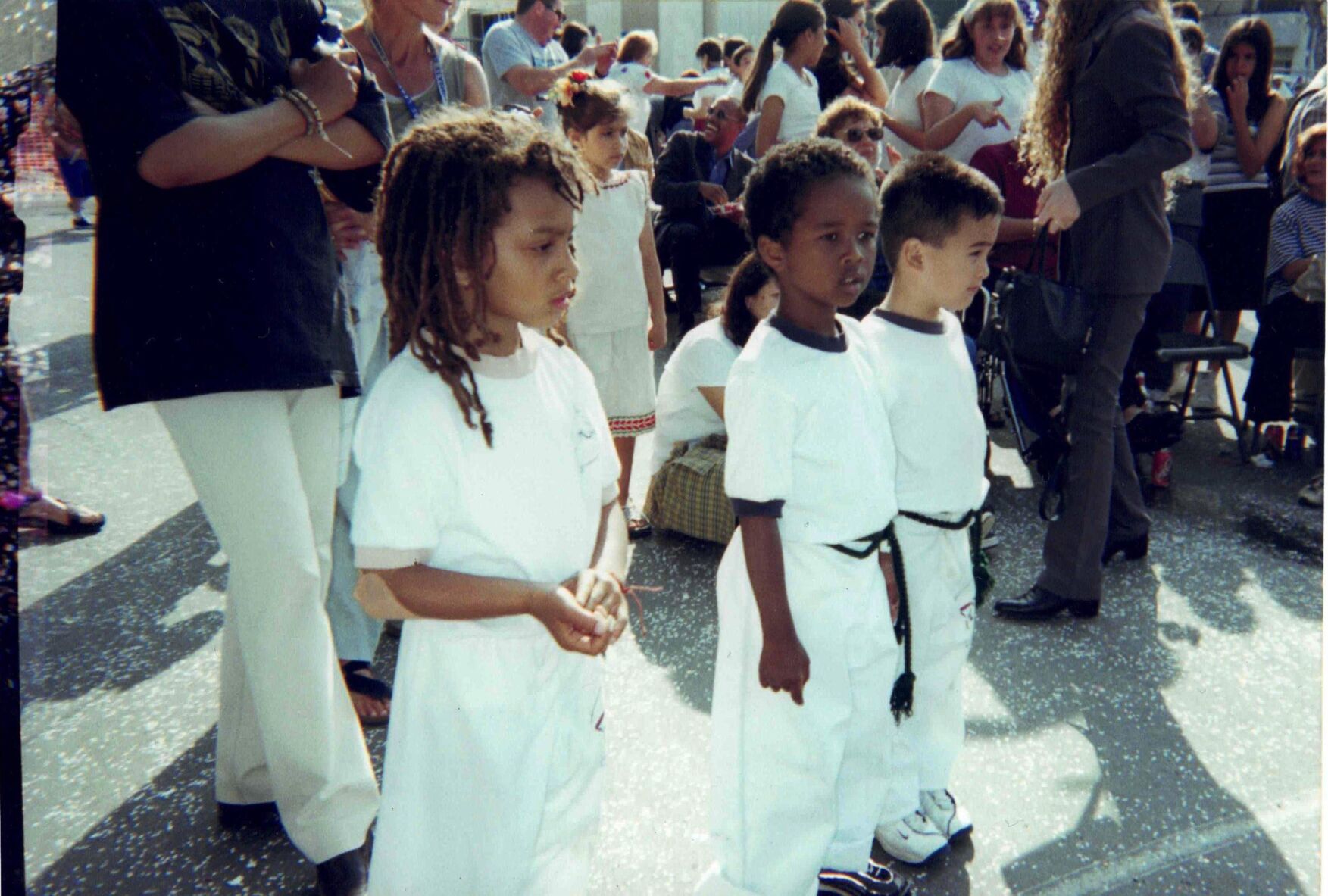

The National Association of Hispanic Journalists joined the National Association of Black Journalists by hosting their national conventions to…
The National Association of Hispanic Journalists, which represents many working journalists and editors and joined forces with the National Association of Black Journalists to host their national conventions together last week in Las Vegas, is working to support Afro-Latino journalists.