
Editor's Pick Spotlight
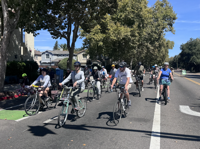
In a vibrant celebration of community, culture and car-free streets, San Jose marked the 10th anniversary of its popular Viva CalleSJ event on…
In a vibrant celebration of community, culture and car-free streets, San Jose marked the 10th anniversary of its popular Viva CalleSJ event on…

San Francisco’s Mission District will be the site for the first televised Lowrider Parade, in honor of National Hispanic/Latino Heritage Month…

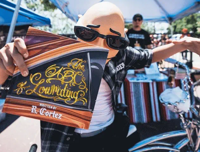
“ABCs of Lowriding” is not just a book for children teaching them the alphabet, it's also for those interested in learning about lowriding cul…

A woman with light brown skin faces the camera outside a college building. She's wearing a pink top. She has long brown hair.

Sylmar resident Carla Bustamante. Bustamante has attended the mental health workshop at Los Angeles Mission College. Credit: Noé Montes/LAist
Therapists say that giving speakers of other languages mental health vocabulary in their own language is a first step toward better mental health. This month, Los Angeles Mission College launched a series of five weekly mental health workshops, open to the public, in Spanish. It’s the first time the college has provided workshops like this in a language that’s commonly used by the people who live around the campus in the north San Fernando Valley. “[Spanish speakers] have a stigma about mental health … it’s important for our community to hold these events because they’re in their language. We need for them to understand this topic in their language, in terms they can grasp,” said Magaly Rojas-González, the basic needs coordinator at L.A. Mission College and the event organizer.
As I grew up, I slowly began to realize that the puns were made at my own expense – and that of my kin and culture. They were survival tools that I developed to consciously and subconsciously go along to get along. This aided me greatly in life, particularly as a budding journalist trying to make his way in a world dominated by white men. Many of those men were comfortable and put at ease when confronted with humor reliant on tired tropes of lazy Mexicans, criminal Mexicans and baby-making Mexicans.

As I grew up, I slowly began to realize that the puns were made at my own expense – and that of my kin and culture. They were survival tools that I developed to consciously and subconsciously go along to get along. This aided me greatly in life, particularly as a budding journalist trying to make his way in a world dominated by white men. Many of those men were comfortable and put at ease when confronted with humor reliant on tired tropes of lazy Mexicans, criminal Mexicans and baby-making Mexicans.