
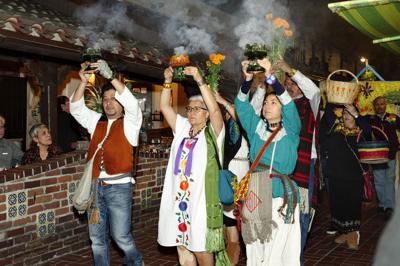

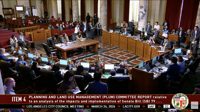
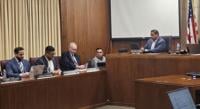
In efforts to promote language justice and accessibility, the Los Angeles City Council approved a motion this week to expand the already existing Citywide Language Access Plan to ensure it also encompasses Indigenous languages.
The expansion of the plan, constructed through a joint report by the Civil Rights, Equity, Immigration, Aging and Disability(CREIAD) and the Personnel, Audits, and Hiring Committee (PAH), listed several recommendations to be able to implement a language access program and include indigenous languages.
Recommendations require city departments such as the Community Investment for Families Department, (CREIAD) and others to collect local data on Indigenous languages (such as where they are spoken, what languages and how many people speak the different languages) and, more importantly, incorporate provisions for services for Indigenous languages, among other requirements.
In addition, the Community Investment for Families Department is required to establish a list of qualified vendors to provide indigenous language services such as translation, interpretation, training, and consultation and incorporate provisions for services for indigenous languages, among other requirements.
Although Los Angeles is one of the most linguistically diverse cities in the world, many indigenous rights advocates believe there is a disconnect among the indigenous communities in L.A. who are often undercounted, as they are often miscounted when grouping them under the label of “Hispanic” or “Latino.”
One organization that has worked to foster language revitalization and create new spaces of engagement with Indigenous languages for younger generations is Comunidades Indigenas en Liderazgo (CIELO).
CIELO was founded in 2016 by two Zapotec women, Odilia Romero and Janet Martinez. Since then, the organization has brought visibility and resources to Indigenous immigrant communities through initiatives such as organizing the first Indigenous literature conference by and for Indigenous communities in Los Angeles. They have also worked with the Los Angeles Police Department (LAPD) to create dialogue and awareness among indigenous communities residing in Los Angeles by conducting cultural awareness training with police officers.
In 2022, CIELO, in partnership with the University of California, Los Angeles (UCLA), published “We are Here: Indigenous Diaspora in Los Angeles,“ which showed an interactive map that visualized the Indigenous language diversity of Los Angeles.
After conducting surveys with nearly 2,500 unique households, CIELO contacted nearly 11,000 individuals from over 30 different Indigenous communities throughout Mexico and Central America who spoke 17 Indigenous languages in L.A. Just over half of respondents indicated a language other than or in addition to Spanish or English as their preferred language. Those languages were: Zapoteco, Chinanteco, K’iche’, Ayuujk, Q’anjob’al, Mam, Nahuatl, Mixteco, Mayan, Akateko, Amuzgos, Kaqchikel, Purépecha, Zeltal, Tacuate, and Chontal.
The importance of having and strengthening a Language Access Plan became even more important after the leaked audio of racist remarks from city councilmembers and city leaders, including Nury Martinez, Kevin de León and Gil Cedillo, in which, among other alarming sentiments, there were clear and indefensible anti-Oaxacan remarks made.
“While Los Angeles prides itself on being a place where we embrace our diverse backgrounds, we still see the impact of centuries of harm on our Indigenous communities in our city,” said Councilmember Eunisses Hernandez, who introduced the plan in 2023. “It’s time we acknowledge the harm done and truly invest in the resources necessary to address the language barriers and make sure everyone feels empowered to participate in their local government.”
Last April, in an effort to promote language justice, the Council instructed the Community Investment for Families Department (CIFD) to collaborate with community-based organizations serving indigenous communities. CIFD then facilitated in-person and virtual engagement sessions to address and document concerns and priorities raised by stakeholders. Following several meetings, CIFD has recommended prioritizing three key areas: data collection, procurement, and culturally responsive training.
Paving the road for a language justice county, the Language Access Plan looks to support the lived experience of Indigenous peoples from countries of origin other than the United States living in L.A. to ensure that all Indigenous peoples are able to meaningfully participate in the decision-making, agendas, and multilingual services within the L.A.
To read the report and their recommendations, please click here.





(0) comments
Welcome to the discussion.
Log In
Keep it Clean. Please avoid obscene, vulgar, lewd, racist or sexually-oriented language.
PLEASE TURN OFF YOUR CAPS LOCK.
Don't Threaten. Threats of harming another person will not be tolerated.
Be Truthful. Don't knowingly lie about anyone or anything.
Be Nice. No racism, sexism or any sort of -ism that is degrading to another person.
Be Proactive. Use the 'Report' link on each comment to let us know of abusive posts.
Share with Us. We'd love to hear eyewitness accounts, the history behind an article.