
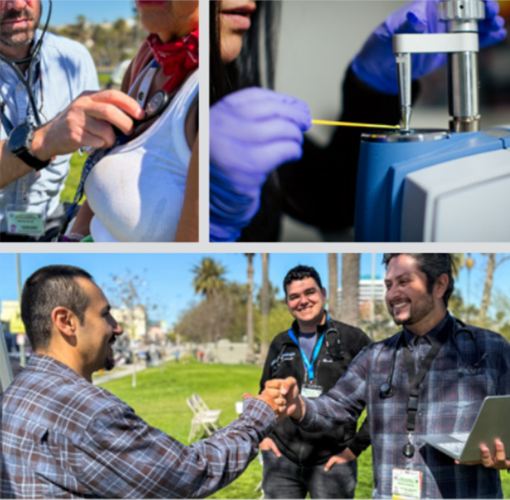






(Photo courtesy of LA County prevention organizations.)
Drug overdose deaths continue to decline in Los Angeles County and across the country, thanks to stronger investments in prevention, harm reduction, treatment and recovery. However, despite this progress, the highest rates persist in Black and Latino low-income communities.
Aurora Morales shared her experience with homelessness and substance use, emphasizing that everyone’s path to recovery is different. She said that growing up in a sheltered environment left her without a strong sense of community.
Feeling isolated, she made choices that led to several years of crystal meth addiction and homelessness. Now she is helping others in their journey to recovery from substance use at Homeless Health Care Los Angeles (HHCLA). Morales oversees multiple sites where the organization provides harm reduction services and the mobile overdose response teams that serve both Skid Row and MacArthur Park.
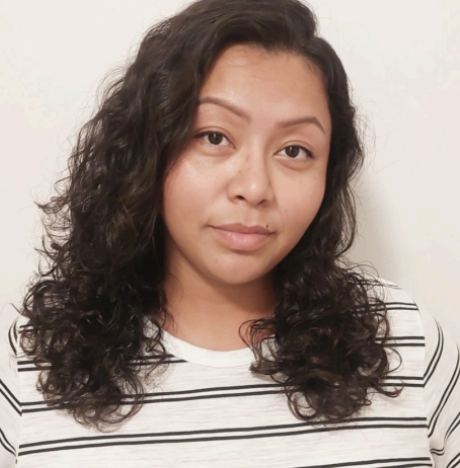
Aurora Morales | Associate Director of Community Initiatives, Homeless Health Care Los Angeles (HHCLA).
At HHCLA, staff members focus on connecting with people through a personal, experience-based approach whenever they carry out harm reduction work. “I needed that community base. I needed someone who could come and provide support, provide love and provide non-stigmatic care for me at that junction in my life,” Morales said. “In that process, I gave my life to the Lord and that's kind of what triggered me going into different spaces.”
She also highlighted that harm reduction and substance use treatment work best together. Harm reduction became a way for her to connect, build trust, and find a safe, compassionate space where she was treated without judgment.
Morales expressed gratitude to the county for investing in substance use prevention services and providing essential resources, which have allowed HHCLA to expand their support in the communities they serve. She also shared that at the Skid Row campus alone they see an estimate of 3,000 people per day.
HHCLA believes that ending homelessness requires more than just housing. Their services range from connecting people to consistent support for basic needs and behavioral health, to community engagement, employment programs and housing navigation. These programs are designed to help individuals meet immediate needs while building long-term stability.

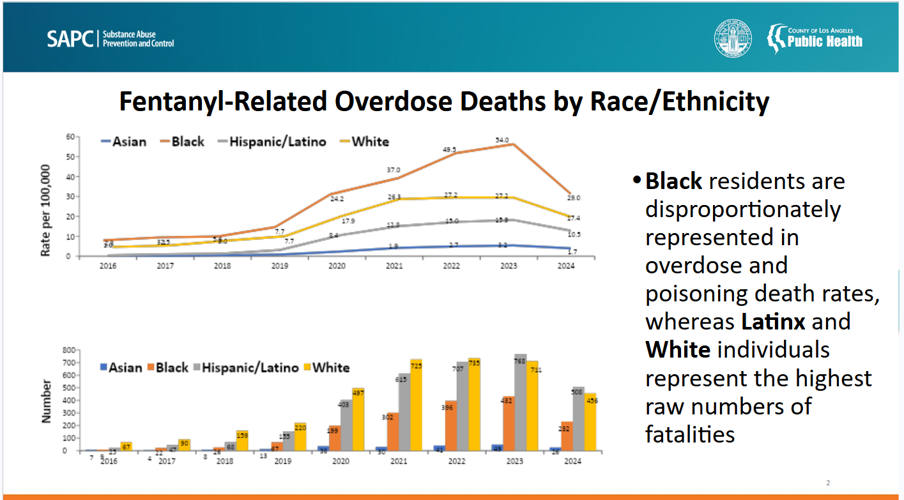
According to the Los Angeles County Department of Public Health, in 2024 they saw a 22% drop in drug-related overdose and poisoning deaths, over 3,000 fewer than the previous year. This included a 37% decrease in fentanyl-related deaths and a 20% decrease in methamphetamine-related deaths. The data also showed that fentanyl-related overdoses disproportionately affect Black individuals in terms of death rates, while Latinx and white individuals account for the highest total number of fatalities. This was the first year in which fentanyl-related Latino overdose and poisoning numbers rose above those of white populations.
In response to the overdose crisis, Los Angeles County has increased funding for substance use prevention, treatment, and harm reduction by more than 260%, 275%, and 500%, respectively. Working together, these programs give the best chance to meet the needs of residents and continue lowering overdose and poisoning deaths.

Kelvin Driscoll, PhD, MSW, MPA | Director, Homeless Outreach Program Integrated Care System (HOPICS).
“Dedicated individuals from HOPICS (Homeless Outreach Program Integrated Care System) are out on the streets of South Los Angeles doing this work and saving lives,” said Dr. Kelvin Driscoll. His passion for public service began with an internship in the office of then-California Assembly Speaker Karen Bass. After graduating, Dr. Driscoll joined HOPICS and just this year he was appointed director of the organization.
“HOPICS just turned 38 this year, 38 years of going strong,” shared Dr. Driscoll. The nonprofit offers services that include housing, behavioral health, substance use, intensive case management and reentry services to L.A. County residents.
“We do a lot of advocacy work. I’m very proud of the over 500 individuals that call HOPICS home, and for those who are dedicated and show up every day to change lives in South Los Angeles,” Dr. Driscoll said. “If you come and visit us, you'll see a mural at our headquarters where our founder, Mike Needley, said that the idea for the homeless outreach program came to him in a cardboard box. We were doing peer support outreach before anybody else wasdoing peer support outreach. And our origin story for the work that we're doing in harm reduction very much mirrors that.”
He also spoke about Oscar Ariano, who became part of the organization after feeling frustrated by the deaths he witnessed in his community and wanting to do something to help. “The realities are clear and the numbers show that Black and Brown communities disproportionately experience challenges with substance use,” said Dr. Driscoll. “They also experience disproportionate challenges with experiencing homelessness.” Dr. Driscoll emphasized that the connection between experiencing homelessness and drug overdose is pertinent.
Another organization working to reduce overdoses in Black and Latino communities is Uthink, which focuses on supporting underserved populations through education, resources and evidence-based programs. Their most recent training aimed to prepare the community to respond effectively to substance use and opioid overdoses, teaching participants how to use Narcan and save lives. According to the National Institute of Health, Narcan also known as Naloxone is highly effective at reversing opioid overdoses, with studies showing a survival rate often exceeding 93% to 99% when administered by bystanders, police or emergency medical services (EMS).
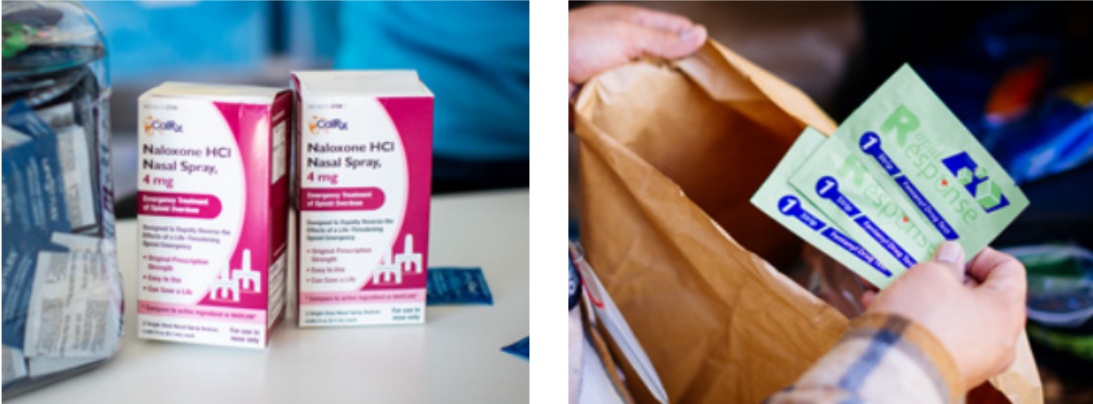
The County's network of dedicated harm reduction partners has increased services to help people struggling with substance use problems. (Photo courtesy of LA County prevention organizations.)
To bring down drug overdose numbers in L.A. County, the focus has been on harm reduction services, a proven approach that engages people who use drugs and helps them make positive changes. The Los Angeles County Departments of Public Health (DPH) and Health Services (DHS) collaborate with community-based organizations to provide services for those who struggle with substance use by protecting them from overdose and illnesses.
People who use harm reduction services are three times more likely to reduce or stop using drugs and five times more likely to participate in drug treatment. Expanding community-based services such as education, treatment, harm reduction and connections to supportive resources like housing and mental health care, is crucial for reducing drug overdoses and addressing the high rates seen in vulnerable communities.
“Providing harm reduction services saves lives, reduces overdose rates, reduces the spread of infectious disease and increases the chance that people go to treatment and makes treatment more accessible. Working with people who may not be committed to abstinence is deeply important on the treatment side if we’re really going to engage our community and try to eliminate health disparities and reach all the people impacted by substance use,” said Brian Hurley, Medical Director of DPH.








(0) comments
Welcome to the discussion.
Log In
Keep it Clean. Please avoid obscene, vulgar, lewd, racist or sexually-oriented language.
PLEASE TURN OFF YOUR CAPS LOCK.
Don't Threaten. Threats of harming another person will not be tolerated.
Be Truthful. Don't knowingly lie about anyone or anything.
Be Nice. No racism, sexism or any sort of -ism that is degrading to another person.
Be Proactive. Use the 'Report' link on each comment to let us know of abusive posts.
Share with Us. We'd love to hear eyewitness accounts, the history behind an article.