
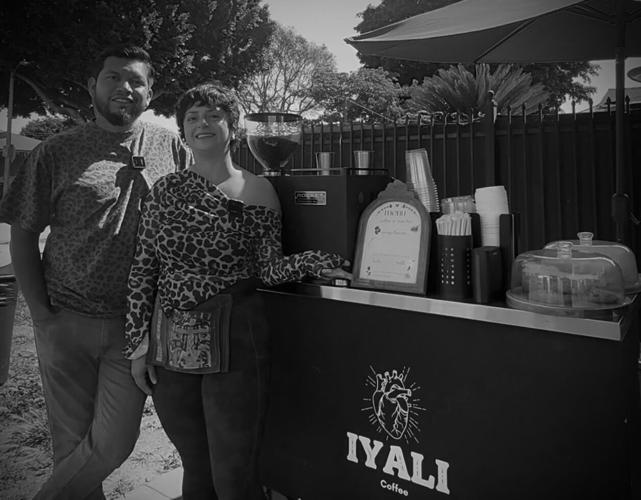

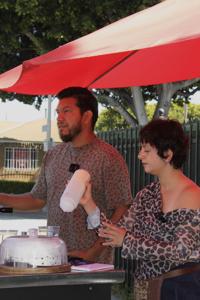



(Left to right) Jose Avalos and Rocio Diaz, founders of Iyali Coffee. Photo by Brenda Verano
In South Central Los Angeles, on the corner of 99th Street and Avalon Blvd, there is a coffee stand where the lattes are sweet, the coffee is concentrated and the family ties are strong.
In a city dominated by drive-thru coffee chains, one young couple began their coffee business with a simple goal: to reclaim family time, something so sacred but scarce, especially for many Latino working-class families.
In early 2025, at that time, Jose Noe Avalos was a full-time truck driver and Rocio Diaz was staying home taking care of their baby, both demanding jobs.
“We were always away from each other for so long and it was a struggle to put a financial burden on him and a childcare burden on me. We were like, ‘OK, what can we do to spend more time together and be more involved in our daughter's life?'What can we do from home? Diaz said.
Family ties
Both parents, who were once high school sweethearts, wanted to eat dinner with their daughter, be part of her bedtime routine and also have time to pursue their own interests and dreams.

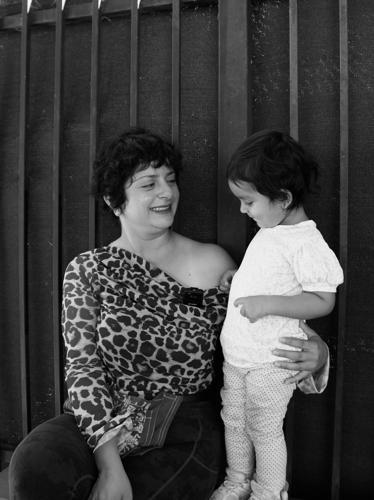
Rocio and her daughter Violeta Iyali Díaz Ávalos. Photo by Brenda Verano
Soon after, with these things in mind, they launched Iyali Coffee, a small business of homemade pastries and specialty coffee.
Iyali, which means “heart of the earth” in Nahuatl, also refers to their daughter, Violeta Iyali Diaz Avalos.
More than a year later, Diaz and Avalos have stepped into their dream of being parents, entrepreneurs and creatives, without having to give up one for the other.
Iyali Coffee, apart from being open five times a week in their regular spot, has also grown to cater events and co-host other community events like neighborhood walks, runs and open mics.
“From the very beginning, since we put ourselves out there, we’ve just kept showing up and we have seen the growth slowly but surely in a sustainable way. A year later, we have our regulars, as well as new people coming to us all the time and connecting with other small businesses,” Diaz said.

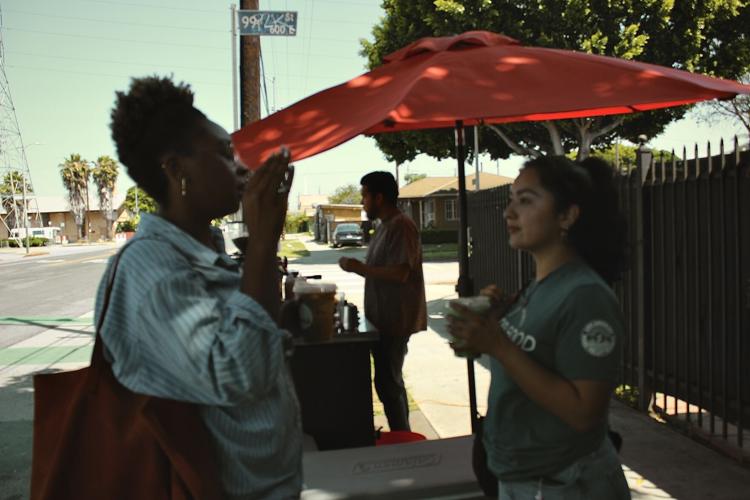
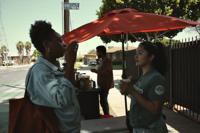
Community getting drinks from Iyali Coffee. Photo by Brenda Verano
Good coffee in communities of color
Apart from creating a business that allows them to be with their family, Diaz and Avalos said that with Iyali Coffee, they are also able to offer high-quality, affordable coffee to the community of South Central, L.A., which is considered a major food desert with significantly higher numbers of stores predominantly selling processed foods.
Seeing how much community members have supported their business, Diaz and Avalos said they take that very seriously and it shows up in the ingredients they use and the care they put into their craft.
“The community is trusting in us,” Diaz said. “We got really creative with our syrups because people want to sweeten up their drink a little bit, most of the time. But for me, it was really important not to bring more highly processed, refined sugars to our neighborhood, because there's already an abundance of that.”
She said she has refrained from using brand syrups like Torani, used in places like Starbucks, which are affordable but use high fructose corn syrup, contain artificial preservatives and have a thin, watery consistency.
Diaz makes her own syrups and pastries at home, even if it means peeling pistachios one by one for their pistachio latte.

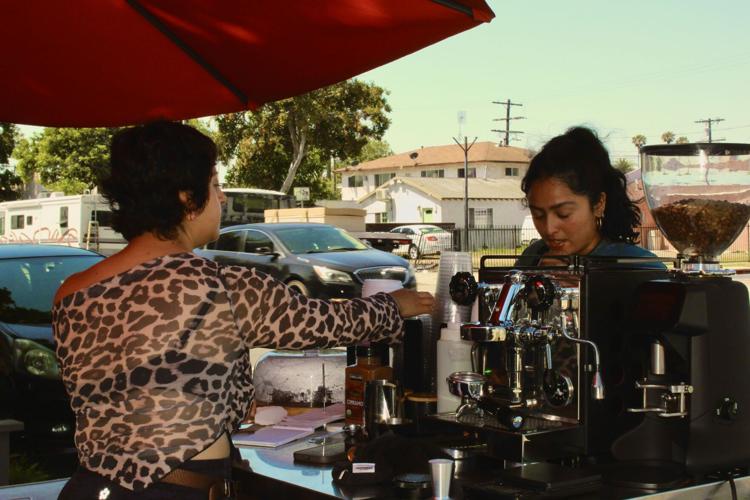
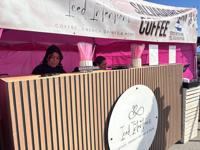
Rocio Diaz attending customers. Photo by Brenda Verano
Despite food apartheid still being part of South Central L.A.'s story, it has also been increasingly recognized as a vibrant hub for entrepreneurship, specifically for community-focused and family-owned businesses.
Avalos said the most rewarding thing about managing a business in South Central L.A. has been being able to connect with his immediate community and neighbors.
He who, as a driver, used to buy rapid instant coffee to stay awake is now making intentionally crafted recipes for his customers.
“In truck driving, I’d be loading, unloading or driving. It was very lonely,” he said. “Here I’m interacting with customers. I get to ask them about their day. I'm more of a friend to people and they also get to share their story, how they're doing, or what they're doing that day. It's very different from truck driving, but adapting was pretty natural because I feel my personality is a better fit for this.”

Rocio Diaz and Jose Avalos found themselves torn between being parents to their first child, a one-year-old baby girl, and working. Photo by Brenda Verano
For Diaz, starting a business in South Central L.A. was a no-brainer.
Both she and Avalos were born and raised in the community, with their parents immigrating from Mexico and El Salvador.
“All of our friends and family are here and so when we were thinking about starting our business, we were like, ‘We don't want to go anywhere else but South Central,'" she said.
Latinos in the coffee industry
Despite operating among big chain coffee giants like Starbucks and Dunkin' Donuts, Avalos and Diaz said their community deserves high-quality coffee, especially when coffee is such a big part of the Latino community, in people's home country and here in the U.S.
“We deserve good coffee and homemade bread. We deserve quality things here in our own neighborhood,” Diaz said. “It's such a strong political statement to also take up space in our streets that historically have not been so safe. We're changing that narrative. We get to create positive stories and change and business. We get to thrive in our own community.”
There is no doubt that Latinos are needed in the coffee industry, especially within the U.S.
According to the National Coffee Association, while Latinos consume 74% of coffee daily in the U.S., only about 13% of coffee roasters in the country are Latino-owned.
Similar to this, despite Latin America producing about 60% of the world's coffee and supplying roughly 80% of U.S. unroasted imports, Latino representation in the U.S. roasting industry remains low.

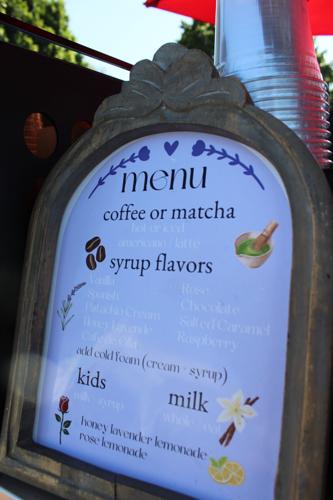
Iyali Coffee menu. Photo by Brenda Verano
“People drink coffee; it's such a big part of our culture and it's just really unsustainable to have to drive so far away for a cup of coffee. It's part of our daily ritual for a lot of us,” Diaz said.
In the U.S., small businesses contribute nearly half of the nation’s jobs and gross domestic product, with Latino-owned businesses becoming a growing force in this sector, particularly in California, where they play a critical role in job creation and economic activity.
There are over 815,000 Latino-owned businesses in California, creating over 500,000 jobs and contributing over $100 billion in annual revenue, with a high concentration in the L.A. area.
When asked if he had any words of encouragement for Latinos who also want to start their own creative business, Avalos said, “I feel anything is possible; the thing is to be consistent. That’s what we had to learn: coming out every day, even if we didn't make that many sales. It was important to be here, to show up, which made a huge difference. For people, I would say, "Show up and be present.”

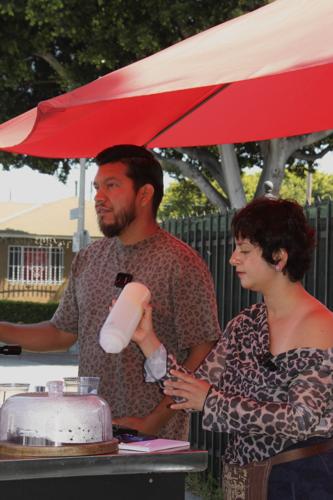
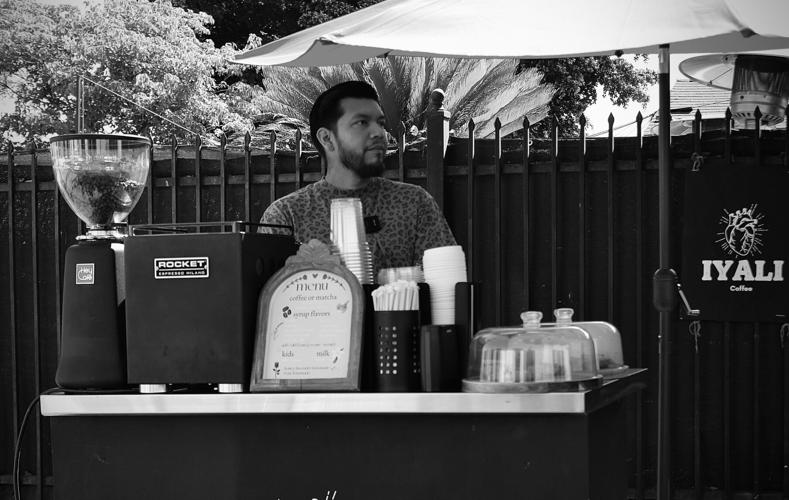
Jose Avalos. Photo by Brenda Verano
For Diaz and Avalos, the days when only a couple of customers would show up throughout the day are over. Today, dozens of their customers come throughout the week, many of whom are now regulars and others who have found them through social media and drive out to try their coffees and banana bread or chocolate chip cookies.
Avalos said that moving forward, they are planning to get a new espresso coffee machine to be able to meet the increasing demand.
Today, both Diaz and Avalos work at the coffee stand, closing early enough to spend the entire afternoon with their daughter, who is now two years old.






(0) comments
Welcome to the discussion.
Log In
Keep it Clean. Please avoid obscene, vulgar, lewd, racist or sexually-oriented language.
PLEASE TURN OFF YOUR CAPS LOCK.
Don't Threaten. Threats of harming another person will not be tolerated.
Be Truthful. Don't knowingly lie about anyone or anything.
Be Nice. No racism, sexism or any sort of -ism that is degrading to another person.
Be Proactive. Use the 'Report' link on each comment to let us know of abusive posts.
Share with Us. We'd love to hear eyewitness accounts, the history behind an article.