
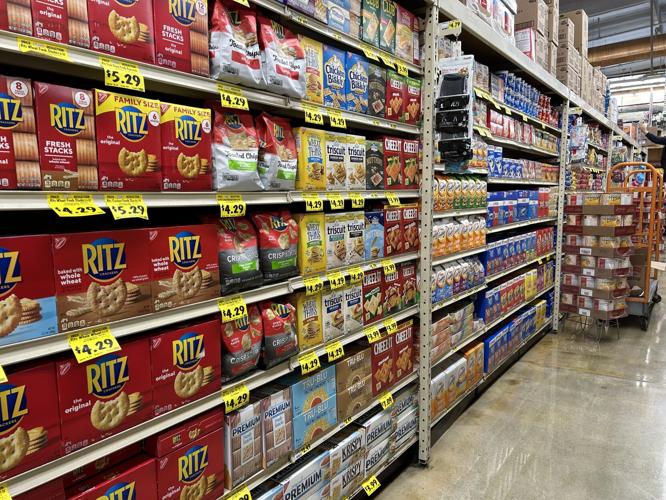





Photo by: Amairani Hernandez
The UCLA Latino Policy and Politics Institute (UCLA LPPI) has recently released a study report that creates awareness to prevent and reduce childhood obesity in the United States. The report, authored by Dr. Arturo Vargas Bustamante, UCLA LPPIU Faculty Research Director, and UCLA LPPI policy analysts Lucia Felix Beltran, Esmeralda Melgoza and Claudio Mendez, associate professor at Universidad Austral de Chile, addresses the alarming rise in childhood obesity rates across the nation, as well as the disproportionate burden faced by the Latino community, which has an obesity rate among children of 26.2%.
In addition, the study examines Latin American countries' successful policies for preventing and managing childhood obesity by identifying best practices for implementing front-of-package (FoP) labeling policies. These policies include portion control initiatives, television advertising restrictions, taxes on sugar-sweetened beverages and front-of-packaging warning labels.
Dr. Arturo Vargas Bustamante, the lead author of the study, explains why this report is more important than ever. “In a rapidly changing policy landscape, this report serves as a vital resource for federal policymakers, health professionals and community advocates in the United States. By drawing on the successful policies implemented in Latin America, this study provides actionable recommendations to address the complex issue of childhood obesity and improve the health and well-being of America's youth.”

Obesity prevalence was 26.2% among Hispanic children. Photo by: Amairani Hernandez
A key recommendation of the report is the importance of targeted interventions to reduce health disparities among Latinos due to childhood obesity and chronic health conditions.
"Latin American countries have shown remarkable progress in addressing childhood obesity through effective policies. It's time for the U.S. to take note and take action. We hope this report will inspire a concerted effort to combat childhood obesity and its associated health disparities in our nation," Felix Beltran said.
According to the report, childhood obesity contributes to short and long-term negative health outcomes, including an increased risk for type 2 diabetes, high blood pressure, high cholesterol, poor self-esteem, anxiety, depression and a higher risk of obesity in adulthood.
In Spanish-speaking households, Latino children are most at risk for obesity. A recent UCLA study found that about 25% of children ages two to five in the U.S. are overweight, and young Latino children from immigrant families are especially likely to be overweight and obese, increasing their risk of health problems.
Dr. Gloria Monsalve is already seeing some of those startling results in young adults who already have chronic diseases and other medical conditions. “Some individuals don’t even know they are sick until they feel bad. They may not feel it now, but 20 years from now, they will. And a lot of low-income families can’t afford expensive medical bills. If a patient has a stroke, that’s very expensive,” Monsalve said.
Dr. Monsalve is a bilingual family physician, an advocate for patients and a professional member of the American Heart Association. She specializes in treating low-income and underserved populations in the San Fernando Valley. She received her medical degree after Colombia’s Industrial University of Santander Faculty of Medicine and has been in practice for more than 15 years, specifically in the Latino community.
Dr. Monsalve said that it was her concern for the young adults that she was caring for that prompted her to join the American Heart Association. Many of the young adults she treats suffer from chronic illnesses such as diabetes, hypertension and obesity.
She also believes that healthy eating starts with an example at home. “If your child sees that you enjoy eating vegetables and fruits, so will they. Education is the most powerful tool needed to make a difference,” Monsalve said.
In order to reduce obesity among young Latino children, the U.S. must implement policies to help Latinos and other communities with similar policies as in Latin American countries. According to the report, in 2022, the White House announced new initiatives to address hunger, food insecurity, and food accessibility, thereby acknowledging that these food-related issues impact millions of people in the United States, especially low-income families, rural communities, and racial/ethnic minorities.

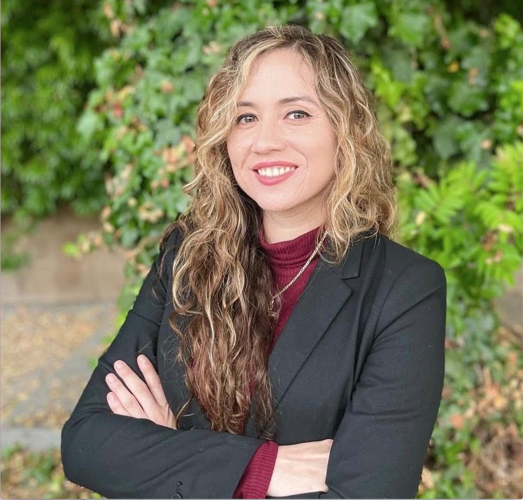
Esmeralda Melgoza is a Senior Research Fellow at the Latino Policy and Politics Institute. Photo Courtesy of Esmeralda Melgoza
CALÓ NEWS also spoke to Esmeralda Melgoza, who is a Senior Research Fellow at the Latino Policy and Politics Institute. She is a Ph.D. candidate in the Department of Community Health Sciences at the UCLA Fielding School of Public Health and also a co-author of the report.
“The report focuses on a lot of the policies that have been implemented in Latin American countries and some of the lessons learned in implementing them here in the U.S., but this report specifically focuses on the front-of packaging policies,” Melgoza said.
According to the report, FoP labeling schemes are already implemented in Latin America and can serve as models in the United States. The mandatory Fop labeling can encourage and warn customers about the information provided by the labels. In addition, it can also motivate food manufacturers to recreate better-formulating products, resulting in healthier food and beverage options for consumers. “With this report, we are really trying to focus on why this obesity epidemic is happening here in the U.S. and specifically how it’s affecting our children and our adolescents,” Melgoza said.
The report states that implementing a mandatory system can be challenged by food and beverage companies as a violation of their First Amendment rights. “Although commercial speech is protected, certain components of FoP labeling might withstand scrutiny.” Additionally, the report notes that food and beverage industry pushback would occur regardless of any attempts at regulation.
Melgoza also said that oftentimes Latino children and adolescents are affected by obesity because of a lack of a healthy diet or physical activity. Another contribution to the increase in child obesity among Latino children is the products that are being bought and the marketing that is being advertised to young children. "A lot of the products advertised to Latino communities often have high quantities of added sugars and sodium, which contributes to the obesity epidemic," Melgoza said.
According to the report, Mexico, Chile and other Latin American countries are employing a multipronged approach to combating childhood obesity that employs FoP labeling, bans on TV advertisements for unhealthy foods and beverages, portion control and taxes on SSBs. UCLA LPPI would like U.S. policymakers, researchers, and community members to consider a similar strategy, one that includes FoP labeling. To read the full report click here.














(0) comments
Welcome to the discussion.
Log In
Keep it Clean. Please avoid obscene, vulgar, lewd, racist or sexually-oriented language.
PLEASE TURN OFF YOUR CAPS LOCK.
Don't Threaten. Threats of harming another person will not be tolerated.
Be Truthful. Don't knowingly lie about anyone or anything.
Be Nice. No racism, sexism or any sort of -ism that is degrading to another person.
Be Proactive. Use the 'Report' link on each comment to let us know of abusive posts.
Share with Us. We'd love to hear eyewitness accounts, the history behind an article.