


Trigger warning: This story discusses suicide
In the latest data from Kaiser Family Foundation (KFF), the suicide rate for Latinos in the United States has increased significantly over the past decade.
Additionally, the Center for Disease Control and Prevention’s (CDC) provisional data for 2022 shows a record high of nearly 50,000 suicide deaths for all racial and ethnic groups.
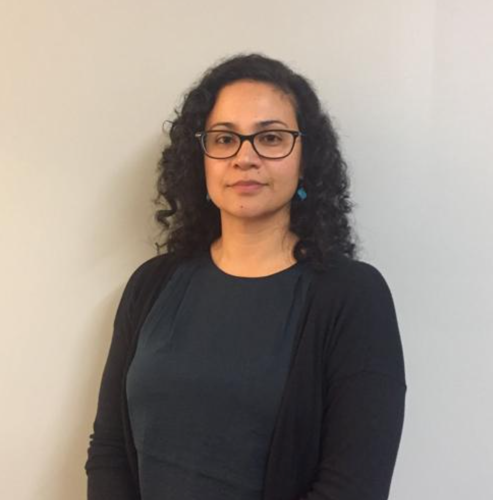
CALÓ News spoke to therapist Frances Chinchilla Orellana, clinical supervisor of Behavioral Health Services at AltaMed, to discuss suicide prevention awareness in the Latino community. “We need to be able to talk about mental health and mental health struggles, and be able to approach the conversation around suicide.”Orellana said. I think, along the lines with the taboo that exists around mental health and mental health conditions it is, if not just the same or just as worse when it comes to the topic of suicide, it's definitely something that people avoid, even saying out loud.”.
Each year 243,000 Latinos in the U.S. attempt to take their own lives, according to data from the American Psychiatric Association. “Normalizing these conversations is important, because the reality is that most people, at one time or another, have had some form of suicidal thoughts, even if it's just a passive thought,” she said.
Depression and other mental health conditions are a big problem in Latino communities due to the stigmatization people experience and difficulties in accessing treatment. “A big part of it is just the stigma. We don't talk about it, and we bottle it up. And when we bottle things up, they fester, and it just gets to a point where it becomes unmanageable,” Orellana said. “There's also issues around some of the challenges that Latinos face, which is equity, access to care that's culturally sensitive. Being able to match with a therapist who has an understanding and lived experience facing some of the challenges that we face as a community, being able to obtain therapeutic services in your language of preference, [are] also very important.”
In the Latino culture there's a perception that talking about mental health is inappropriate, embarrassing and even shameful. “We come from such a collective culture that really emphasizes family and community and these should be sources of support. But when it comes to mental health struggles and struggling with suicidal thoughts, that conversation isn't something that's necessarily encouraged within our culture,” Orellana said.
Familismo is a part of Latino culture that emphasizes the importance of family relationships that, while it can give support, can also hinder mental health challenges, depending on family dynamics and acculturation.
“When we are thinking about our first-generation Latinx community, and how that rubs against very traditional ideologies that are rooted in the family, this can create a lot of discord and cause tension between the Latinx youth and their parent or extended family. And this is obviously going to create some mental health distress in our youth,” Orellana said. “And again, what do they do with this? Who do they go to with this? And it's probably not going to be mom or grandma, especially if there's some kind of conflict within the family depending on what the problem is about.”

Photo Courtesy of Francis Chinchilla Orellana.
She also said that everyone can have different beliefs systems and that can lead to families not being able to reconcile. “Perhaps the youth identifies as an LGBTQ member and it might not be easy to have that conversation with your grandmother, who grew up in the 50s. So it can make them feel really lonely and disconnected,” she said.
As the Latino culture is complex and diverse, it is vital to understand the importance of cultural identity to some individuals. This again may support or negatively affect their mental health. According to the “Frontiers in Public Health” journal, acculturation has been associated with negative health consequences among Latinos between the ages of 21 and 24 and other underrepresented groups.Among Latinos, acculturation has been historically measured by language use.
“I've worked with youth and young adults who have struggled to acculturate coming to this country and adjusting to our way of living [and] our customs and there is a huge disconnect for them. There's a huge sense of isolation, and even making friends can be very difficult because they are up against a whole new culture. And there are nuances that they don't necessarily understand that can create some barriers to connection and feeling understood,” Orellana said. “I've had a lot of patients who come to me to address these difficulties that they're experiencing around acculturation.”
Latinos are often disproportionately affected by economic, social and health consequences. Orellana believes the Latino community has systemic barriers that are contributing to the stigma and the decreased access and utilization of mental health services. Latinos living below the poverty level, as compared to Latinos over twice the poverty level, are twice as likely to report serious psychological distress, according to the Department of Health and Human Services.
“They're going to be stressful if we have economic challenges. We're facing disparities and lack of access. This is going to create a major stress for us. But again, because we are from this collective culture, we can sort of lean on each other when necessary and seek out support from those we trust within our community and within our family,” Orellana said. “It goes along the lines of helping decrease the stigma around expressing your feelings and your thoughts and sharing what it is that you're going through, and just being willing to take that risk and be more open and people will be surprised. People are willing to support. People do care. Your family does care and is willing to step in and support you,”
A study of Latino immigrants found the primary barriers to mental health services were cost (59%), lack of health insurance (35%) and language (31%) and according to the Department of Health and Human Services, Latinos have the highest uninsured rates of any ethnic group in the country, with 18.3% of the population uninsured compared to 5.4% of white people.
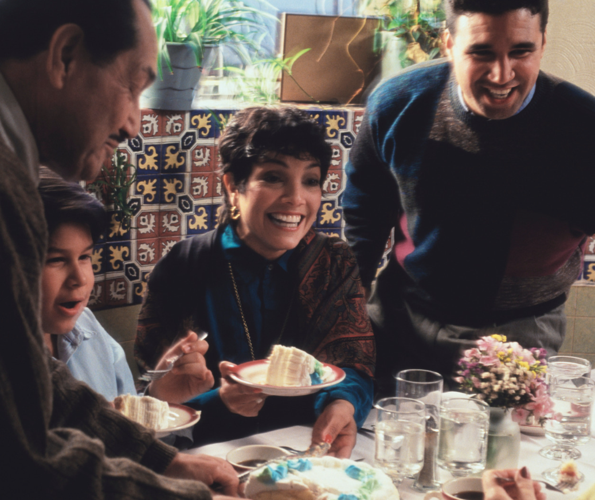
Orellana discussed a strategy within the Latino culture that can support suicide prevention and mental health support. “One of our strengths is being from a collective culture. There's always opportunity to connect, even if we're not necessarily opening up or sharing what we're struggling with…so, just connecting, enjoying time with our loved ones, sharing a meal and engaging in things that elicit a sense of calm and ease and just make us feel connected,” she said. “When somebody is struggling with suicide, they feel very alone, even if they're not necessarily physically alone, there's this deep sense of loneliness, and so being able to connect to community and family is definitely a strength for us.”
While the Latino community struggles to access free, low cost mental health resources, Orellana believes that just opening up the conversation to your doctor and talking to them about what you're facing will lead you to the right direction for help.
She also spoke about places like AltaMed, where behavioral health services are embedded into care, and where doctors are able to talk to patients about mental health and refer them to see someone, which is a big deal in stopping stigma in the Latino community as it’s being more normalized to talk about.
If you are struggling, worried about a loved one, or in need of any type of support, call or text the 988 Suicide and Crisis Helpline. The helpline is available 24/7 and is in more than 240 languages. Individuals who speak Spanish can connect directly to Spanish-speaking crisis counselors by calling 988 and pressing option two.














(0) comments
Welcome to the discussion.
Log In
Keep it Clean. Please avoid obscene, vulgar, lewd, racist or sexually-oriented language.
PLEASE TURN OFF YOUR CAPS LOCK.
Don't Threaten. Threats of harming another person will not be tolerated.
Be Truthful. Don't knowingly lie about anyone or anything.
Be Nice. No racism, sexism or any sort of -ism that is degrading to another person.
Be Proactive. Use the 'Report' link on each comment to let us know of abusive posts.
Share with Us. We'd love to hear eyewitness accounts, the history behind an article.