


(Facebook)
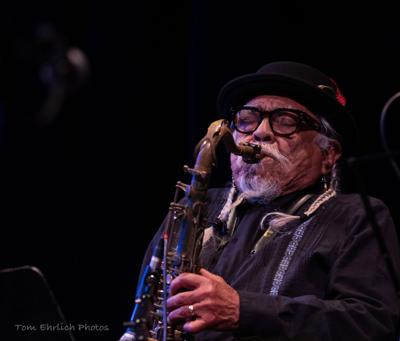
According to Radio Bilingue, José Bernardo Cuéllar, also known as Dr. Loco, has died.
Cuéllar was an American anthropologist, musician and educator. He was professor emeritus of Latina/Latino Studies at San Francisco State University (SFSU), where he taught courses in Chicano/Latino studies, music and cultural performance.
Cuéllar is recognized as a scholar of Chicano culture and as the bandleader of Dr. Loco’s Rockin’ Jalapeño Band.
KQED wrote that “Cuéllar hasn’t just studied and documented Chicano culture. [He] embodied the creative frisson generated by cultural evolution as the leader of the Rockin’ Jalapeño Band, a vehicle through which he’s explored the verdant possibilities of Mexican American life and identity.”
“Reflecting back, it seems to me that I’ve wanted to do things and planned things, but what I’ve done is not stuff I planned,” Cuéllar said to KQED from his house in San Francisco’s Bayview neighborhood. “I never really planned or felt ‘I want to go to Stanford.’ They called me. I thought I’d go back to San Diego State after a year.”
Cuéllar started playing in Texas in the Del-Kings, a mostly Chicano R&B band playing Junior Parker, Bobby “Blue” Bland, B.B. King and T-Bone Walker.
He spent four years in the Air Force, where he was trained as a dental technician, but he followed his passion to be a musician.
He then performed in Las Vegas and Southern California. He enrolled in Golden West College in Huntington Beach to study music, slowly learning about the movement against American involvement in the Vietnam War. He transferred to Long Beach State in 1969, in the midst of the Chicano movement.
He earned a PhD in anthropology from UCLA in 1977. After a stint in Colorado, he moved to the Bay Area, where he formed Corrido Boogie Band, which later became Dr. Loco’s Rockin’ Jalapeño Band in 1989.
“The group’s sound encompassed musical eras and idioms, merging old school New Orleans R&B, Afro Caribbean rhythms, Mexican rancheras and Tex-Mex soul,” according to KQED.
He wrote the book “Tex Mex Saxo: The History and Heritage of El Saxofon in Tejano and Norteno Music.”
According to Greg Landau, Maldita Vecindad saw Dr. Loco as “the last Pachuco,” and were inspired by him.













(0) comments
Welcome to the discussion.
Log In
Keep it Clean. Please avoid obscene, vulgar, lewd, racist or sexually-oriented language.
PLEASE TURN OFF YOUR CAPS LOCK.
Don't Threaten. Threats of harming another person will not be tolerated.
Be Truthful. Don't knowingly lie about anyone or anything.
Be Nice. No racism, sexism or any sort of -ism that is degrading to another person.
Be Proactive. Use the 'Report' link on each comment to let us know of abusive posts.
Share with Us. We'd love to hear eyewitness accounts, the history behind an article.