
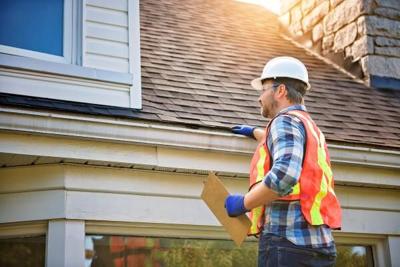
(StatePoint) Everyone knows the basics of home maintenance, but there are several less obvious hazards that can put people and property at risk. Learning more about building code safety is your best bet for protecting your home and the people within it.
International Code Council’s Building Safety Month reinforces the need for the adoption of modern, regularly updated building codes, and helps communities understand what it takes to create safe, sustainable structures. In honor of Building Safety Month’s 46th year, building safety industry experts are sharing their top tips to help ensure safety within the home.
1. Check for B-Vent Damage. Kyley Flynn, Plans Examiner II for the City of Arvada, Colorado, shares that homeowners should make sure their B-vent (used for venting gas appliances) is intact after roof work.
“Roofers may bump the B-vent without even knowing it, which can cause carbon monoxide buildup inside the home,” said Flynn. “Check and see if it’s knocked over or contact a mechanical contractor to check it out.”
2. Follow Applicable Building Codes. Following building codes during DIY projects can prevent costly safety issues. Ashley Bassoco has seen a lot of questionable DIY projects as a Code Enforcement Officer I for the City of Yucaipa, California. She recalls visiting homes in which the owner added or moved a gas line using regular PVC material and ran it across their backyard to an unpermitted accessory dwelling unit (ADU). She also once had to “red tag” a home (indicating it’s no longer safe for occupancy) after discovering a crutch holding up one side of an unpermitted garage. Some of the biggest dangers came when reluctant property owners neglected to make necessary repairs.
“I’ve seen people who don’t want to fix a leak, but then it turns into mold,” said Bassoco. “Then one night, their whole ceiling falls in on them.”
3. Check Every Filter. Most people know that they need to regularly change their furnace filter, but they may not realize their home has other filters that need changing.
“The equipment in your home may be substantially different from another house. Knowing how your house works is important,” said Don Sivigny, Supervisor of Education, Rules, Codes and Grants programs at the Minnesota Department of Labor and Industry.
4. Don’t Remove Fire Separation Walls. Jonah Michaels, Commercial Plans Examiner for the City of St. George, Utah, saw what might happen if a homeowner expanded their living space into an attached garage without understanding building codes and without the assistance of building safety professionals.
“Their hybrid car caught fire and the owner had taken down the fire separation wall,” Michaels recalled. “Everyone made it out safely, but the fire caused damage to both the house and the garage.”
The fire separation wall wouldn’t have stopped the fire, but it could have helped contain it, potentially minimizing the overall damage.
5. Don’t Tap into City Power Lines. Most people are unqualified to install new electricity lines, but there are some who try or simply don’t want to spend money hiring a professional.
“I’ve seen people tap into city power lines and put in their own power source,” said Bassoco. “I’ve seen them hold up the power lines with blocks in the backyard or across the roof and tie those lines into backyard lights. This is serious because an electrical issue can kill everyone in a house.”
6. Have an Unobstructed Escape Route. This is an easy one to overlook, especially when staying somewhere temporarily. Whether bunking with a friend, staying in a hotel, or moving into a new dwelling, quickly familiarize yourself with your environment.
“Everybody’s tendency is to go out the way they came in. Knowing other ways out, and the quickest way out, can make a huge difference,” said Sivigny.
7. Don’t Let Unpermitted ADUs Ruin Your Home. Building safety professionals agree you must get a permit for every ADU and advise against buying properties containing unpermitted ADUs.
“When buying a house, contact the local building department and find out if any past permits for the house were pulled for any additions or remodels. It’s good to know if the house has an unpermitted addition with potential issues,” Michaels advised.
8. Don’t Take Shortcuts. Be sure to use quality products intended for the task at hand. According to Bassoco, the money you save today could be far less than the cost and hassle you’ll incur tomorrow.
For more home safety tips, visit ICC’s Building Safety Month at https://www.iccsafe.org.
*****
Photo Credit: (c) LSOphoto / iStock via Getty Images Plus












(0) comments
Welcome to the discussion.
Log In
Keep it Clean. Please avoid obscene, vulgar, lewd, racist or sexually-oriented language.
PLEASE TURN OFF YOUR CAPS LOCK.
Don't Threaten. Threats of harming another person will not be tolerated.
Be Truthful. Don't knowingly lie about anyone or anything.
Be Nice. No racism, sexism or any sort of -ism that is degrading to another person.
Be Proactive. Use the 'Report' link on each comment to let us know of abusive posts.
Share with Us. We'd love to hear eyewitness accounts, the history behind an article.