


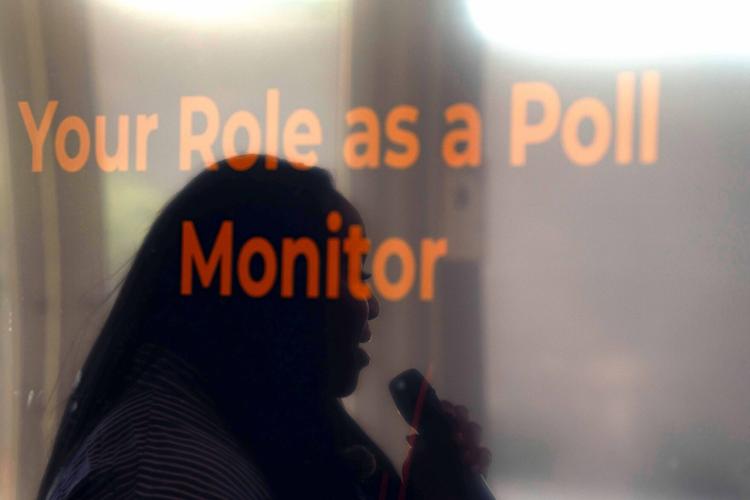


Rev. Medina Moore, an Arizona Faith Network voting rights organizer, is reflected on a television screen during a training for poll chaplains and peacekeepers, Tuesday, Oct. 6, 2026, ahead of the upcoming general midterm election, at Temple Chai in Scottsdale, Ariz. (AP Photo/Rebecca Noble)
There’s a lot of talk about election security and voter fraud — so much so that the Arizona GOP has a measure on the ballot requiring a change in election ID requirements and the federal government continues on its crusade to interfere in voting procedures.
The latest action on Monday afternoon involved the U.S. Supreme Court rejecting the Trump administration's push to force California to set aside thousands of ballots from people the federal government claims are noncitizens.
Since 2020, unfounded election fraud claims have been heavily circulated by election deniers, increasing concerns across the country. A 2026 poll by Arizona State University’s Center for Latinas/os and American Politics Research and Hispanic Research Center found that, among 700 registered Latino voters surveyed, 61% were “somewhat” or “very concerned” that voter fraud would be a significant problem this election.
How exactly do federal, state and local officials ensure that the election process remains safe and trustworthy? Here’s a breakdown.
A secure processing and counting system
Arizona has several procedures in place to verify ballots, protect voter information and ensure votes are accurately counted. According to the Arizona Secretary of State’s Office, county election officials are responsible for processing and tabulating ballots in federal, state and county elections.
When an early ballot is received, election officials verify the signature on the ballot’s affidavit envelope against the voter’s signature on file with the county. This helps confirm that the ballot was submitted by the registered voter.
If officials have questions about a signature, they contact the voter to confirm it. Once the signature is verified, the ballot moves forward for processing and tabulation. The ballot is separated from its affidavit envelope before counting to protect the voter’s privacy. According to the Citizens Clean Elections Commission, bipartisan election boards help prepare verified early ballots for tabulation.
For ballots submitted on Election Day, counties use two methods to count them, including precinct tabulation and central count.

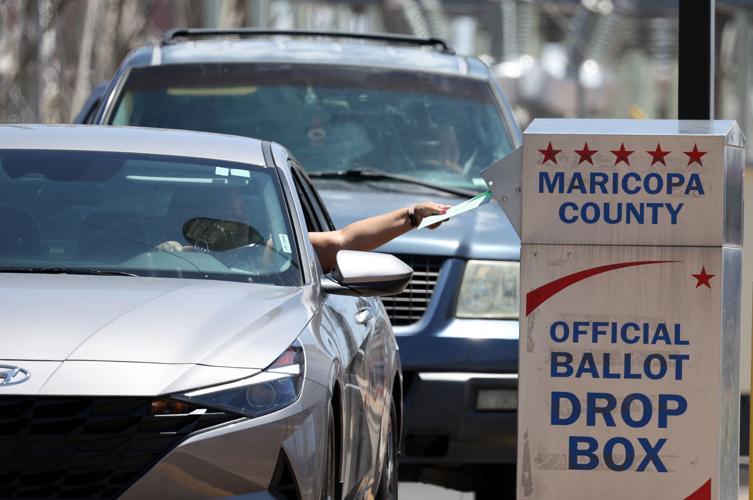
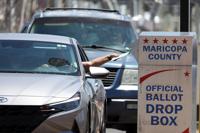
PHOENIX, ARIZONA - AUGUST 02: A voter places a ballot in a drop box outside of the Maricopa County Elections Department on August 02, 2022 in Phoenix, Arizona. Arizonans are heading to the polls to vote in the state's midterm primary election. (Photo by Justin Sullivan/Getty Images)
In precinct tabulation, voters insert their completed ballots into a tabulation machine at the voting location. The machine records the votes on site. In the central count, voters place their completed ballots in secure ballot containers. Election workers transport the ballots to a county counting center, where they are processed and tabulated.
The methods used vary by county and voting location.
As stated by the Citizens Clean Elections Commission, Arizona counties follow chain-of-custody procedures to document the handling and movement of ballots. These procedures include maintaining records of ballot transfers and handling, storing ballots in secure locations, using tamper-evident seals and identification badges and having election workers from different political party affiliations participate in certain ballot-handling procedures. They also provide video surveillance of county ballot tabulation rooms while ballots are present
According to the Secretary of State, election equipment must also pass logic and accuracy testing before it can be used to count votes. These tests help verify that tabulation equipment is recording votes correctly.
Voters can check whether their ballots have been received and counted using the Arizona Secretary of State’s website. They can also watch county ballot-counting activity through the Arizona Secretary of State’s website. All 15 counties are listed.
Thousands of monitors to keep watch
Democrats and outside watchdogs are planning a massive presence at the polls on Election Day. Local groups include Living United for Change in Arizona and the ACLU.
Leading up to the July primary, LUCHA trained hundreds of community members to be nonpartisan constitutional observers at polls amid fears of immigration enforcement agents near polling areas and unfounded claims of widespread election fraud made by the Trump administration and his followers. They continued that training process for the midterm.

LUCHA hosts the People's Congresso in Tucson, Arizona, on July 18, 2026. (Susan Barnett/CALÓ News)
State Democratic parties have trained an estimated 10,000 volunteers to observe polling places and report anything potentially concerning they might see from federal agents. Common Cause has trained roughly 16,000 more volunteers to stand watch at voting precincts, said Suzanne Almeida, vice president of states for the group.
She said a broader Election Protection coalition involving 300 other groups has trained tens of thousands more.
Federally, the Justice Department is planning its largest-ever election monitoring effort, with about 1,000 department staff expected to observe voting and ensure federal laws are being followed, spokesperson Kiersten Pels said. That comes after a primary season in which the department said it deployed more than 100 election monitors across hundreds of polling locations.
Controversy ensued after the department claimed it would be sending FBI and Immigration and Customs Enforcement (ICE) agents. Last week, the department backtracked and said only officers from other agencies will be present acting as monitors, not as law enforcement officers.
When Arizonans can expect results
Arizona’s first unofficial election results are expected after 8 p.m. on Nov. 3.
Election results are initially reported as unofficial, as the count continues sometimes days after Election Day and are updated as counties report their vote totals. The updates may appear at different times because counties must process and tabulate ballots before reporting them.
The first results typically include early ballots that were processed and counted before Election Day. Election Day ballots and other outstanding ballots will be added as counting continues.
Not all results will be available on election night. Early ballots returned on Election Day, provisional ballots, and ballots requiring additional verification can take more time to process.
The Secretary of State’s Office says voters should expect results to continue being updated over several days.
The statewide official canvass, which formally establishes the election results, is scheduled for Nov. 23.
Pima voters can follow results through their county’s election page.
Maricopa voters can follow results through their county’s election page.
For other counties, residents can use the State Election Results website and select their county from the drop-down box.
The Associated Press contributed to this reporting.
Barbara Flores is a freelance writer for CALO News. She grew up in San Diego, California, before moving to Tucson, where she studied journalism at the University of Arizona. She reports on elections, Latino communities, sports and community events.






(0) comments
Welcome to the discussion.
Log In
Keep it Clean. Please avoid obscene, vulgar, lewd, racist or sexually-oriented language.
PLEASE TURN OFF YOUR CAPS LOCK.
Don't Threaten. Threats of harming another person will not be tolerated.
Be Truthful. Don't knowingly lie about anyone or anything.
Be Nice. No racism, sexism or any sort of -ism that is degrading to another person.
Be Proactive. Use the 'Report' link on each comment to let us know of abusive posts.
Share with Us. We'd love to hear eyewitness accounts, the history behind an article.