
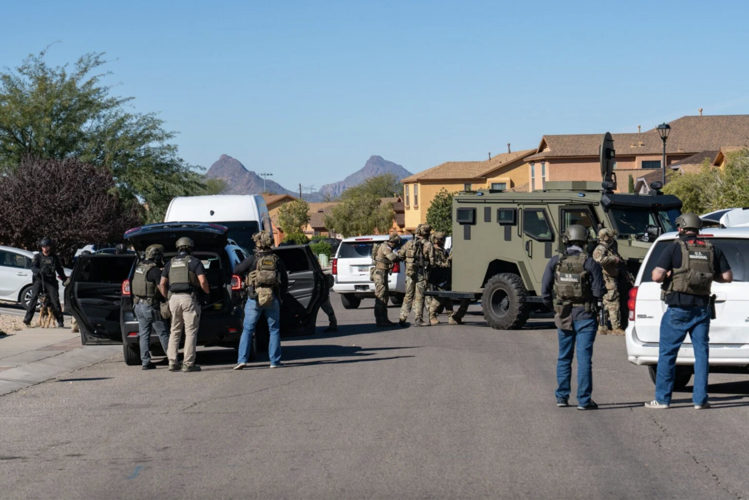
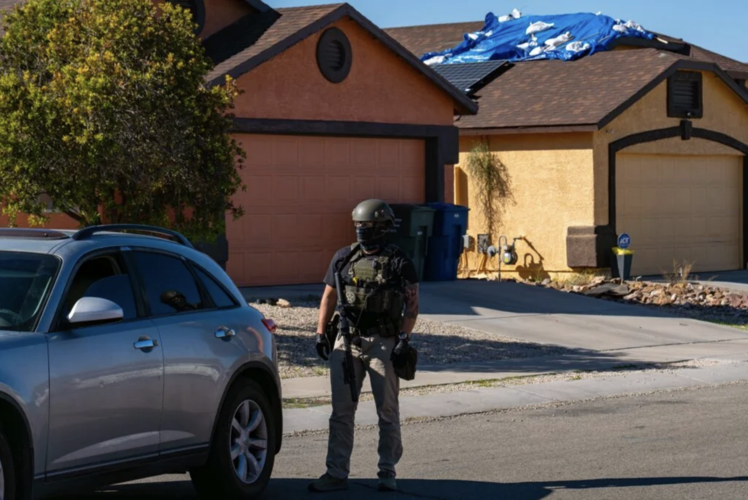
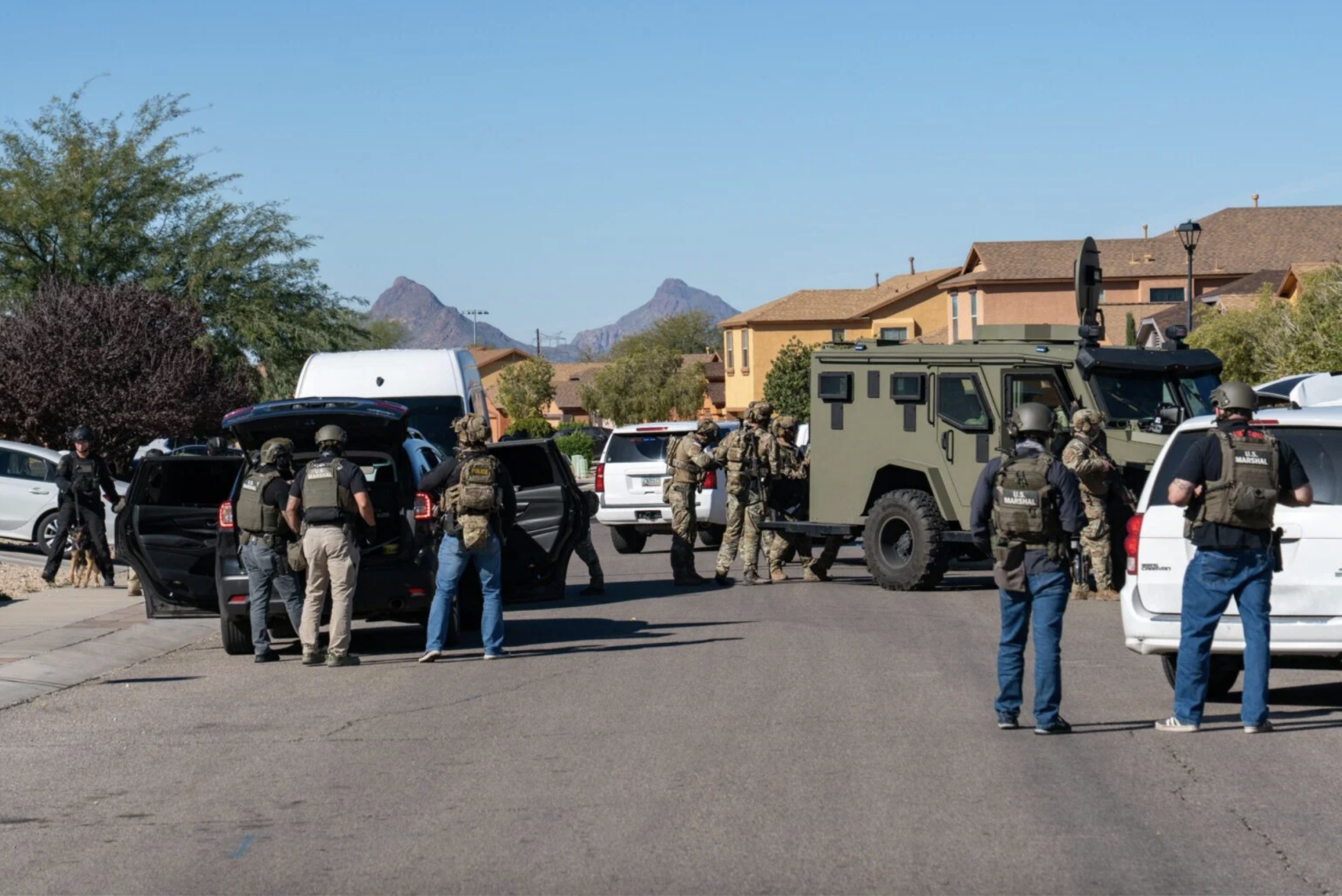
An operation in the Tres Pueblos neighborhood in Tucson generated several reports to the Rapid Response group on Jan. 15, 2026. Volunteers later clarified it was not an ICE-related incident.
This story was originally published in Spanish by Somos Tucson.
TUCSON – Calls to the Tucson Community Rapid Response Hotline reporting immigration activity in Tucson began as early as 6 a.m. on Wednesday, Jan. 14. By 2 p.m., Maria Carrasco, an organizer with the Human Rights Coalition and a volunteer with the group, said she had answered about 20 calls. She is one of several people answering the line.
That same day, rumors circulated on social media that Immigration and Customs Enforcement (ICE) agents had been seen at the Graduate Hotel near the University of Arizona in downtown Tucson. The hotel was hosting a conference for leaders of the Arizona Department of Public Safety, during which no ICE agents were present, according to the Tucson Sentinel.
The rumors may not have been verified, but other reports of ICE activity in Tucson were, Carrasco said in an interview with Somos Tucson.
Dugan Meyer, another Rapid Response volunteer, said that in recent weeks, there have been more calls to the hotline. What is not entirely clear is whether this is due to increased ICE presence in Tucson or to the agency's enforcement operations in the city intensifying. It could also be that people are simply more alert and willing to report, Meyer said.
Aurora Ramírez, a member of the Party for Socialism and Liberation (PSL) of Tucson and part of the Rapid Response group, offers two possible reasons for the increase in calls: she believes the hotline has been widely shared among Tucson residents since the Taco Giro raids in early December and people are more aware of what is happening across the country and are keeping a watchful eye locally.
Tucson Rapid Response is a group of trained volunteers that receives alerts and monitors the activity of ICE, U.S. Border Patrol and local police departments collaborating with ICE. Their goal is to ensure that human rights are not violated during these agencies' operations or arrests. The phone number for Tucson Rapid Response is (520) 221-4077.
In many cases, ICE agents are already gone by the time volunteers respond to a call for observers, Ramírez said. She also explained that some reports are verified, but others cannot be confirmed. Even so, it's good that people continue to call and remain vigilant of their surroundings, as Arizona is expected to be the next state affected by an increase in ICE raids, Ramírez said.
Many who call the hotline are driving or don't have time to stop and record or observe.
Not all reported sightings are ICE operations

A U.S. Marshals Service officer during an operation in the Tres Pueblos neighborhood of Tucson on Jan. 15, 2026. ICE was not present during this operation.
On Thursday, Jan. 15, volunteers with Rapid Response witnessed a raid where agents from the U.S. Border Patrol's Special Operations Tactical Unit, the U.S. Marshals Service and at least one officer from the Oro Valley Police Department surrounded a home in the Tres Pueblos neighborhood, near Sunnyside High School in Tucson, said Meyer. ICE was not present during this operation.
Although ICE and Border Patrol both operate under the Department of Homeland Security (DHS), they are different agencies and focus on different types of cases. Border Patrol (CBP) focuses on the immediate border area and ports of entry, while ICE focuses on immigration enforcement within the interior of the country.
ICE is responsible for enforcing immigration laws within the country, conducting investigations and carrying out deportations originating within the United States. The Border Patrol's Special Operations Tactical Unit operates similarly to a Special Weapons and Tactics (SWAT) team, assisting with immediate responses to high-risk incidents, according to the DHS website.
Rapid Response volunteers had been coordinating surveillance in the Drexel-Park neighborhood, near Three Rivers, for several days after a resident called the hotline saying they had seen suspicious cars and believed someone was following them, even when they were dropping their children off at school, Meyer said.
The observers took turns monitoring the area and verified that unmarked police cars were in the neighborhood. The alert requesting observers in Three Rivers was related to what had been seen in Drexel-Park, Meyer said.
When Meyer arrived in Three Rivers that day, he saw several unmarked police cars and an armored vehicle surrounding the home. Officers from various agencies kept their distance and used a megaphone to demand that everyone come out of the house. They said they had a warrant and were looking for a man, Meyer recounted.
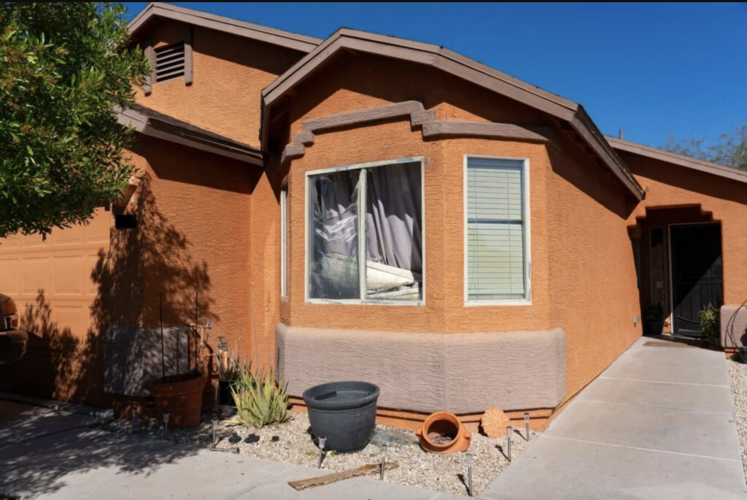
There were several people in the home, including a young child, Meyer said. With weapons pointed at the house, some people came out. They were handcuffed and shown a photo of an arrest warrant on a phone. Then, two Border Patrol agents approached the house and placed an explosive device on a window. They quickly moved away, and moments later, the explosion shattered the window.

According to the testimony of an observer from the Tucson Rapid Response group, Border Patrol agents placed an explosive device on a window to force out the person they arrested in the Tres Pueblos neighborhood of Tucson on Jan. 15, 2026. ICE agents were not present during this operation.
Then a man came out of the house and was arrested, Meyer said.
“At no point did any of the police ever approach the front door,” Meyer said. “There was no door-knocking involved or anything like that.”
After the rest of the people were released and the agents left, some volunteers stayed to provide support to the family. They found people who could fix the window and began raising funds to pay for the repairs.
“Another thing that Rapid Response can do is provide support to families, not only before these kinds of situations happen, but also during and after… We can help families contact lawyers and document what happened,” Meyer said.
They can also help locate detained family members.
"They were all very shaken up, as you might imagine,” Meyer said. “There was a very small child, but there were young people as well. And again, everyone that was in the house had many different assault rifles pointed at them. They were being yelled at."
To avoid confusion and fear among community members, local agencies should stop using unmarked cars and use uniforms clearly marked with each agency's insignia, Meyer suggested, recommending that people ask their representatives to demand this from the government.
"If people are upset about the confusion, which they should be, the solution is for the agencies who are hiding their identities — hiding which officers are at incidents — it's their responsibility, we think, to identify themselves,” Meyer said. “They're public agents.”
How to get involved with Rapid Response
The goal of Rapid Response is to document what happens during immigration enforcement operations.
People who want to get involved, help document and report the activity of immigration agents can attend the weekly Coalición de Derechos Humanos and Defense and Resistance Collective meeting every Thursday at 5:30 p.m. at the Global Justice Center, Ramirez said. There, they can learn more about all the groups working to protect their undocumented neighbors and see which groups they can or would like to join.
Those who volunteer with Rapid Response receive training on how to observe and protect their neighbors.
If you are interested in being part of Rapid Response, send an email to rapidresponsetucson@gmail.com with your name and contact number, and mention that you would like to observe raids or immigration court proceedings.
Carrasco said that, in addition to observation, they have received many calls from people who want to help with transportation for those who are afraid to drive to places like a doctor's appointment or the store.
“We see that we have a very supportive community,” Carrasco said. “And it’s fighting against all this injustice.”
Stephanie Casanova is an independent, bilingual journalist from Tucson, Arizona, covering community stories for over 10 years. She is passionate about narrative, in-depth storytelling that is inclusive and reflects the diversity of the communities she covers.








(0) comments
Welcome to the discussion.
Log In
Keep it Clean. Please avoid obscene, vulgar, lewd, racist or sexually-oriented language.
PLEASE TURN OFF YOUR CAPS LOCK.
Don't Threaten. Threats of harming another person will not be tolerated.
Be Truthful. Don't knowingly lie about anyone or anything.
Be Nice. No racism, sexism or any sort of -ism that is degrading to another person.
Be Proactive. Use the 'Report' link on each comment to let us know of abusive posts.
Share with Us. We'd love to hear eyewitness accounts, the history behind an article.