
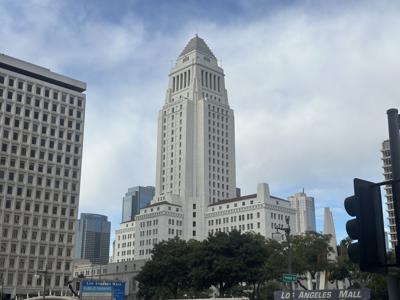


Although Latinos comprise just 23% of the population across the three evacuation zones they account for 36% of all workers in those areas. Photo by Brenda Verano
Los Angeles Councilwoman Eunisses Hernandez has introduced legislation to support workers affected by the fires, providing commercial tenant protections and developing a disaster resilience and preparedness plan in response to the 2025 wildfires.
It’s been over two weeks since the wildfires spread across Los Angeles County in and around Pacific Palisades, Altadena, Pasadena, Sylmar and Hollywood on January 7.
Hernandez is the elected representative for L.A. City Council District 1, which has a population that is 70% Latino, encompassing communities that include Highland Park, Chinatown, Mount Washington, Echo Park, Elysian Park, Westlake, Pico-Union, Koreatown, Angelino Heights, Lincoln Heights and MacArthur Park.
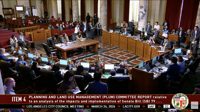
She said that when the fires broke out on that Tuesday morning, she and her fellow representatives were in the middle of an in-person council meeting. “When the first fire broke out, we were all on council. I don't think anybody expected this emergency to get to the level that it did,” Hernandez told CALÒ News in an exclusive interview on Thursday.
According to Hernandez, council members pivoted their attention to the fires and the initial assistance that residents in and around the fires might need.
“What is our response? How do we, what do we do, especially for the districts that were closest to the fires?” are some of the questions that Hernandez said began circulating throughout the different councilmembers.
“The closest fire to us was Eaton Canyon Fire, and we knew that there could be a possibility for it to start going and burning into the city, and then that would start in Council District 14. So we were just trying to figure out how we could prepare if people needed to evacuate,” she said.
Over 37,000 acres have been burned by the deadly fires and thousands of homes, businesses and other structures have been destroyed.
Speaking of the wildfires, Hernandez described them as "a once-in-a-generation catastrophe," one which, as stated by Hernandez, has and will continue to disproportionately affect Latinos and other low-income people of color.
Last week, Hernandez and Hugo Soto-Martínez (CD13) introduced a motion that called for a moratorium on evictions for tenants affected by the fires and a one-year pause on rent hikes, effective through January 2026.
The decision was made after price gouging and rent-increasing incidents began to arise after the fires displaced victims and left many others housing insecure. Community organizations were able to quickly identify landlords, real estate agencies and/or other property managers exorbitantly raising the rent for a property or raising a tenant’s existing rent at an unconscionable price during an emergency or disaster.
More than housing, Hernandez’s office said they were able to identify different areas of protection needed for residents, especially the 800,000 undocumented L.A. County residents.
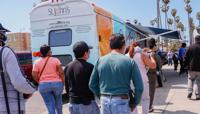
In many instances, undocumented folks who have lost their homes do not qualify for FEMA or other federal disaster relief, inequities that have left many immigrant workers like housecleaners, gardeners and other service workers at a loss of income and basic needs.
”Some of our immigrant communities don't get check stubs so they don't have the documented proof of earnings or loss of wages that other documented folks would have because they have social security numbers,” Hernandez said. “When we put these motions forward, and when we work with the city departments, we make sure that all Angelenos can access it because we don't want to leave anybody behind. During COVID-19 [we saw] how many of our immigrant families and communities were prevented from accessing resources, and we didn't want to repeat that mistake again.”
On Wednesday, legislation Hernandez introduced looks to support workers and families who fell into unemployment or lost their income due to the fires. The legislation directs the Community Investment for Families Department (CIFD) to report back on a guaranteed basic income program for workers who lost employment due to the 2025 fires. The report will also outline how to reach and serve impacted outdoor, domestic and childcare workers and provide details about program eligibility and the verification process.
At least 35,000 jobs held by Latinos were at risk of temporary or permanent displacement due to the wildfires, according to a report published last week by the UCLA Latino Policy and Politics Institute. Although Latinos comprise just 23% of the population across the three evacuation zones (Eaton, Palisades and Hurst), they account for 36% of all workers in those areas.
“At the forefront of our minds are the folks in our district who were the workers, the gardeners, the nannies, the property caretakers—all these folks who work in the Palisades, who live in our district, who are barely making ends meet,” Hernandez told CALÒ News. “ Many people lost the income that they survived off of; that's why we put forward a motion to direct CIFD to create a guaranteed basic income program or an emergency cash assistance program so that people who did lose their jobs can apply and help get money for groceries or rent, whatever they need.”
As initially reported by the Associated Press, although the accurate tally of the financial toll and economic losses of the wildfires is not yet final, a preliminary estimate by AccuWeather puts the damage and economic losses so far between $135 billion and $150 billion.
According to Cal Fire's damage assessment, approximately 6,662 structures were destroyed in the Palisades Fire, while around 9,148 were lost in the Eaton Fire, with many others sustaining varying degrees of damage.
To aid some of the local economy and small business revenue in places near or destroyed by the fires, Hernandez is also pushing forward legislation that aims to protect commercial tenants and small businesses. The motion aims to provide relief to small business owners, requesting the city attorney produce a report on measures the city can take to prohibit commercial rent gouging, freeze commercial rents and limit no-fault and non-payment evictions for small business tenants who have lost income due to the fires.
If passed, the motion would also direct the Economic and Workforce Development Department (EWDD) to report back on funding opportunities and one-time grants specifically for small businesses with fewer than 100 employees adversely affected by the wildfires and to provide details on anti-harassment measures for small businesses to prevent potential displacement.
“Several of our small businesses in the district were impacted by the fires. Many lost [their] business; they lost income, their employees, or their housing or had to evacuate,” Hernandez said. “Our city budget lives off the taxes generated [from] our small businesses. Small businesses were already struggling with the rising costs [of] gentrification. So we wanted to make sure that we could focus on keeping the small business that we have.”
In addition to assisting after the fires, CD-1 also wants to allocate funds to proactive measures for fire safety and preparedness to fortify communities that are located in high-fire severity zones and increase community disaster preparedness training. The legislation looks to allocate $50,000 from Council District 1 discretionary funds to the Los Angeles Fire Department Foundation’s Community Emergency Response Team (CERT) program, which is designed to help protect individuals, families, pets, neighbors and communities in an emergency.
The funding will go towards supplies and resources for Council District 1 CERT Training participants. If passed, the motion would also help allocate an additional $75,000 to develop and procure supplies for a Council District 1 disaster resiliency plan and conduct multilingual preparedness training.
“We're moving money, some discretionary money, into enhancing our emergency wildfire preparedness. Our district has many hillside communities and all of these areas that are fire-prone are high-fire severity zones,” Hernandez said. “If there was an emergency to happen, we don't want to see the scenes that we saw in Palisades. We're putting money to prepare those communities for what to do so that no one gets left behind and for people to evacuate correctly.”
The motions put forward by CD-1 are currently in the city council committees, part of the legislative process.
To read the legislative package, click the links below:
My Safe LA Resiliency Plan- Preparedness Training Funding Motion




(0) comments
Welcome to the discussion.
Log In
Keep it Clean. Please avoid obscene, vulgar, lewd, racist or sexually-oriented language.
PLEASE TURN OFF YOUR CAPS LOCK.
Don't Threaten. Threats of harming another person will not be tolerated.
Be Truthful. Don't knowingly lie about anyone or anything.
Be Nice. No racism, sexism or any sort of -ism that is degrading to another person.
Be Proactive. Use the 'Report' link on each comment to let us know of abusive posts.
Share with Us. We'd love to hear eyewitness accounts, the history behind an article.