
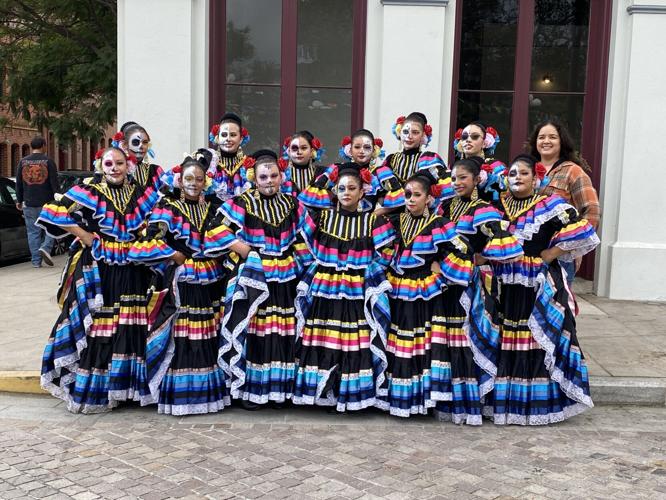

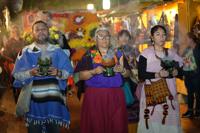


Ballet Folklorico Orgullo Mestizo at Placita Olvera. (Roxsy Lin)
Every year, as the cool Fall air sits over Los Angeles, the historic Olvera Street, or "Placita Olvera," transforms into a hub of color, culture, and devotion as families and visitors gather to celebrate Día de Muertos (Day of the Dead). This ancient Mexican tradition, held annually from October 25th to November 2nd, is a time for families to honor and remember their late loved ones. This celebration combines elements of the Latino community’s art, food, music, and spiritual customs.
“It is a ceremony, something spiritual that helps us to keep the memory of the dead, of our family, our ancestors, of everything important that has happened along the line. That is the Day of the Dead because this tradition has many years in Mexican cultures,” said in Spanish Mario Zapien, spiritual leader of the “Sacred procession” of the Dia De Muertos at Placita Olvera.
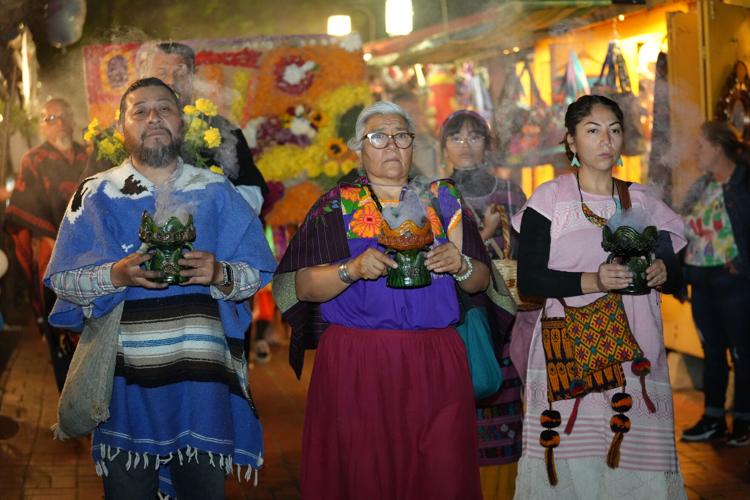
Each evening at 7 p.m., the "Sacred Procession" began with the ritual of "limpias," a blessing ceremony offered to the community. This ritual involves cleansing the body with copal, the traditional incense used in ancestral practice that originates in the Purépecha culture. Long lines of people gathered each night to receive the sacred blessing.
The tradition of remembering
The Cempasúchil flower (marigold), known as the "Flor de Muerto," is an essential element of the celebration, believed to guide the spirits of the dead back to the realm of the living. Other central components are the altars, or ofrendas, where people place photographs of the deceased, along with offerings like bread, water, and their favorite foods. “It is a ritual about the memory. It is something sacred,” explained Zapien.
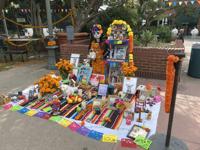
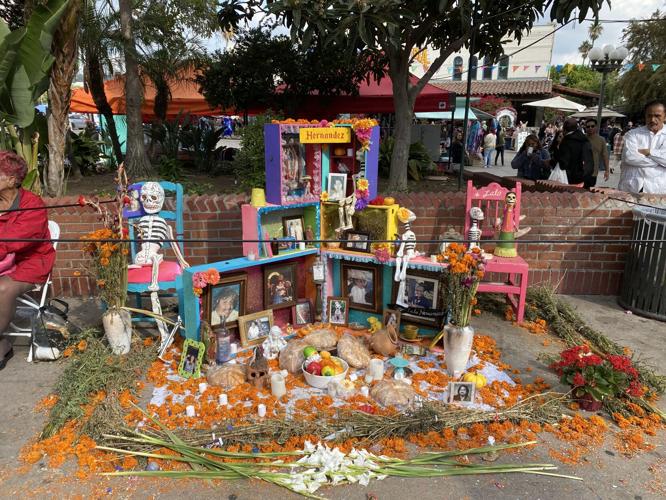
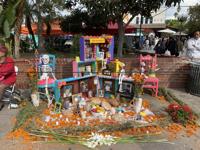
Every year, the Placita Olvera features a collection of intricately decorated altars surrounding its gazebo. Local families and community members come together to create these vibrant displays. Among them, an altar inscribed with the sign “Por siempre los recordaremos” ("We will remember you forever") was dedicated to cherished pets, offering a heartfelt tribute to beloved animal companions. Photographs of goats, donkeys, and dogs were amid the personal touches included, honoring their memory with love.

Altar Familia Hernandez at Placita Olvera. (Roxsy Lin)
Folkloric dances were also a highlight of the celebrations, featuring groups like the Santa Monica Dance Company and Ballet Folklorico Orgullo Mestizo from Fontana. These talented performers filled the atmosphere with joy and color, captivating the crowd with their striking costumes and energetic performances.
“I think it's really important to showcase our culture and to see [that] our ancestors came from different parts of Mexico. Today, we [performed dances from] Jalisco, Chiapas, Baja California Sur […] It's really important for people to know that we're still here, the culture is still alive, and it's good for everyone to see,” said Julie Garcia, Dance Instructor at Ballet Folklorico Orgullo Mestizo.

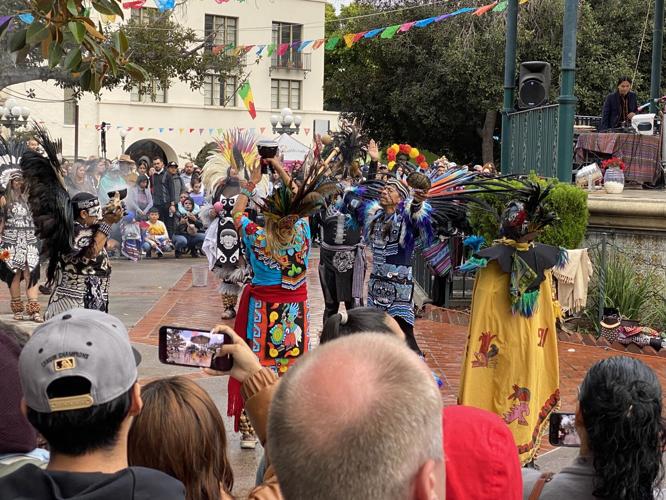
Xipe Totec dance at Placita Olvera. (Courtesy of Eduardo Rodriguez)
Throughout the nine-day celebration, singers like Diana Velazquez,Dos voces de Mexico (Mar Lizarraga and Jesus Arredondo), and Ruby Clouds (Claudia Garcia) serenaded the participants with lively and soulful songs; while groups like Xipe Totec performed the danza Azteca, an indigenous ritual that pays homage to Mexican ancestors.
These performances are meant not only to entertain but to honor the past in a way that feels both sacred and festive. No Día de Muertos celebration would be complete without traditional foods. At Placita Olvera Street, visitors savored a complementary portion of "Pan de Muerto” and hot chocolate at the end of each evening.
While Día de Muertos is deeply rooted in Mexican culture, the celebration at Placita Olvera welcomes people of all backgrounds to learn about, honor, and participate in this meaningful tradition.
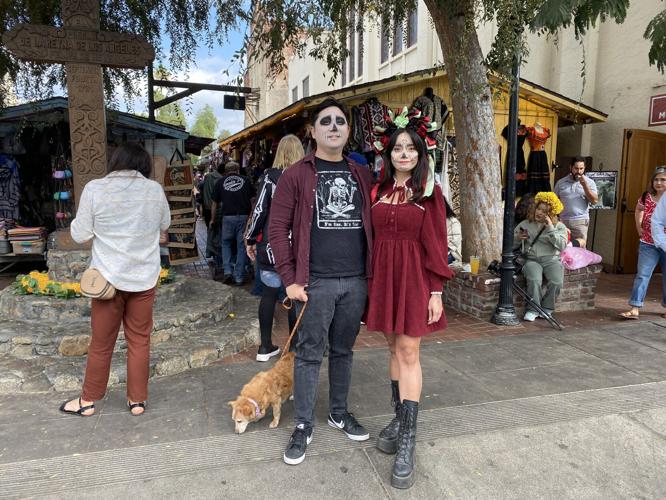
“We really enjoyed this holiday. We celebrated our honeymoon in Mexico City, and we celebrate on Day of the Dead as well. We fell in love with the culture and the celebration there. So, when it was Day of the Dead here, we wanted to do the same thing,” said Vietnamese-American Lisa Nguyen and Chinese-American Andrew C.

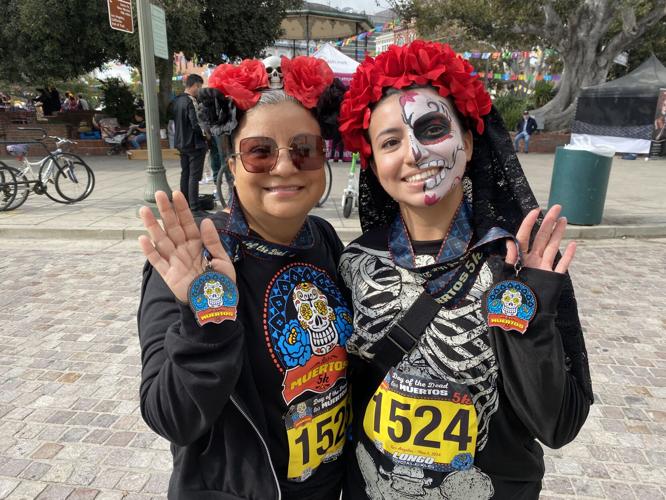
Jasmin and Raquel Garcia at Los Muertos 5K. (Roxsy Lin)
A run to honor the loved ones
Los Muertos 5K run is another fun activity. This year, it took place on November 2nd and started at 6:30 am at the Main Street in El Pueblo de Los Angeles Historical Monument to later traverse Chinatown, Alameda Street, Los Angeles Historical Park to conclude at Olvera Street. The run has become a meaningful occasion for many.
“I love it that I can do this with my daughter and that she embraces my culture. We're running for my mom [Rosa Garcia]. In memory of […] I want to do it every year,” said Raquel Garcia, who has participated for four consecutive years.
This was a significant moment for Garcia’s daughter, Jasmin, as it marked her first participation in the run. “It was really beautiful to see everybody from all different ages coming out […] There were kids running, people in wheelchairs, just everybody. I think it's really great that the community does this for us because it's very inclusive. And we have a really big community of Latinos in Los Angeles, so it's nice to be represented and collectively get together to celebrate our culture,” she said.

Día de Muertos procession at Placita Olvera. Pictured: José Luis Bahena, Liliana Paz and Xóchitl. (Courtesy of El Pueblo de Los Angeles Historical Monument)
The event offers a chance for attendees to come together and remember their loved ones. It serves as a reminder of the importance of heritage, community, and memory. Whether attending for the first time or as a family tradition, this celebration offers a unique experience that resonates with the universal desire to keep loved ones close, even after they have passed away.
Olvera Street, nestled in the heart of downtown Los Angeles, is more than just a tourist destination; it symbolizes Mexican heritage and history. The Día de Muertos festivities attract hundreds of visitors each year who come to experience the magic of this celebration. With altars, traditional Mexican music, and fragrant incense filling the air, the street itself becomes a sacred space where life and death are celebrated.

Pets altar at Placita Olvera. (Roxsy Lin)
If you haven’t had the chance to visit this meaningful celebration, be sure to mark your calendar for next year. Immerse yourself in Día de Muertos and join a community that knows that remembering those who came before us keeps their memory alive forever.

Lisa Nguyen and Andrew C at Placita Olvera. (Roxsy Lin)






(0) comments
Welcome to the discussion.
Log In
Keep it Clean. Please avoid obscene, vulgar, lewd, racist or sexually-oriented language.
PLEASE TURN OFF YOUR CAPS LOCK.
Don't Threaten. Threats of harming another person will not be tolerated.
Be Truthful. Don't knowingly lie about anyone or anything.
Be Nice. No racism, sexism or any sort of -ism that is degrading to another person.
Be Proactive. Use the 'Report' link on each comment to let us know of abusive posts.
Share with Us. We'd love to hear eyewitness accounts, the history behind an article.