
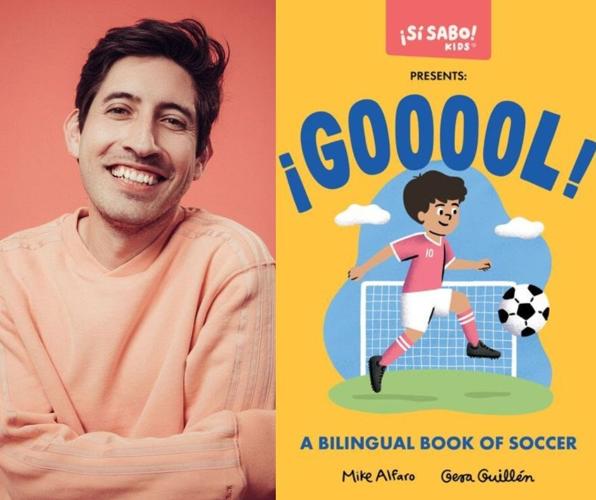


Mike Alfaro, creator of the viral, bestselling hit Millennial Lotería, has announced his newest project, ¡GOOOOL!, a bilingual book celebrating soccer, set for release on March 3, 2026.
The book is part of Alfaro’s bestselling Sí Sabo Kids imprint, a bilingual children’s line designed to support early language development while celebrating Latino culture through play. ¡GOOOOL! combines bold visuals, accessible language, and cultural authenticity to engage families, educators and young sports fans.
Arriving ahead of the World Cup, ¡GOOOOL! is a colorful bilingual board book designed for children ages 0–6, using the excitement of soccer to introduce Spanish and English vocabulary.
Told in English and Spanish with easy pronunciation guides, the story follows a young player chasing the winning goal, weaving language learning into the drama of a final match, from pre-game cheers to a tense penalty kick and the climactic goal.
As a Guatemalan-born creative director and former advertising executive, Alfaro brings a unique perspective on representation, language and culture. His work has been and his mission remains consistent across every project to make Latino culture visible, joyful and proudly mainstream.
“Our community and our culture is constantly under attack from different sources and from different places, and I think it's important for us to see that. Nobody's going to represent us better than ourselves, and I want other people to also create content, to make books, to make games. I want to be an inspiration for people to see that you can do it, if you put your mind to it,” Alfaro shared.
He told CALÓ News that building a platform matters to him not just as an author, but as a contributor as well, especially with the thousands of followers he reaches through social media.
“It's important for me to be able to put work out there, put products, put content that makes people happy and makes people proud of being Latinos in this country and also for speaking Spanish. I think that's really important for me to get through and I want to make sure that I always represent the immigrant community in a positive light,” he said.
On March 1, Alfaro is taking over Pretend City Children’s Museum in Irvine for a family-friendly celebration of his new book. The day will include book readings, soccer tournaments for the little ones, and activities throughout the entire museum. Tickets are available at pretendcity.org.
This interview has been edited for length and clarity.
Why do you think that your previous project, Millennial Lotería, was such a success?
“I think because it was originally just a project that I had made for myself. It wasn't like a game or a business or anything. It was just artwork and creativity and I wanted to represent how I was feeling as a Latino, an immigrant living in this country, and how I saw Latino culture. I wanted to portray us in a way that was fun, modern, cool and funny, just how we are. My friends and I decided to make these lotería cards that represented me, and it turns out that a lot of people felt like I did, and I guess we just didn't have that representation.
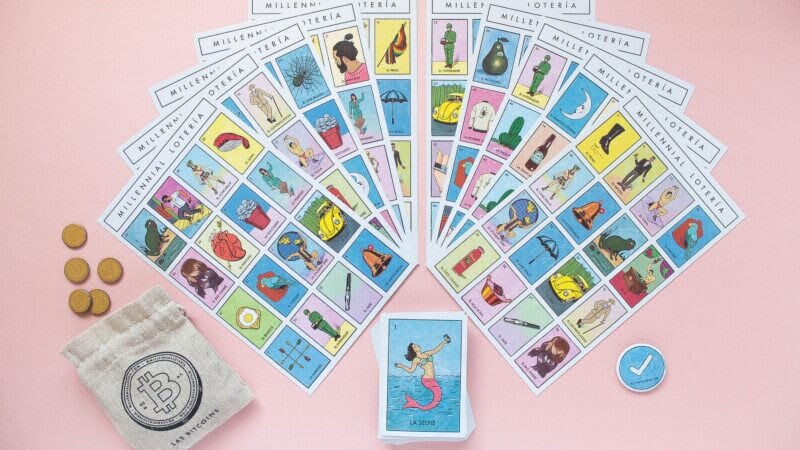
Millenial Loteria.
“I think Millenial Lotería became this little moment in time for young millennials to feel represented in a way that was fun and in a way that was through a modern lens, but still kept that traditional, nostalgic thing that millennials love so much, that nostalgic feeling. And so I think that's why I connected with a lot of people because it was an earnest project of just showing what I thought about myself. I didn't really want to represent a generation. I just want to represent myself, and it turns out that I ended up representing a lot of people out there that had those same feelings as me.”
What inspired your shift from creating a loteria to writing children's books?
“I became a father. I think a lot of Latinos, a lot of millennials, we just grew up. I started Millennial in 2017 online and it became a product in 2018. We're almost coming up on 10 years soon, so I've grown up and a lot of my audience, a lot of the people that follow me have grown up as well.
“I became a father and I realized that I wanted my daughter to grow up speaking Spanish or at least having the opportunity to learn Spanish just how I learned English growing up. I grew up speaking Spanish in Guatemala, and my parents, they didn't speak any English, but they tried to get me books and tried to help me along. I wanted to provide that also for people here in the United States that want to teach their kids Spanish. So I make books called Si Sabo Kids, because I just want people to have the opportunity to teach their kids Spanish here in the United States. I think that's why I got inspired to do these, these books, and I write them for my daughter and again all my work is very personal based on things that I want to represent me and represent my family, and it just seems that there's a lot of people out there who connect with that sort of earnestness in the work.”
Why was it important to you to create this book and ensure it was bilingual?
“I always remember my parents telling me that speaking a second language will open up so many doors for you in the world, and I think that's something that a lot of parents have tried to teach their kids and I think that's something that's so true. A lot of the success I had in my career was because I was able to navigate between these two worlds, these two languages and two cultures, and I think that the United States, which is the second largest Spanish speaking country in the entire world, only behind Mexico. So I think it's really important for people to learn Spanish here, there's so many new opportunities for us as a culture.
“I know we're going through some times where people might be afraid to speak Spanish or not want to pass it down to their kids, and I think that's something that we need to reject. We need to be proud of who we are, and we need to, as a culture, continue to pass this along to our children as it's going to be really important for them in the future.”
What has been the most rewarding part of writing a children's book that teaches about soccer?
“I grew up playing soccer in Guatemala, but I played on the streets. Also because the World Cup is coming up, this book is more about teaching kids all the fundamentals about soccer in Spanish and in English. I really want kids to listen to the announcers games in Spanish because there's nothing like it. I mean, English is good, but there's nothing like hearing an announcer in Spanish. So with this book they'll be able to know all the different words and all the different sayings. I always say that if your child thinks that tacos de football is something you can eat, then you need to get them this book because it explains a lot of all the terminology and soccer, and it's a fun story as well to read to your kids, but also teaching about a sport that's going to be really huge this year here in Los Angeles as well as in North America.”
What do you hope children and their parents take away from ¡GOOOOL!?
“For me, it's really a love of Spanish and the love for the game. I really do think if all of a sudden children want to be listening to the games in Spanish and learning in Spanish as they watch the World Cup, I think that'll be a great reward for me. I want to get kids prepped so that they can learn Spanish and also that this is a sport that brings people together and learning a second language can also do that. It also helps us see that there's not a lot of differences once you get down to it, on a human level, on a family level. And so I just want people to see the good not only in the sport, but also in learning a second language.”




(0) comments
Welcome to the discussion.
Log In
Keep it Clean. Please avoid obscene, vulgar, lewd, racist or sexually-oriented language.
PLEASE TURN OFF YOUR CAPS LOCK.
Don't Threaten. Threats of harming another person will not be tolerated.
Be Truthful. Don't knowingly lie about anyone or anything.
Be Nice. No racism, sexism or any sort of -ism that is degrading to another person.
Be Proactive. Use the 'Report' link on each comment to let us know of abusive posts.
Share with Us. We'd love to hear eyewitness accounts, the history behind an article.