
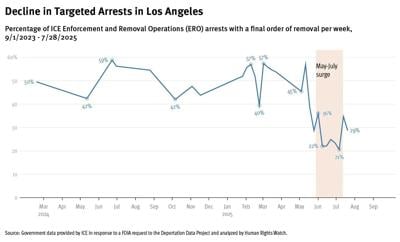


Immigration and Customs Enforcements operations in Los Angeles, Chicago, Washington, D.C. and across Massachusetts have been less than half as effective at apprehending people with a criminal record, a New York Times investigation revealed.
Only 6% of people ICE arrested in L.A. had a violent conviction, 29% had a past conviction, 14% had a pending criminal charge and 57% had no criminal charges.
In Los Angeles, the Trump administration deployed the National Guard and active duty Marines during the summer of 2025, claiming that they were needed to protect ICE and Border Patrol agents to perform their operations.
700 Marines left the city on July 21. On December 14, National Guard troops left Los Angeles.
Governor Gavin Newsom’s office posted on Threads: “FOR THE FIRST TIME SINCE JUNE, THERE ARE NO FEDERALIZED TROOPS DEPLOYED TO THE STREETS OF LOS ANGELES. Thanks to the work of many, this clear authoritarian overstep by Trump has ended.”
The Deportation Data Project gathered information on all ICE arrests through a lawsuit.
Many of the people arrested were working at car washes, mowing lawns, in courthouses, at green card interviews and regular check-in meetings of their status.
Human Rights Watch also analyzed the ICE arrest data, excluding arrests by CBP or other agencies, and confirmed that from May 28 through July 28, ICE Enforcement and Removal Operations officers dramatically increased arrests, primarily of people without violent or even any U.S. criminal history.
Data suggests ICE agents detain people based on their perceived race, ethnicity or national origin, which the Supreme Court decided in September was legal.
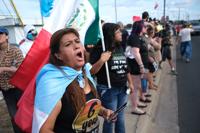
The raids Human Rights Watch documented from June to September occurred without warning, as agents arrived in unmarked vehicles, jumped out and swarmed the people they targeted. News and social media reports of other raids confirm a consistently similar approach.
Witnesses described and videos confirm agents usually carried military-style weaponry, sometimes dressed in civilian clothes or military outfits and often wearing masks hiding their identities. There have been incidents of agents using excessive force and smashing car windows and pulling people from their cars.
Arrested people and their relatives said they and their loved ones experienced abusive treatment while being transported and in detention. They said those arrested were shackled for extended periods, denied food and water, forced to sleep on floors and refused contact with family and lawyers.






(0) comments
Welcome to the discussion.
Log In
Keep it Clean. Please avoid obscene, vulgar, lewd, racist or sexually-oriented language.
PLEASE TURN OFF YOUR CAPS LOCK.
Don't Threaten. Threats of harming another person will not be tolerated.
Be Truthful. Don't knowingly lie about anyone or anything.
Be Nice. No racism, sexism or any sort of -ism that is degrading to another person.
Be Proactive. Use the 'Report' link on each comment to let us know of abusive posts.
Share with Us. We'd love to hear eyewitness accounts, the history behind an article.