
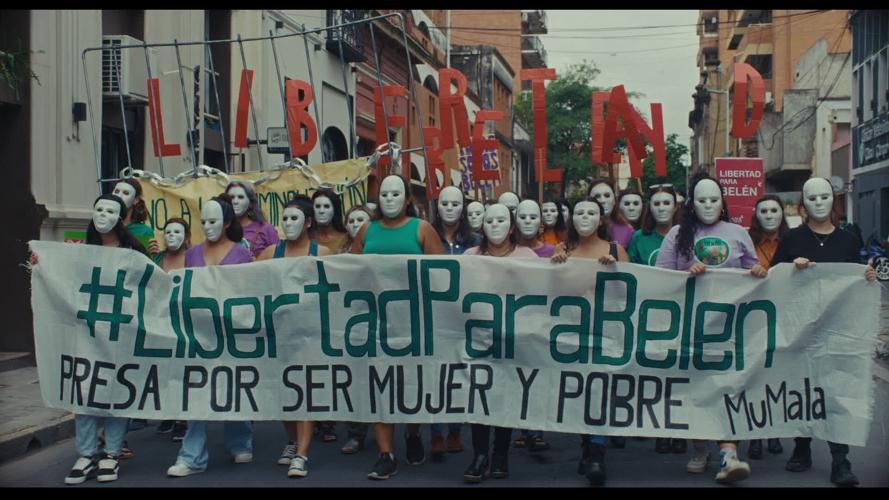
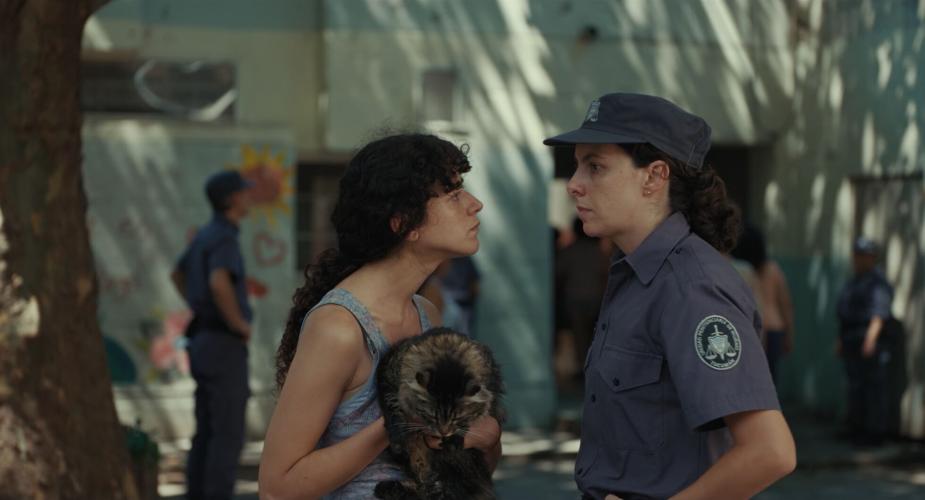


The film is Argentina's official submission for the Oscars. Photo courtesy of Amazon MGM studios
Argentina's talent and filmmaking made an appearance in Los Angeles, the entertainment capital of the world, to present and introduce “Belén,” a film about abortion and women's rights, solidarity and the unstoppable movement for justice and bodily autonomy.
“Belén” is Argentina's official submission for the Best International Feature Film category of the 98th Academy Awards.
Last week, the Women’s March Foundation (WMF) hosted a special screening of “Belén” in Beverly Hills. After the screening, the film's director, writer and protagonist, Dolores Fonzi, Emiliana Guereca, president of the WMF and civil rights leader Dolores Huerta hosted a conversation on global abortion criminalization and the urgent need for reproductive justice in the United States.

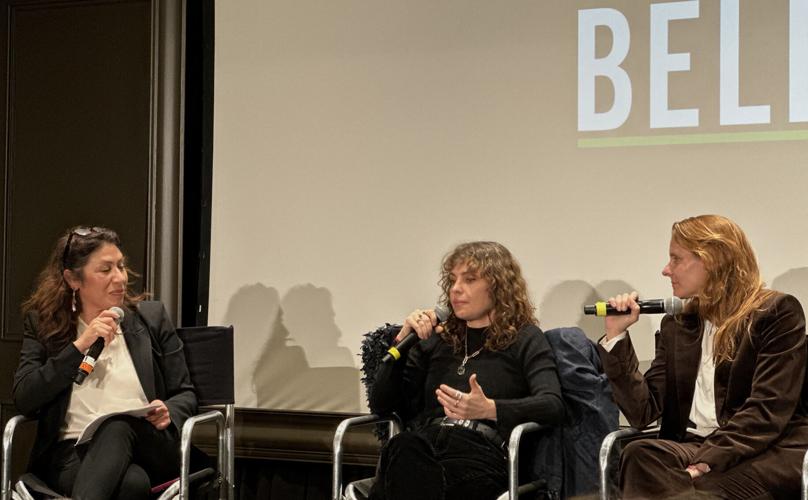
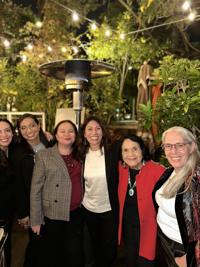
(left to right) Emiliana Guereca, Dolores Fonzi and film producer Leticia Cristi. Photo by Brenda Verano
“We know this story is not exclusive to Argentina. Even as we sit here now, there are countries in Latin America where women are being imprisoned because they may have had an abortion or a miscarriage,” Huerta said during the screening's opening statements. “We say, ‘Well, that won't happen in the U.S.,’ Well, it is happening. We know there are some states like Texas and other Southern states that are putting barriers to women's right to have an abortion.”
The film, which made its official debut in the U.S. last month, tells the true story of a 25-year-old woman in Argentina who, after arriving at a hospital with severe abdominal pain in 2014, was wrongfully accused of having an illegal abortion, handcuffed to her hospital bed and sentenced to eight years in prison—despite no DNA evidence and a deeply flawed investigation.
More than Belen’s time in prison, the film, based on Ana Correa's book “Somos Belén,” also captures the story of Soledad Deza, played by Fonzi, the fearless lawyer who takes on the highly controversial case and comes face-to-face with a corrupt, classist and patriarchal legal system.

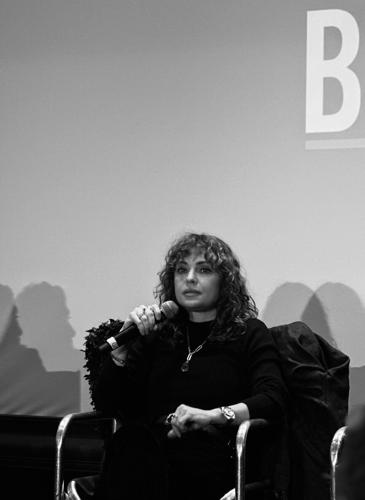
Dolores Fonzi is the film's director, writer and protagonist. Photo by Brenda Verano
The real-life Belen remains in anonymity in Argentina, but Fonzi said she was a big help and contributor to the direction of the movie and the overall message. “For me, it was a gift to have the opportunity to show this story,” Fonzi said. “I already knew about the case. I met the real Belén and the real Soledad Deza when the book was released and then they collaborated with us in all of the process of the movie.”
At that time, Belén’s case sparked massive protests, which helped fuel Argentina’s Green Wave movement for reproductive justice. The movement successfully pushed for abortion legalization, with a landmark law passed in December 2020 and effective in January 2021, allowing abortion on request up to 14 weeks of pregnancy.
Despite this, Fonzi said that reproductive rights in Argentina are not perfect. “They have not taken [the right to abortion] away for now, but they took the resources and supplies, so women have to pay for the medicine, which is about 20% of minimum wage. They have not prohibited the law, but they are putting up a lot of obstacles.”

Belen played by Camila Plaate (left). Photo courtesy of Amazon MGM studios
Guereca said the film's story is not a distant history.
“Reproductive freedom is the defining fight of this generation,” Guereca said. “Belén’s story reminds us what happens when governments police women’s bodies. It’s the same battle we are fighting here in America.”
In 2022, the U.S. Supreme Court overturned Roe v. Wade, the case that established a woman's constitutional right to an abortion based on the right to privacy under the Fourteenth Amendment.
But more than two years ago, in the case of Dobbs v. Jackson Women's Health Organization, the court ended nearly 50 years of federal constitutional protection for abortion rights and returned the authority to regulate or ban abortion to the government instead of the person's individual and autonomous decision.
“The ruling in Dobbs v. Jackson Women’s Health Organization abandoned nearly 50 years of precedent and marked the first time in history that the Supreme Court has taken away a fundamental right,” the Center for Reproductive Rights stated.
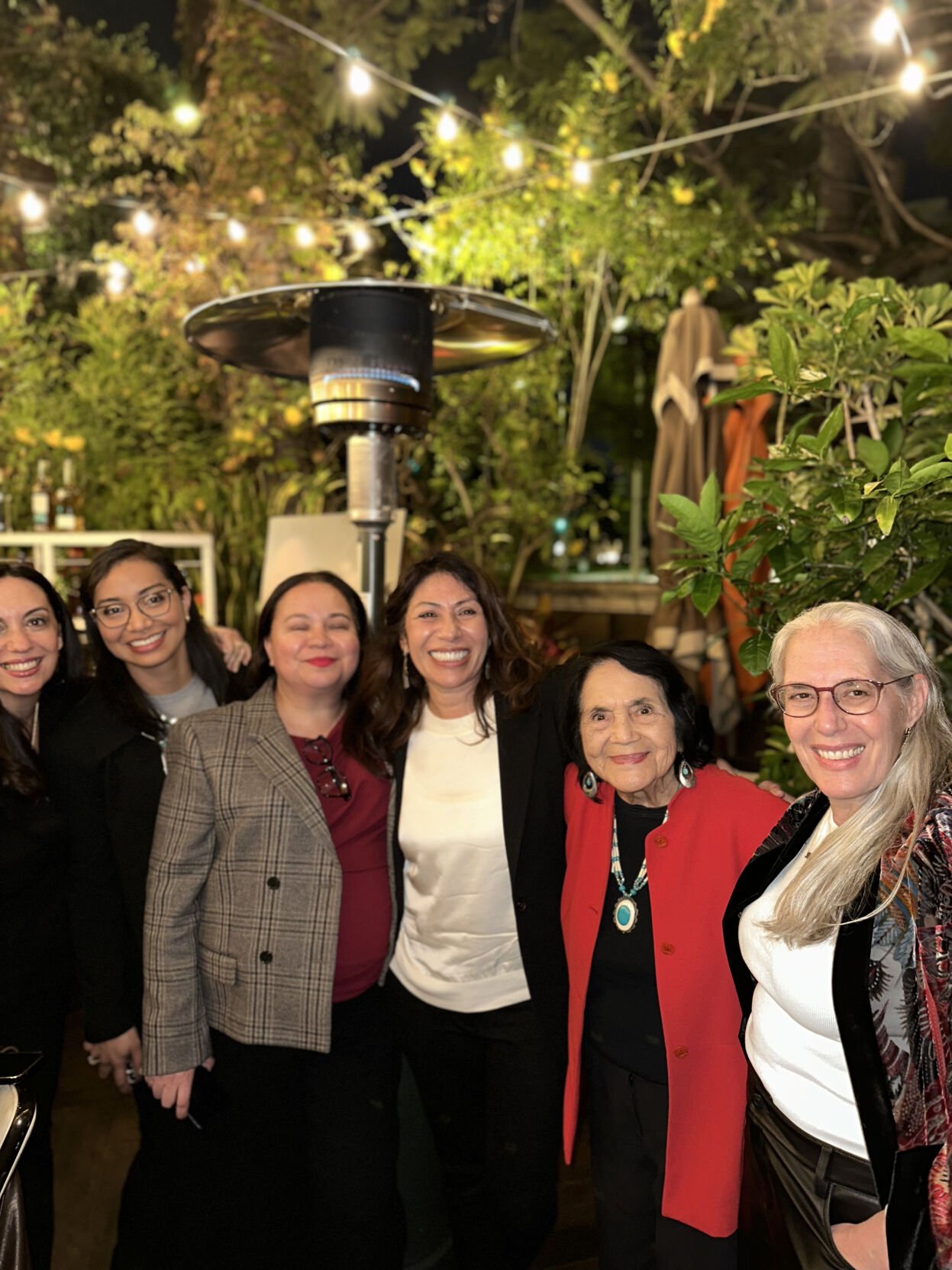
(Middle) Emiliana Guereca and civil rights leader Dolores Huerta with friends and colleagues at the film screening. Photo by Brenda Verano
Today, without any federal standard regarding abortion access, the right to abortion is decided through individual states, meaning that the states set their policies to ban or protect abortion. In states like Alabama, Arkansas, Idaho, Kentucky, Louisiana, Mississippi and Oklahoma, among others, abortion is completely banned and prohibited.
“We reached out to Argentine women as Roe fell in 2022. We looked at Argentinian women and saw how they [did] it. In 2020, abortion was legalized in Argentina and I firmly believe it has to do with continuing to tell the stories,” said Huerta. “This is a continuous fight,” Huerta said. “Unless women are completely liberated in every way, shape or form, we will not have special justice anywhere.”
The film is in Spanish with English subtitles and was shot in Tucumán, Argentina. It’s now available through Amazon Prime Video.







(0) comments
Welcome to the discussion.
Log In
Keep it Clean. Please avoid obscene, vulgar, lewd, racist or sexually-oriented language.
PLEASE TURN OFF YOUR CAPS LOCK.
Don't Threaten. Threats of harming another person will not be tolerated.
Be Truthful. Don't knowingly lie about anyone or anything.
Be Nice. No racism, sexism or any sort of -ism that is degrading to another person.
Be Proactive. Use the 'Report' link on each comment to let us know of abusive posts.
Share with Us. We'd love to hear eyewitness accounts, the history behind an article.