
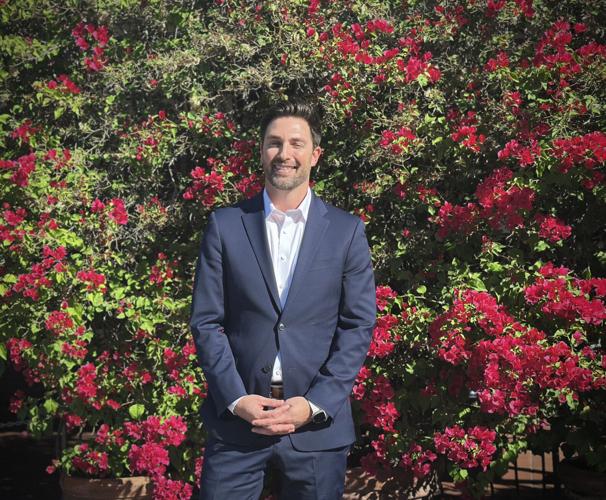



Ian Calderon has officially entered the already saturated 2026 race for California governor. Photo by Brenda Verano
Through a “new generation" campaign theme, Ian Calderon, the former leader of the California State Assembly, has officially entered the already saturated 2026 race for California governor.
If elected, the 40-year-old could become one of the youngest governors in the Golden State’s history, after Jerry Brown, who entered his first term in office at 36 years of age.
Before taking a break from politics to focus on being a parent and husband, he was the first millennial elected to the California State Assembly in 2012, representing Southern California. In 2016, he became the state's youngest assembly majority leader.
Today, the Latino Democrat, born in Whittier and raised in Montebello and East Los Angeles, returns to politics, aiming for the state's top executive position.
He said his decision to run for governor came from his role as a parent and worrying if California could become a state where his kids could live and succeed. “I decided to run for governor in 2026 because I want to know that my kids, my family and all of our families have a future in this state,” he told CALÓ News.
New leadership
Calderon, a California State University, Long Beach alumnus, said that despite joining a race with a large crowd of big-name Democrats, including former state Senate president, Pro Tem Toni Atkins, former representative Katie Porter, former U.S. Health and Human Services Secretary Xavier Becerra and former L.A. Mayor Antonio Villaraigosa, among others, he feels confident in his experience and approach to bring a new generation of leadership to the state.
“Everything important to me rests on the future of this state and who the next governor is going to be. There is a generational shift in leadership that's occurring; it's the passing of the baton of leadership to the next generation that's ready to step up and lead,” he said. “When I take a look at the field of candidates that I am running against right now, I see them as representing a different generation of politics and governance. I believe that I'm the one who represents something that's new, something that's different. I don't think that we're going to solve our challenges by continuing to elect the same people with the same solutions; it has to be something new. It has to be something different.”
Priorities
Calderon said his campaign for governor is rooted in issues prevalent in many California communities, such as making a pathway for homeownership, lowering the cost of living, public safety and government accountability.
“My priorities as governor are very simple: [creating a] pathway to home ownership. The best way to freeze our rent is to make sure that we're getting people into homes,” he said.
In California, only around 55-56% of Californians own their homes, a percentage significantly lower than the national average due to extremely high housing costs. According to a recent report by the Legislative Analyst’s Office, California home prices have long been and continue to be much more expensive than the rest of the U.S.
The study showed that payments for a mid-tier home were nearly $6,000 a month in June 2024, an 84% increase since January 2020 and payments for a bottom-tier home were over $3,600 per month, an 89% increase since January 2020.
Latinos
Although growing, the Latino homeownership rate is far behind the white homeownership rate and the Asian homeownership rate, something Calderon hopes to change.
Calderon said he is well aware of the responsibility of leading a state with around 16.1 million Latinos in 2024, making it the largest Latino-populated state in the U.S.
“My promise to the Latino community is to never forget you, to not ignore you and actually do something about the challenges that you're facing. [Latinos] want to know that [they] can buy a house, that affordability is something that's just not talked about by politicians, but somebody actually does something about it,” he said. “The community that I represented in the State Assembly was 70% Latino. I know the challenges that our communities face.”
When it comes to affordability, Calderon said childcare is another of his top priorities. “We want to lower the cost of childcare because it's too expensive in this state. In L.A. County, [childcare] will run you an average of $1500 to $2,000 [a month],” he said. “Under my plan, we'll cap it so that nobody is paying over $500 a month on childcare costs.”
Calderon said a big part of the unaffordability prevalent in California is due to “unaccountable government.”

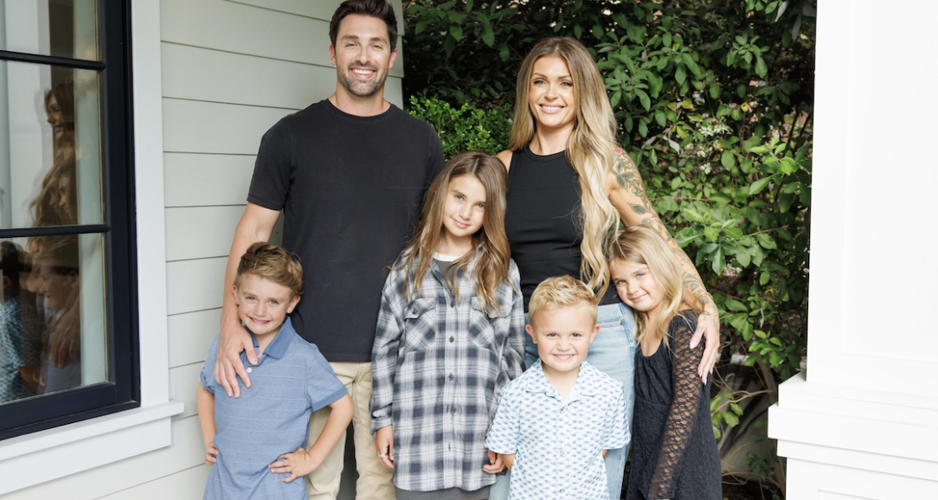
Ian Calderon, his wife and kids. Photo courtesy of Ian for Governor
“We spend a lot of money to solve our challenges, but we're seeing very little benefit. What we're seeing is people in the middle making a lot of money,” he said. “We cannot have a better California where we can have affordable childcare unless we have an accountable government and root out corruption.”
He said he feels confident in transforming these campaign visions into real bills if given the opportunity, due to his prior experience in the assembly, where he helped pass measures such as raising the state minimum wage to $15 by 2022, reducing greenhouse gas emissions, and authorizing legislation that allowed terminally ill Californians to try experimental treatments.
Budget
When asked about one of the most extensive and important tasks as governor—creating, presenting and administering the state's budget—Calderon said he plans to create a spending plan that is rooted in not raising taxes but instead creating more revenue sources.
If elected, he, or any other candidate, will have to tackle California’s year-long, cyclical budget process, where, along with the legislature, he will create a balanced spending plan by the annual June 15 deadline for the fiscal year starting July 1. The state’s budget involves agency proposals, legislative review, negotiations and a final signature from the governor.
“I know what goes into these negotiations. I know what it takes to actually balance the budget because we had to do that when I was in the legislature,” he said.
The state is expected to face a nearly $18 billion budget deficit in the new fiscal year due to higher-than-expected spending.
“Both the California and U.S. economies currently face significant headwinds. Borrowing costs, a key factor in business expansions and major consumer purchases, remain high. New tariffs on imports into the U.S. are creating cost pressures for businesses and consumers. Despite this, income tax collections have been strong in recent months, growing at double‑digit rates,” the Legislative Analyst’s Office stated in November.
Calderon said he hopes to create a budget that is not dependent on the federal government.
“There are a lot of corporate and foreign investors that come in and buy up all of our homes and price us out of our communities. I'm going to stop that. We're going to find ways to invest money that generates different revenue so that we're also not completely dependent on the federal government. I know [Californians] don’t want to feel like [they’re] under anybody's thumb, especially the federal government and this administration,” he said. "We're not going to just keep cutting and expecting to raise taxes, and that's how we're going to solve our budget deficits. We already pay too much in taxes. It's too expensive to live in the state, so we don't need more costs. We need creativity and innovation that's going to allow us to generate revenue from the money that we already have, and that is what's going to make us more secure.”
The father of four also comes from a family of politicians. His father, Charles Calderon, was elected to the Assembly in 1982. Two of his uncles also served in the Legislature, both of whom faced charges of financial impropriety.
In 2016, former California State Senator Ronald S. Calderon was sentenced to three and a halfyears in federal prison after pleading guilty to a federal corruption charge and admitting to accepting tens of thousands of dollars in bribes from hospital owners and undercover FBI agents. That same year, California State AssemblymemberThomas M. Calderon was sentenced to 10 months in custody for his conviction on a money laundering charge.
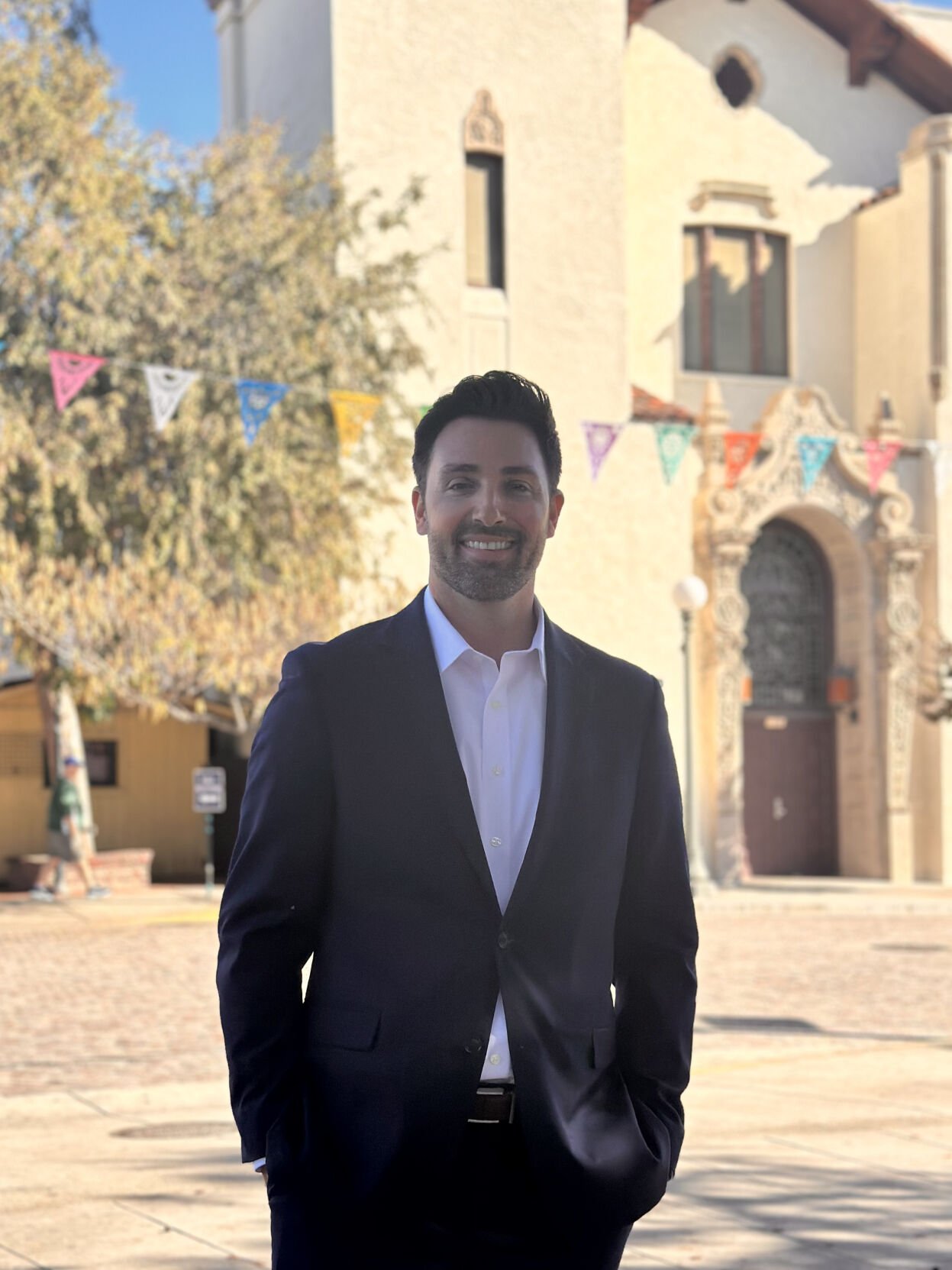
Ian Calderon at Placita Olvera in Los Anegeles. Photo by Brenda Verano
In a 2013 article, the L.A. Times published an article titled “For the Calderons, politics and its money are the family business,” referring to the family as “a political dynasty that has spanned three decades.”
But Calderon said his family life outside of politics is what has kept him grounded. In 2020, Calderon stepped away from politics to focus on raising his family. “I had a lot of power at the height of [my career], and I left. I gave it up to go and be with my family, be with my wife to raise our kids. That's something that somebody in my position never does,” he said. “But because again, I fear for my own family's future in this state, that's why I'm coming back. That's the type of leadership that I think Californians are expecting out of their next governor and why I best represent it.”
Immigration
At the start of June, Immigration and Customs Enforcement (ICE) raids began to hit multiple locations in Los Angeles, triggering a rapid response from communities and a spontaneous protest in Downtown Los Angeles.
Since then, ICE has detained over 10,000 people in L.A., according to the Department of Homeland Security (DHS) recent reports, many of whom did not have any criminal convictions.
“Our communities really have been devastated by our federal government's fight to try to tear our communities apart and harm our families and our friends,” Calderon said. “When President [Donald] Trump was running, he talked about making sure we were getting violent criminals off our streets. I don't think any reasonable person would have a problem with that if that's what the federal government was focused on, but I knew better. We knew that that’s what they were saying, but that wasn't what they were going to do. We knew that they were going to go after our families.”
Calderon also denounced the aggressive tactics and use of force by ICE and U.S. Border Patrol agents during enforcement operations across the U.S., where agents carry military-style weapons, hide their identities and at times smash car windows, tackle people to the ground or deploy tear gas and chemical agents in residential areas.
“I don't care where you are on the political spectrum. That's wrong. That is against our values. We're a compassionate state and that isn't a good representation of who we are,” he said. “We need to continue to make sure that we're getting the word out as to how we can protect ourselves and that the state is there to back us up. My administration is going to fight like hell to make sure that that doesn't continue and we put an end to it and make people know that what is happening is wrong and we're not going to put up with it.”
With Gov. Gavin Newsom's term ending in January 2027, the race for the state's highest position, paying $242,000 a year, remains open. Candidates will have until early March 2026 to file their paperwork ahead of the June 2, 2026, primary.







(0) comments
Welcome to the discussion.
Log In
Keep it Clean. Please avoid obscene, vulgar, lewd, racist or sexually-oriented language.
PLEASE TURN OFF YOUR CAPS LOCK.
Don't Threaten. Threats of harming another person will not be tolerated.
Be Truthful. Don't knowingly lie about anyone or anything.
Be Nice. No racism, sexism or any sort of -ism that is degrading to another person.
Be Proactive. Use the 'Report' link on each comment to let us know of abusive posts.
Share with Us. We'd love to hear eyewitness accounts, the history behind an article.