
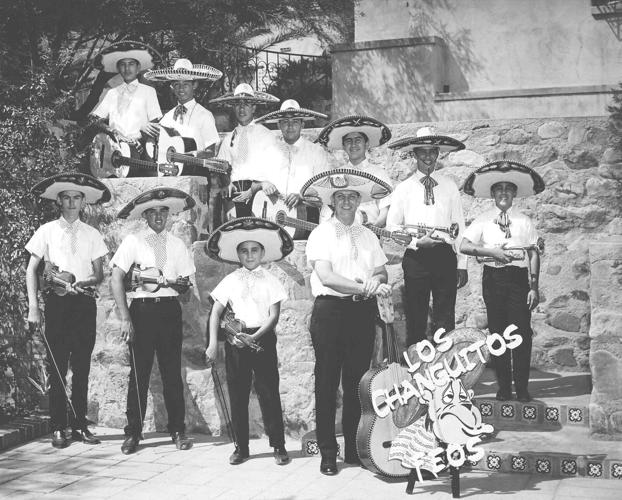




Los Changuitos Feos was the first youth mariachi in the U.S., started in Tucson, Ariz. (Los Changuitos Feos)
TUCSON – The story of how Los Changuitos Feos started and lived on is a story of dedication, resilience and triumph — and it’s now being told on the big screen.
The documentary “Ugly Little Monkeys: The True Story of Los Changuitos Feos de Tucson,” produced and co-directed by Tucsonan David E. Valdez, tells the history of Los Changuitos Feos, the first youth mariachi group in the U.S.
The mariachi was started in the basement of a Catholic church in Tucson in 1964 by Fr. Charles Rourke, an Irish priest and musician who overheard mariachi playing and fell in love with the music. He recruited a group of Chicano boys, ages nine to 14, and started teaching them to play mariachi music.
The film dives deep into how the young group popularized the Mexican genre across the U.S. and, eventually, the world, while also covering some of the darker parts of their history, including sexual abuse allegations against Rourke.
It took some time for the director to gain the original members’ trust and get them to agree to participate in the documentary. He also had to be patient with the Los Changuitos Feos organization, now an educational nonprofit. It took them three years to agree to work with him.

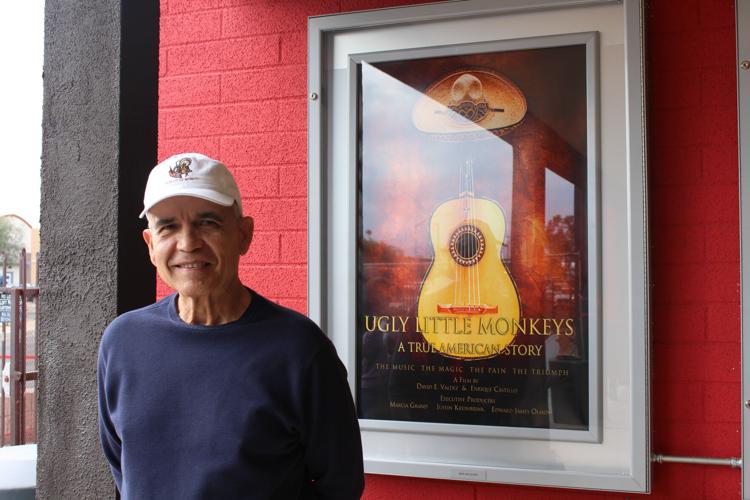
Tucsonan David E. Valdez poses for a photo in front of the poster of the documentary “Ugly Little Monkeys: The True Story of Los Changuitos Feos de Tucson" that he produced and co-directed.
“People have to know the resilience that they went through, the agony,” he said. “And they still continued because they believed in the music and in the culture, regardless of what the priest was doing. And to this day, todavía están tocando [they’re still playing], almost 63 years.”
It took David Ruiz, one of the original trumpet players, about a year to agree to be interviewed.
“The human experience is that we want to remember the really positive things and kind of put away the darkness, but for us, it's difficult to do,” Ruiz said. “The two were so intertwined.”
It was his wife who convinced him to be vulnerable enough to share the whole story, Ruiz told CALÓ News during the film premier party on Friday at The Loft Cinema.
What resulted was a deep and honest conversation with the mariachi’s original members.
“This is a significant film,” Ruiz said. “It tells a very deeply personal story. We're incredibly proud of what we were able to accomplish and we were okay, in the end, telling the entire story.”
Film unearths vulnerability and resilience of original members
What started in a predominantly Mexican American barrio in Tucson in 1964 would soon become bigger than any of the young boys imagined.

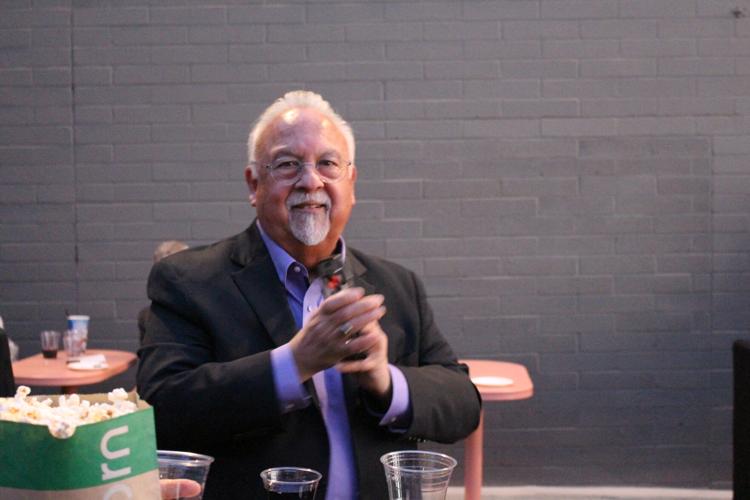
David Ruiz, one of the original trumpet players of Los Changuitos Feos mariachi of Tucson, Ariz.
As the group became more well-known, they were invited to play on bigger stages, including the White House for Nixon’s presidential inauguration. They traveled to Mexico to play for the Sauza family, then-owners of the tequila brand. They opened for Johnny Cash at the Kentucky State Fair and auditioned for the Ed Sullivan Show.
The creation of the Tucson International Mariachi Conference is credited in large part to the group.
But as popularity grew, so did Rourke’s alcoholism, leading los Changos — as the mariachi members were commonly known — to have to defend themselves from his unwanted advances. But they never told anyone about the harassment, not even each other. In the documentary, many of them say they didn’t think people would believe them at a time when the Catholic church and its leaders were highly regarded.
Despite the alcoholism and abuse allegations, many of the members give Rourke credit for building up a successful mariachi group. Without him, they say, youth mariachi programs in schools wouldn’t exist and the mariachi conference likely wouldn’t have happened.
Others, however, like Wilfred Arvizu, who wrote the book, “Bless Me Father For You Have Sinned; The Behind the Curtain Story of Los Changuitos Feos & Their Founding Father,” prefer to give the hardworking boys credit for the group’s success and influence.
“We see some of them to have a different perspective over the number of years in how they view their experience with the priest,” said Enrique Castillo, producer, co-director and writer. “Some forgive, some don’t. Some are ambivalent, but all very truthful and very honest.”

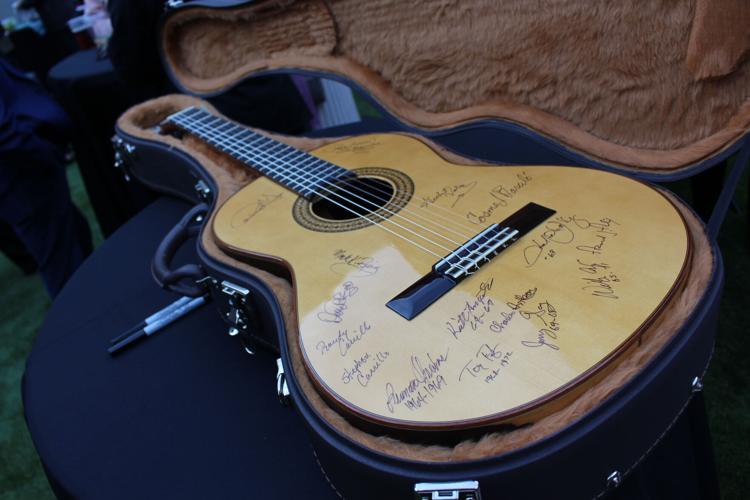
Guitar signed by several original members of Los Changuitos Feos mariachi of Tucson, Ariz.
Castillo said he hopes they conveyed the story with dignity and respect, and that the documentary helps acknowledge that mariachi is as American as jazz, rap or R&B.
In the film, the late Don Ruben Fuentes, a famous Mexican violinist and composer who contributed greatly to mariachi music, gives the Changos credit for popularizing mariachi.
“I say it's the seed of children's and older kids' love for mariachi. Nobody thought before that they would like mariachi,” Fuentes says in Spanish, his rough voice reflecting his age.
Fuentes died in 2022, months after he was interviewed for the film.
“To hear Don Ruben Fuentes, the godfather of mariachi music — he's like the John Williams of the genre — he attributed the success of mariachi music in the United States and throughout the world to us, and that makes me proud,” Ruiz said, adding that this story is about resilience and the pursuit of their own creativity.
Los Changos: From past to present
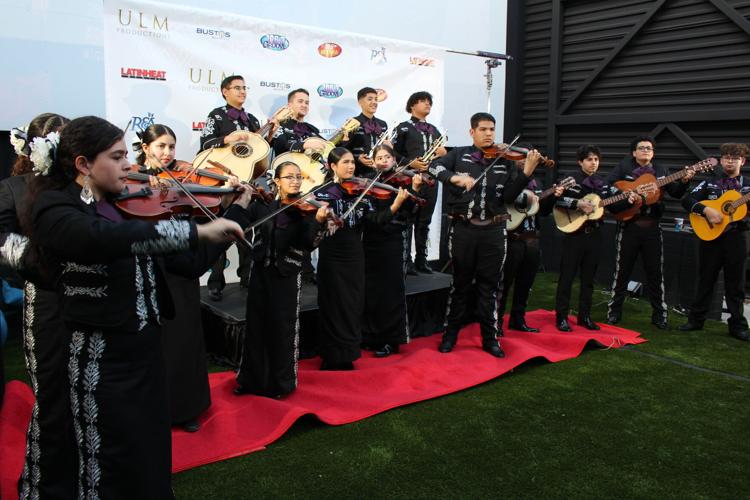
On Friday, at the party ahead of the documentary’s premier, the current iteration of Los Changuitos Feos, 15 young musicians, played for the crowd at The Loft Cinema.
The trumpets pierced through the chatter, along with the violinists’ bright notes and the strumming of guitars, the vihuela and guitarrones. Behind them, a projector showed behind the scenes footage of the making of the documentary — students practicing their music, the original Changos talking in the band room, scenes from the 50th anniversary of the mariachi, where past Changos including some of the original members, performed on the street in downtown Tucson during the Tucson Meet Yourself festival.

The current members of Los Changuitos Feos mariachi perform during the pre-premier party of the documentary celebrating the legacy of the original members in Tucson, Ariz.
Past and present collided that evening, signaling the mark that the original band members left on the community, despite many having moved on from the music scene.
Richard Carranza, former chancellor of the New York City Department of Education was a Chango. So was Jerry Gay, who later went on to study aerospace engineering and help design, build and launch the NASA Hubble Space Telescope. Former Arizona State Senator Frank Felix was also a Chango. Ruiz has been a practicing physician in Vancouver, Washington for 45 years.
Gilbert Velez, one of the original guitarists of the group, helped found Mariachi Cobre after he left the Changos. He was also the mariachi director at the University of Arizona for 16 years and taught mariachi to Nogales High School students for 20 years. But Velez doesn’t teach kids mariachi, he teaches “success through mariachi,” he says, something he and others learned as teenage musicians themselves.
“This was a magnificent group of people who took something that could have been crippling and transformed it into success of all kinds throughout the rest of our lives,” Ruiz said.
“Ugly little Monkeys: The True Story of Los Changuitos Feos de Tucson” will be playing at The Loft Cinema in Tucson through Thursday, Feb. 26.
Stephanie Casanova is an independent, bilingual journalist from Tucson, Arizona, covering community stories for over 10 years. She is passionate about narrative, in-depth storytelling that is inclusive and reflects the diversity of the communities she covers.









(0) comments
Welcome to the discussion.
Log In
Keep it Clean. Please avoid obscene, vulgar, lewd, racist or sexually-oriented language.
PLEASE TURN OFF YOUR CAPS LOCK.
Don't Threaten. Threats of harming another person will not be tolerated.
Be Truthful. Don't knowingly lie about anyone or anything.
Be Nice. No racism, sexism or any sort of -ism that is degrading to another person.
Be Proactive. Use the 'Report' link on each comment to let us know of abusive posts.
Share with Us. We'd love to hear eyewitness accounts, the history behind an article.