
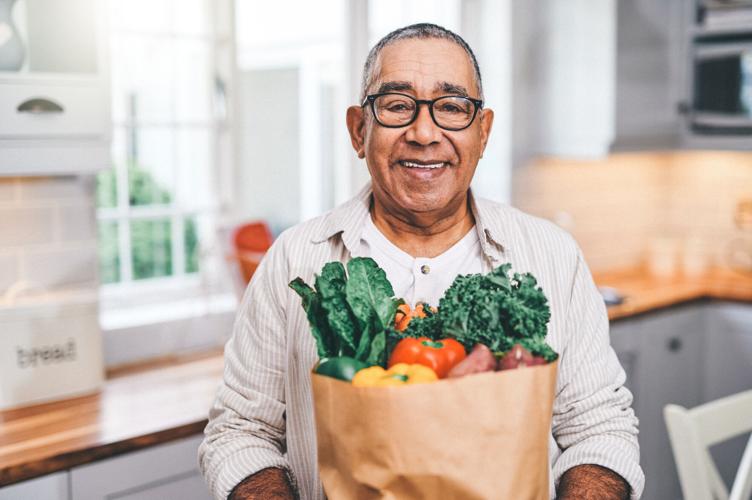




Let food be thy medicine. Photo by Charday Penn
As March is National Nutrition Month, AltaMed Health Services is raising awareness about the importance of healthy eating.
Eating a healthy, balanced diet is important for everyone, but it can be challenging for many individuals. Having access to healthy foods and their cost are just two big hurdles.
According to a study by HelpAdvisor that analyzed the U.S. Census Bureau Household Pulse Survey, the average family in America spends about $270.01 at the grocery store per week and about $1,000 per month. Also, the study found that California topped the list of the most expensive places to buy food, with a household average of $297.72 per week more than the average for the 48 continental states.
AltaMed Health Services is one of the nation’s largest federally qualified community health centers, with more than 60 health centers in Los Angeles and Orange counties. AltaMed serves more than 500,000 people, regardless of their ability to pay. About 80% of AltaMed’s patient demographic is Latino and on Medi-Cal.
Cesar Sauza is a registered dietitian and clinical nutrition manager at AltaMed. He is in charge of seeing patients with all types of medical conditions like diabetes and high blood pressure and he also gets to work with kids as well.

Photo courtesy of Cesar Sauza
Sausza believes that healthy eating is important in every community because it’s really costing people and the country a lot of money. “We know that chronic diseases are one of the leading causes of death and disability in America, and they’re also the leading drive of healthcare costs. And we know that nutrition in our lifestyle has a direct correlation with chronic diseases,” he said.
His advice on how Latinos can prevent and manage any of these conditions is the following: eating healthy, being active, drinking enough water and sleeping well. “A healthy diet is going to be one that's rich in whole foods. Things like fruits, vegetables, whole grains, nuts and seeds, and also looking at protein like chicken, turkey, plant-based protein, beans, soy beans and lentils,” he said.
Sauza also said that all of the foods he mentioned are the ones that contain good nutrients for our body and that are needed for our body to thrive. “Ultra-processed foods, like fast food, junk food, chips and sodas, are most likely to raise our sugar levels, causing inflammation and ultimately chronic diseases.”
Adults with diabetes and food insecurity are 40% more likely to have poor glycemic control. Therefore, there is an urgent need to understand the collective impact of chronic diseases and the associated health disparities, according to the National Library of Medicine
In another report, in 2022, the White House announced new initiatives to address hunger, food insecurity, and food accessibility, thereby acknowledging that these food-related issues impact millions of people in the United States, especially low-income families, rural communities, and racial and ethnic minorities.
Sauza believes that the more individuals eat inflammatory foods, the more it increases the risk of chronic diseases. Aside from developing healthy eating habits, many low-income Latino’s suffer from food insecurity.
Low-income people of color are among the most impacted by food insecurity. In Los Angeles County, every 3 in 10 households experienced food insecurity in 2023, according to a USC study published last September. The study found that food insecurity because of limited money or other resources disproportionately impacts Latino communities.
Our community is not only impacted by food insecurity and food deserts but also by inflation. According to Sauza, there are some ways to maintain a healthy diet on a budget. “The first thing they should do is plan what they are going to eat, “ he said. “Because going to the store without a plan is going to be a sure way to spend more than what is needed. So, planning for the week is the first thing to keep in mind, as is knowing how many people are going to eat and also planning the ingredients that are going to be needed.”
Another great tip that he gave is to use the same ingredients for other dishes so that more money doesn’t need to be spent. He also said that buying in bulk, doubling recipes and freezing leftovers is another way to save money while keeping healthy.
Additionally, he adds that there are a lot of stores that are considered discount stores and offer great deals when it comes to buying produce.
To Sauza, it’s important to raise awareness among the Latino community and all communities. ”It’s crucial to talk to each other about trying to improve health. I think our community, the Latino community, just grew to think that more was better because you do get to hear that the more you eat, the healthier you're going to become, and we know that’s not the case because if it was we wouldn’t see such high rates of these conditions of obesity,” he said. “I think it’s time that the younger Latino population really break these ideas that we’ve had since our childhood and start promoting more fruits and vegetables and realize that they can be perfectly fine and that we don’t have to rely on things like chips and soda.”














(0) comments
Welcome to the discussion.
Log In
Keep it Clean. Please avoid obscene, vulgar, lewd, racist or sexually-oriented language.
PLEASE TURN OFF YOUR CAPS LOCK.
Don't Threaten. Threats of harming another person will not be tolerated.
Be Truthful. Don't knowingly lie about anyone or anything.
Be Nice. No racism, sexism or any sort of -ism that is degrading to another person.
Be Proactive. Use the 'Report' link on each comment to let us know of abusive posts.
Share with Us. We'd love to hear eyewitness accounts, the history behind an article.