
How do artists respond to injustice?

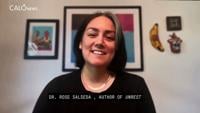
In "Unrest," Dr. Rose Salseda, author and professor of Art and Art History at Stanford, examines how artists have documented, remembered, and reckoned with the 1992 LA Riots. The book is the first to explore the visual art legacy of the riots and their lasting impact on Los Angeles.
Rather than treating the riots as a closed chapter in the city’s history, Salseda traces how artists continue to return to this pivotal moment.
In a conversation with Caló News, Salseda discusses the artists featured in the book, the stories behind their work and the ways art can preserve, challenge and complicate our understanding of history.
Share your experience with the 1992 LA Riots in the comments.
To learn how to access Unrest: Art in the Aftermath of the 1992 Los Angeles Riots, visit rosesalseda.com.












(0) comments
Welcome to the discussion.
Log In
Keep it Clean. Please avoid obscene, vulgar, lewd, racist or sexually-oriented language.
PLEASE TURN OFF YOUR CAPS LOCK.
Don't Threaten. Threats of harming another person will not be tolerated.
Be Truthful. Don't knowingly lie about anyone or anything.
Be Nice. No racism, sexism or any sort of -ism that is degrading to another person.
Be Proactive. Use the 'Report' link on each comment to let us know of abusive posts.
Share with Us. We'd love to hear eyewitness accounts, the history behind an article.