
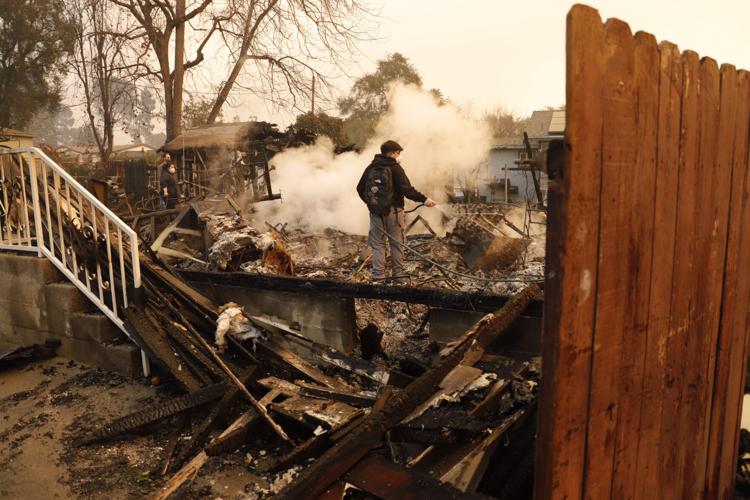
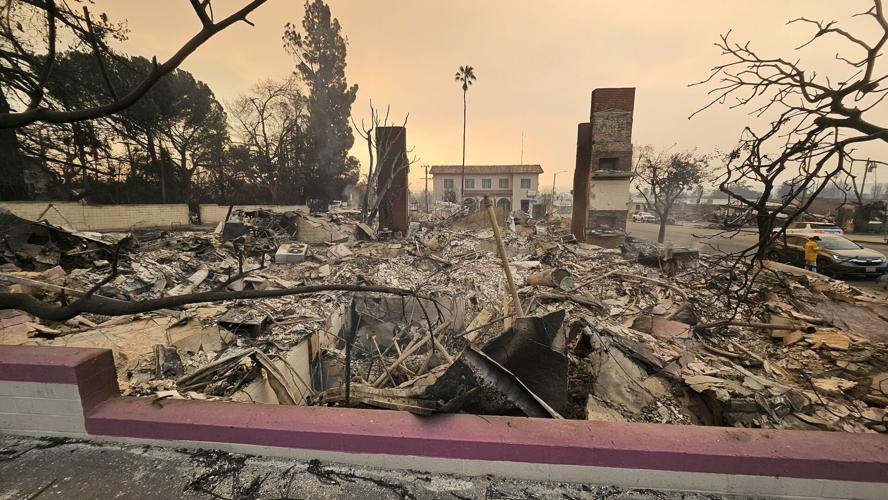


Neighbors and volunteers help extinguish the flames that rekindled in the rubble of some homes in the Altadena area after the Eaton Canyon fire burned through parts of the neighborhood.
On the one-year anniversary of the day historic wildfires ravaged through Los Angeles, California is still working to address the damage caused, support survivors and ensure the state is prepared for the next fire season.
In early January 2025, the Palisades and Eaton fires, the biggest among multiple wildfires that broke out almost simultaneously, severely damaged the affluent Pacific Palisades neighborhood and the predominantly Black neighborhood of Altadena. Since then, lawmakers have passed various laws attempting to speed up the rebuilding process as well as prepare the state for the next inevitable fire disaster.
“As we begin this solemn week, we recognize a hard truth: recovery looks different for every family. Many are rebuilding. Others are still navigating how and whether to rebuild. Some are still grieving the losses of loved ones that will never fade,” said Governor Gavin Newsom in a recent statement. He added, “We see you, and we honor you. California is listening and shaping our recovery around real needs - accelerating rebuilding, supporting mental health, reopening businesses and pressing the federal government to deliver. Our commitment is simple: we will keep showing up, and we will keep doing the work.”
From Jan. 7 until mid-February, a total of 14 fires erupted throughout L.A. County. Over 57,000 acres of land were burned and over 16,000 structures were destroyed, according to the Frontline Wildfire Defense.
L.A. County’s official death count totaled at 31; however, an August 2025 study in the medical journal JAMA estimated over 400 deaths indirectly linked to the fires.

Aftermath of Eaton fire. (Photo by Jacqueline García / CALÓ News)
On Tuesday, the eve of the one-year anniversary of the fires, the governor announced several new initiatives to support survivors.
Streamlined rebuilding process and mortgage relief
In a Tuesday news release, Newsom announced the CalAssist Mortgage Fund, a program that provides grants for three months' worth of mortgage payments, will once again expand eligibility criteria in the next several weeks, opening up the door for even more homeowners to qualify for the mortgage assistance.
In October, CalAssist increased its income limits by $70,000, allowing for more fire survivors to qualify for assistance. In February of 2025, Newsom also introduced a $125 million mortgage relief program for homeowners whose homes were impacted by the fires.
In the same news release, Newsom announced the state had secured commitments from banking industry leaders, including Bank of America, to launch new lending programs that will help survivors of the fires rebuild their homes. Newsom also announced that he will be working with the Legislature, state agencies and private lenders to develop a fund to help more homeowners qualify for construction loans.
Following the fires, Newsom and lawmakers hit the ground running, making sure Californians could start rebuilding as soon as possible. On Jan. 23, 2025, Newsom signed and released a $2.5 billion wildfire recovery package.
Dozens of laws were introduced in the Legislature and signed in a matter of months to streamline rebuilding efforts. Some were aimed at requiring faster coastal permits and expedited local permitting for rebuilt homes and temporary housing.
2,617 rebuilding permits have been issued throughout L.A. County, with 3,487 still under review as of Jan. 5, according to data from the L.A. County Permitting Progress Dashboard.
Investments in communities
On Tuesday, Newsom also announced a $107 million investment in affordable housing communities located in Los Angeles, Bellflower, Claremont, Covina, Santa Monica and Pasadena.
Through the Multifamily Finance Super NOFA fund, nine projects that include a total of 673 affordable rental homes will be built. Survivors of the 2025 wildfires will be offered residence first, followed by other eligible residents. Wildfire survivors have also been given priority on affordable housing waitlists through executive actions taken by the governor.
The new affordable housing communities announced Tuesday will also include 29 homes reserved for veterans.
“We are rebuilding stronger, fairer communities in Los Angeles without displacing the people who call these neighborhoods home,” said Newsom in a statement. “More affordable homes across the county means survivors can stay near their schools, jobs and support systems, and all Angelenos are better able to afford housing in these vibrant communities.”
In addition to the $2.5 billion state relief package, $2.5 billion in Small Business Administration disaster loans were approved and $144.2 million in Federal Emergency Management Agency (FEMA) funds were provided directly to individuals for housing and disaster-related assistance.
The state was also able to provide $10 million of cash assistance to small businesses, non-profits and workers through L.A. County’s LA Region Small Business and Worker Relief Funds.

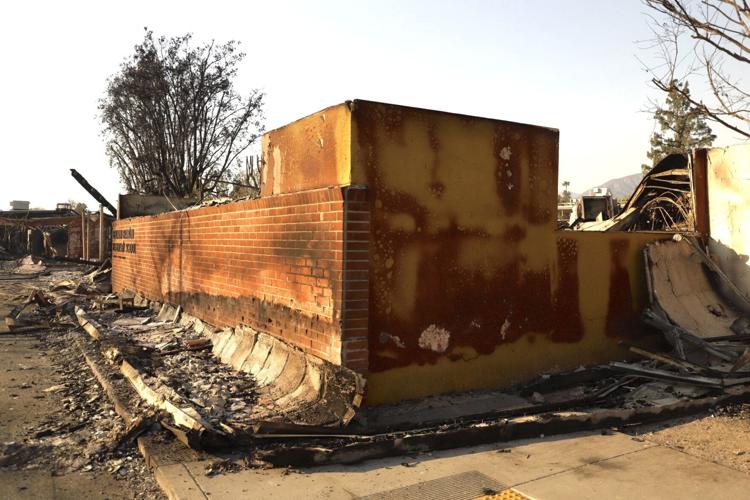
Burned down Elementary school dure to the Eaton fire in Altadena and Pasadena areas on January 10, 2025. (Gisselle Palomera/CALÓ News)
Future disaster response
President Donald Trump has still not advanced long-term disaster funding for survivors to Congress. In a recent letter to the president, Newsom advised that additional federal support is crucial in order to rebuild schools, roads and water systems as well as to develop housing and reopen small businesses that have been forced to close their doors.
As far as in-state work to address potential wildfires, CAL FIRE announced last month that over $62 million in wildfire prevention grants had been awarded to 84 local wildfire prevention projects throughout the state.
To keep L.A. County equipped to handle future fires, the state has also expanded firefighting capacity by adding five new Type-6 fire engines to the L.A. City Fire Department. The new engines, the smallest and “most-manueverable units,” will form a “strike team” tasked with responding quickly to urban and wildland areas, according to a recent press release.
The state also released LiDAR maps, which use light detection and ranging to track forest and vegetation conditions for over 100 million acres of land; this new data provides a high-resolution view of statewide conditions that can be used to inform prevention efforts. The State Legislature allocated $30 million for the initiative.
“The Los Angeles fires showed us we need to move faster and smarter,” said Newsom in a statement. “We’re streamlining projects that used to take years, deploying new technology to target our efforts where they matter most and investing record funding in prevention. We’re turning hard lessons into concrete action and delivering results on the ground.





(0) comments
Welcome to the discussion.
Log In
Keep it Clean. Please avoid obscene, vulgar, lewd, racist or sexually-oriented language.
PLEASE TURN OFF YOUR CAPS LOCK.
Don't Threaten. Threats of harming another person will not be tolerated.
Be Truthful. Don't knowingly lie about anyone or anything.
Be Nice. No racism, sexism or any sort of -ism that is degrading to another person.
Be Proactive. Use the 'Report' link on each comment to let us know of abusive posts.
Share with Us. We'd love to hear eyewitness accounts, the history behind an article.