
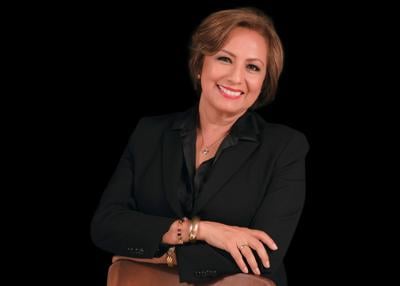


Proud of her Mexican roots, Rosario Marín—the first migrant woman to hold the position of Treasurer of the United States—spoke to a group of Latino scholarship recipients in Los Angeles, California, about education and success.
Marín said Mexico requires the support of other nations to address some of its challenges and warned that, in a democracy, it is unhealthy to concentrate all power in a single political party. She made these comments at the Becas Alas event on December 12, 2025, weeks before the Trump Administration deposed Venezuela's President Nicolás Maduro.
She also addressed how achieving the American Dream has become increasingly difficult for migrants, a phenomenon she also linked to the concentration of political power in one party. Marín further commented on the global hegemony maintained by the United States, which, in her view, is set to continue.
In contrast to her extensive monologue before the audience, Marín carefully chose her words when later questioned in a follow-up interview about the many problems currently facing Mexico’s government.
Marín is a clear example of the American Dream. Yet beyond an inspiring life story, she also offered her views on Mexico’s current situation.
Precisely because of her deep knowledge of politics and public administration, more direct, in-depth and less evasive answers were anticipated. From the outset, however, she issued a caveat:
“I always see Mexico with the eyes of the heart, and I don’t see things as they are, but as they can be.”
This interview has been edited for length and clarity.
After seven years of a new government, what does Rosario Marín perceive in economic terms for Mexico?
“Mexico, obviously, I always see with the eyes of the heart. I don’t see things as they are, but as they can be. Mexico has greatness because of the greatness of its people. Mexicans, no matter the challenges they face, time and again always move forward. Mexico is an industrious, highly creative country; Mexican ingenuity allows people to make the best of any situation. I am not afraid of the adversities that may exist in Mexico right now—whether economic or related to drug trafficking. Mexicans will overcome them. When you look at Mexico’s history—where we come from, where we have been, the ups and downs—Mexico keeps prospering. Mexico continues to give and to open its doors to tourism. So many people visit Mexico; if I remember correctly, Mexico is the fifth most visited country in the world. It may face challenges, but what is best for Mexico is Mexicans themselves.”
But what lies ahead economically? For seven years there has been a polarized narrative from both the ruling bloc and the opposition. As someone with a statesman’s vision, what do you perceive?
“To be very honest, I see opportunities—I see ‘yes, it can be done.’ I receive a great deal of information about what is happening in Mexico, and I see, again and again, that despite the problems, industrialists, merchants, workers and people in rural areas step up and move forward. I don’t minimize the challenge; these challenges are real. Certainly, the president (Claudia Sheinbaum) inherited a difficult economic situation, but I believe that with the support of all sectors, she will move forward. I hope so for the good of Mexicans—and certainly for Mexican women.”
Would you dare to characterize the government of the so-called Fourth Transformation (4T)?
“Look… no. I do see challenges, but I also see many opportunities. I believe the president, her cabinet and everyone involved are trying to make the best of a situation they inherited—a difficult one—but they are pushing forward. Governing is not easy. I can tell you that from experience at the local, state and federal levels, it’s not easy. The only thing I can do is wish all governments—mayors, governors, and presidents—the best of luck.”
When you say President Sheinbaum did not inherit an easy government, are you referring to what Andrés Manuel López Obrador left behind?
“Well, any leader who comes in has to deal with decisions made previously. I say this as a former mayor and as someone who worked in two state administrations and with President [George W.] Bush. You never inherit a perfect country, state or city. Obviously, she inherited a difficult situation economically, but I think she is dealing with it in the best way she can.”
Beyond the economy, what do you see as the main challenges … violence?
“Violence is very difficult. Both the economy and violence are not easy to resolve; if they were, they would have already been fixed. The president inherited a very difficult situation, but I hope that with the help of many people and other governments, she can move forward.”
What is your view on the negotiations surrounding the U.S. – Mexico – Canada Agreement (USMCA)?
“The USMCA must be preserved at all costs. It has benefited all three countries enormously. While there have been ups and downs over the 30 years the agreement has existed, it must be maintained and improved. For the good of all three countries, we need to stay united.”
Do you believe there is pressure from the U.S. president on Mexico regarding the USMCA?
“Look, the current president has made the situation a bit more difficult, but I hope the vision that existed from Reagan through Presidents Obama and Biden continues, because it was always a trilateral vision. That was the idea, and I hope it remains so.”
Regarding the situation in the United States—particularly in California—the so-called American Dream seems increasingly out of reach for migrants and other economic sectors, even for people holding two jobs. What is happening?
“This will end, I hope, as soon as next year, when there is a new Congress and a new Senate. If not, we will have to wait until the 2028 elections. I hope things will ease once a new Congress takes office. In the meantime, we have to endure it. If a new Congress comes in, the President will no longer have carte blanche. Right now, the president has a totalitarian majority, but if Congress changes in the midterm elections, that total control will be gone.”
On totalitarian congresses: in Mexico, the president has an absolute majority in Congress. In your opinion, is that bad for democracy?
“Yes, absolutely. In the United States, Americans don’t like it. If you look at history, presidents have at times held the White House, the Senate and Congress, but after four or eight years, the balance shifts. Americans do not like having all power concentrated in a single party.”
And regarding U.S. global hegemony—does it still have time left, amid talk of a new geopolitical order and economic fragmentation?
“That’s what our opponents say. The United States still has hegemony. Regardless of having a president who has committed all kinds of excesses, we remain the most powerful force in the world. That strength is based on the economy and on the influence the country wields regionally, across Latin America, and globally. People do not move without the United States being on board.”








(0) comments
Welcome to the discussion.
Log In
Keep it Clean. Please avoid obscene, vulgar, lewd, racist or sexually-oriented language.
PLEASE TURN OFF YOUR CAPS LOCK.
Don't Threaten. Threats of harming another person will not be tolerated.
Be Truthful. Don't knowingly lie about anyone or anything.
Be Nice. No racism, sexism or any sort of -ism that is degrading to another person.
Be Proactive. Use the 'Report' link on each comment to let us know of abusive posts.
Share with Us. We'd love to hear eyewitness accounts, the history behind an article.