
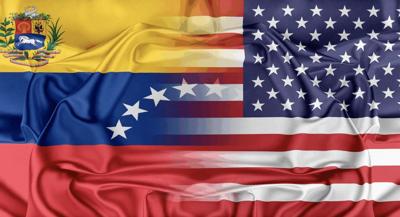

The U.S. military capture of Venezuelan President Nicolás Maduro abruptly ended one phase of Venezuela’s long political crisis, opening a far more uncertain one.
The January 3 attack by U.S. forces on Caracas, capturing Maduro and his wife, Cilia Flores, culminated a months-long U.S. counter-narcotics operation that targeted dozens of alleged drug boats and blocking sanctioned oil tankers entering and leaving Venezuela.
While Maduro and his wife await trial on cocaine conspiracy charges in the Metropolitan Detention Center in Brooklyn, New York, the Venezuelan government is now led by Maduro’s vice president, Delcy Rodríguez.
Venezuelan expectations, uncertainty
U.S. officials have said they expect Rodríguez to meet Washington’s demands including privileged access to Venezuelan oil reserves; stopping the sale of oil to U.S. adversaries; drug trafficking crackdowns; and kicking out forces hostile to the U.S. including Iranian, Cuban and Hezbollah operatives.
“Is it surprising that Donald Trump doesn’t care about democracy? Am I surprised that his primary interest is material? No. What’s surprising is the explicitness and brazenness with which this is being articulated,” said Alejandro Velasco, associate professor in the Gallatin School and Department of History at New York University, and executive editor of the journal NACLA Report on the Americas, at a Friday, January 9 American Community Media briefing.
“There is extremely very little love lost for Maduro being out. The axis of contention right now,” he continued, “is the manner in which it happened, which is an armed assault on Venezuelan territory, which killed as many as 100 people, many of them Cuban security guards assigned to Maduro. But there’s a question about whether this threat of additional pressure could then parlay into other attacks.”
Venezuelan Interior Minister Diosdado Cabello confirmed on January 8 that 100 people died in the attack, including a large part of Maduro’s security contingent and 32 military and intelligence service members.
“The very incipient sense that I’m getting from folks on the ground, is ‘expectativa,’ which doesn’t translate to ‘hope,’ but a sense that a political game has been unstuck,” added Velasco. “We’ve seen things happening that seemed completely implausible even days and certainly months ago, like the release of political prisoners … and conciliatory messaging from the new authorities in Venezuela about working with the Trump administration, even Trump himself saying that there might be a meeting.”
The Venezuelan government announced on January 12 that of the 800 people it has detained for political reasons, 116 have been released.
However no identities or detention centers of release were published, and independent United Nations human rights investigators found that only about 50 people have been released so far.
Legal consequences unlikely
“It’s quite clear that there’s no legal way to justify this operation,” said Venezuelan geopolitics lawyer Mariano de Alba. “Nicolás Maduro could hardly be considered the legitimate president of the country, given that he resoundingly lost a presidential election in July 2024. However, that detail is irrelevant in terms of international law, given that Maduro, despite his lack of democratic legitimacy, was de facto in control of the country.
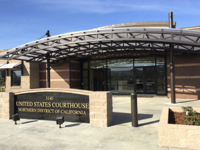
On January 6 in Manhattan federal court, Maduro pleaded “not guilty” to drug trafficking charges after a half-hour hearing, adding that he had been “kidnapped” and remained the president of Venezuela.
He faces four counts: narco-terrorism, cocaine importation conspiracy, and possession of machine guns and destructive devices. His next court date is set for March 17.
“From an international perspective, it’s highly unlikely that [U.S. officials] will face any legal consequence,” said de Alba, referring to the Caracas attack and seizure. “There’s a possibility that whether this attack was authorized will eventually be tried before U.S. courts.
“But given that the attack was ordered by President Trump, and the position the Supreme Court has taken about the immunity of sitting presidents and the decisions that they take,” he continued, “it’s highly unlikely that Trump, or any official will face legal consequences.”
Big oil skeptical
“Now we have President Trump saying that this is all about oil and now the U.S. is going to recover the Venezuelan oil industry,” de Alba added, “with the problem that Trump cannot really force or direct big U.S. oil companies to do massive investments in Venezuela and recover the oil industry unless the real problem in the country gets resolved, which is to establish a rule of law, to make substantial investments to recover the infrastructure of the country, to have independent courts that guarantee the respect of contracts.”
Venezuela produces about 900,000 barrels of oil per day — less than 1% of the global supply, despite holding the world’s largest proven oil reserves.
“On the global scale, it’s quite a small amount, but Venezuela’s economy is almost completely dependent on oil revenues,” said Roxanna Vigil, international affairs fellow at the Council on Foreign Relations. “ In order to achieve President Trump’s objective of rebuilding Venezuela’s oil sector … you need institutional changes that can really only be done by a democratically elected government.”
At a January 9 meeting with U.S. oil industry executives, Trump asked for at least $100 billion invested in Venezuela, but received no major financial commitments, with executives emphasizing caution.
Exxon Chief Executive Darren Woods said, “We have had our assets seized there twice and so you can imagine to re-enter a third time would require some pretty significant changes from what we’ve historically seen and what is currently the state,” adding, “Today it’s uninvestable.”
Concerns over corruption
Questions also remain as to how the Trump administration plans to use oil proceeds.
“What they’ve said so far, which is very little, is that it’s not going to go to the Treasury Department. It’s not going to be part of government funds that have normal oversight and controls,” Vigil explained. “So far, what’s been indicated is that the proceeds of Venezuelan oil that the U.S. government sells will settle in a U.S. account, unclear where … and what controls there will be to make sure that the money doesn’t end up being used for corrupt purposes.”
“Unless we see some clear policy statement indicating that the Trump administration has a plan for a transition to democracy … in the next few months, I don’t see how it can meet its objective of rebuilding the oil sector,” she added. “In order for the Venezuelan people to benefit, they need to have a seat at the table.”




(0) comments
Welcome to the discussion.
Log In
Keep it Clean. Please avoid obscene, vulgar, lewd, racist or sexually-oriented language.
PLEASE TURN OFF YOUR CAPS LOCK.
Don't Threaten. Threats of harming another person will not be tolerated.
Be Truthful. Don't knowingly lie about anyone or anything.
Be Nice. No racism, sexism or any sort of -ism that is degrading to another person.
Be Proactive. Use the 'Report' link on each comment to let us know of abusive posts.
Share with Us. We'd love to hear eyewitness accounts, the history behind an article.