





An attachment relationship between the child and the parent is a firm expectation of the child feeling protected and safe.
There is a saying that says parents always have a favorite child, but what if the roles are reversed and it is the child who has a favorite parent? As a result, the parent is the go-to person for anything and everything. You can call it a badge of honor, but it can actually be upsetting and not ideal for both parents. For the preferred parent, being on call all the time can quickly become overwhelming and eventually lead to burnout.
It also means that the unfavored parent may get out of some day-to-day tasks or responsibilities and ultimately feel excluded and rejected by their toddler. At the end of the day, there’s no real winner, and it can cause some tension at home.
Most toddlers start becoming independent at the age of two and develop strong preferences for clothing, food, toys, and yes, even people. It is almost inevitable that a child will favor one parent over the other at some point in a two-parent home. This even happens with grandparents too. So, don’t worry; favoritism is a common and expected part of child development.
Here’s how to handle parental favoritism:
Don’t take it personally
Rejection by your favorite little person hurts, and sometimes it's hard not to take it personally.Although I'm on the other side of the situation, I see it often with my partner. On some occasions, I’m also told, “ No, mama.” According to Krista L. Swanson, Ph.D, child psychologist at the Early Childhood Center at Cedars-Sinai Medical Center, one of the reasons why your child rejects you is because the child feels safe enough in the relationship to experiment. “[Your child is] secure enough in your love to know that he can jilt you and still get a warm welcome back,” she said.
Have some bonding time
Let your child have some one-on-one time with each parent. It is not uncommon for one parent to spend most of his or her time with the child while the other works full-time. In my experience, my partner works full time while I work two part time jobs. One of my jobs involves working from home, so I do get to spend some additional time with my son, Levi. I know it can be hard for the other partner, but if your child only wants to spend time with the preferred parent, try deliberately setting up special time with the other parent. For example, “I’m going to the store for a while, so you and Levi can spend some special time together." Another example is when your toddler asks you to do something with him. Try encouraging the other parent to take over. That will give them some time to bond with each other even more. As the preferred parent, I also try to not interfere when they are together, and it also gives me a little break after being on command.

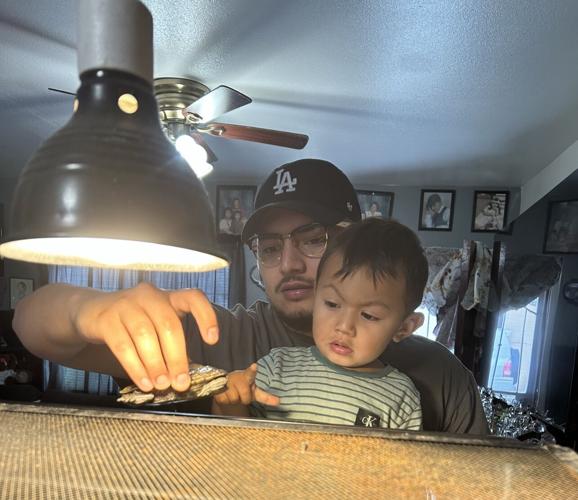
Levi and dad, bonding over animals.
Validating feelings
The most important thing you can do for your toddler is to validate their feelings, empathize with them, and reassure them. It may seem difficult to understand what your child feels when he or she wants someone else, but let them know you understand. Toddlers still don’t have a great handle on their emotions, so it can be a lot for them. In certain situations, I like to tell my toddler, for example, “I know you wanted to stay longer at grandma’s house, but she needs to do things, It’ll be OK. We can come back tomorrow and wait with you until then.”
Also, validating your partner's feelings is important. Rejection by your child isn't something to be taken personally, but it still hurts. In situations like this, I try to be fair. If someone is getting a hug or kiss from my son, I encourage him to give kisses to both my partner and myself. It works almost every time.
Patience is key
This toddler parent favoritism behavior will eventually change, stop, and start again as the child gets older. Just wait until their teenage years. I think we've all been there and know what it’s like to be on your child's side. For now, the best thing you can do as a parent is to be patient and just be there for your child, no matter what. Eventually, they will develop new behaviors, some of which might hurt, but remember that it won’t always be this way. Patience is key in this journey of parenting.
If there is anything I can help young mothers and fathers with, please don’t hesitate to reach out to me at amairani@latinomedia.org. Follow my Mami & Me column here.







(0) comments
Welcome to the discussion.
Log In
Keep it Clean. Please avoid obscene, vulgar, lewd, racist or sexually-oriented language.
PLEASE TURN OFF YOUR CAPS LOCK.
Don't Threaten. Threats of harming another person will not be tolerated.
Be Truthful. Don't knowingly lie about anyone or anything.
Be Nice. No racism, sexism or any sort of -ism that is degrading to another person.
Be Proactive. Use the 'Report' link on each comment to let us know of abusive posts.
Share with Us. We'd love to hear eyewitness accounts, the history behind an article.