
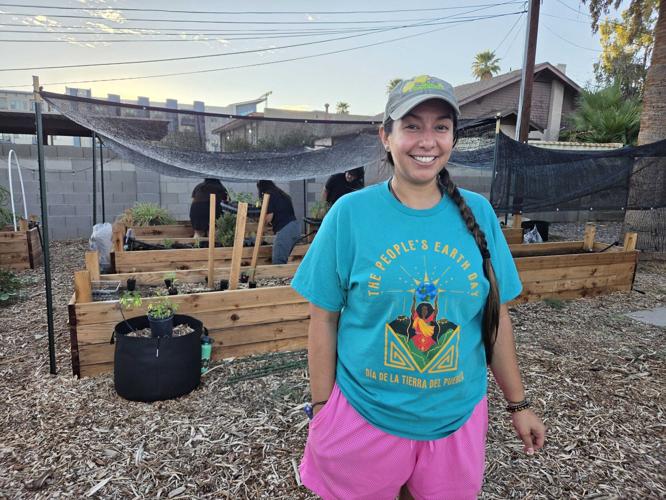
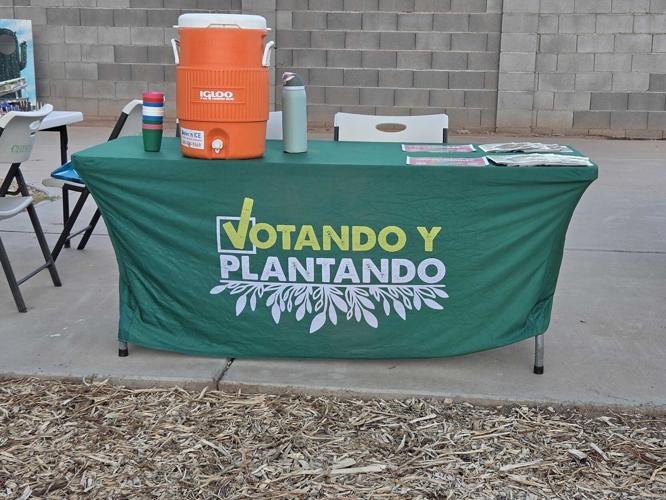
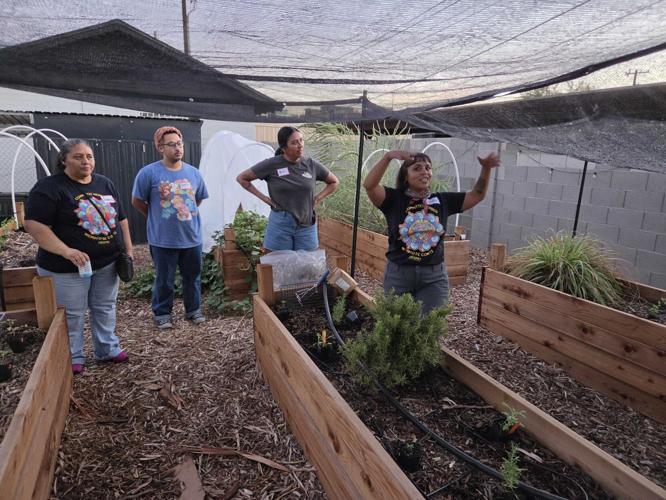

Chispa Arizona hosts a garden beautification workshop during Latinx/e Conservation Week at their headquarters in Phoenix, Ariz. (Analisa Valdez/CALÓ News)
Latinx/e Conservation Week might have been in full swing last week, but for Phoenix-based environmental justice movement group Chispa Arizona, hosting community conversations about conservation, composting and and environmental justice are a year-round effort that keeps Latinx-specific efforts front and center.
Across Arizona, Latinx/e Conservation Week — which takes place every year during Latinx Heritage Month — was celebrated with a series of events hosted by Chispa, the Sierra Club, Mi Familia En Acción, Poder Latinx, Latino Outdoors, Protectors of the Salt River, AZ Land and many more. Over the years, the celebration has become a joint effort among grassroots environmental organizations to encourage Latinos to get involved not only in conservation efforts at home, but also in environmental issues that impact their communities.
That’s why, on Thursday, as Chispa Arizona welcomed the community to tend and beautify their growing garden, they also took the time to educate folks as an act of resistance against policies currently being enacted by the Trump administration.
“Latinx Conservation Week is really important because we — at least here at Chispa Arizona, and with our partner organizations that are putting on all these events — we're really seeing it and approaching it with an active resistance right now under the Trump administration,” Zuri Torres, Chispa Arizona’s communication director, said. “There's been a lot of restrictions on public lands and we see a lot of destruction happening to our public lands. And with our national parks, we feel like the Latinx community has been targeted.”

Chispa Arizona hosts a garden beautification workshop during Latinx/e Conservation Week at their headquarters in Phoenix, Ariz. (Analisa Valdez/CALÓ News)
New rules that went into effect Jan. 1 have turned the National Park Service into pseudo-immigration agents, after the U.S. Department of the Interior issued a $100 fee for nonresident or non-citizen visitors to national parks. The department also adjusted the price of an Annual Pass for the National Park System to $80 for U.S. residents and $250 for nonresidents or noncitizens.
“It's really creating this financial barrier for a lot of our community to be able to access these places that bring so much peace and tranquility and connection,” Torres said. “We're really wanting to encourage everyone to — along with the events that we're hosting, but just in general — to [be] in places where they feel comfortable to really enjoy nature and be together, and show that we're not afraid that these acts happening on behalf of the Trump administration aren't scaring us because these lands belong to all of us and we're we're not going to budge.”
What started in 2014 as an initiative of the official National Park Service partner, the Hispanic Access Foundation, Latinx Conservation Week is now an annual nationwide celebration that promotes access to the outdoors and demonstrates the community’s commitment to conserving the environment.
“We really ramped up having a series of events and work in collaboration with a number of organizations, including Chispa, and we try to have some activity almost every day,” Sandy Bahr, director of the Sierra Club’s Grand Canyon Chapter, said of the week’s activities.

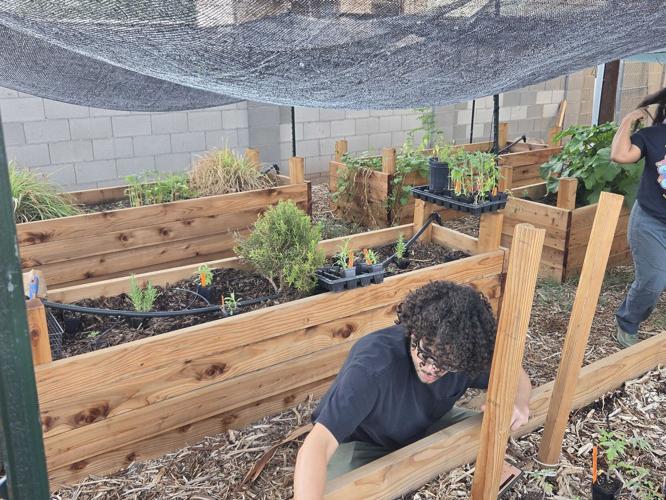
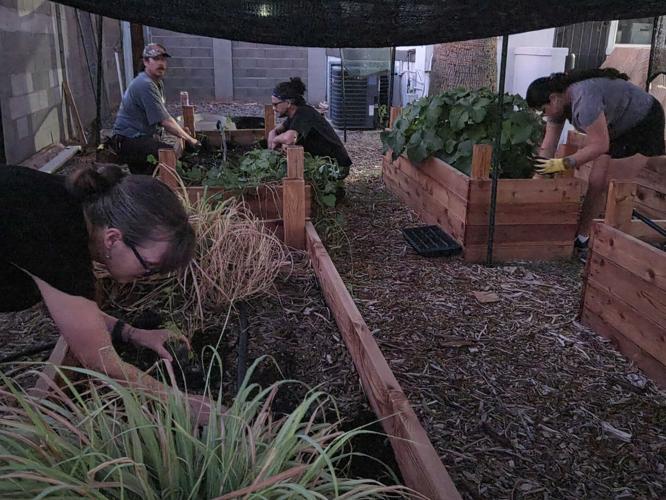
Chispa Arizona hosts a garden beautification workshop during Latinx/e Conservation Week at their headquarters in Phoenix, Ariz. (Analisa Valdez/CALÓ News)
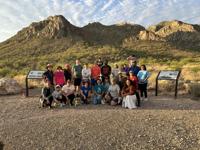
These included a cleanup and invasive weed removal in the Rio Salado, a hike in the Ironwood Forest National Monument, a kayaking cleaning expedition on the Salt River and a prayer walk for the lands and more.
Conservation advocacy groups also raised concerns about the privatization and sale of precious, previously protected land, like the San Carlos Apache Tribe’s sacred Oak Flat that was sold to Resolution Copper earlier this year and the controversial uranium mining within the boundaries of the new national monument, the Baaj Nwaavjo I’tah Kukveni, near the Grand Canyon’s South Rim.
“Having all these events, one of the things that we want to make sure is that the message is sent that the Latinx community is part of the land, has always been involved in conservation and that everyone understands that we all belong here,” Bahr said. “I think that is one of the key things, but also[to] help people understand that there are things that they can do. Right now, I think a lot of people are feeling very anxious because of some of the policies that are being pushed through, and so we want to help people have an opportunity to take action.”
Gardening as an act of resilience
Community members gathered at the Chispa Arizona headquarters on Thursday afternoon, where Clean and Green campaign specialist Jessica Bueno gave a brief presentation on the evening’s mission, what they’d be learning and doing, followed by a land acknowledgement that recognized the 22 federally recognized indigenous nations across Arizona.

Chispa Arizona hosts a garden beautification workshop during Latinx/e Conservation Week at their headquarters in Phoenix, Ariz. (Analisa Valdez/CALÓ News)
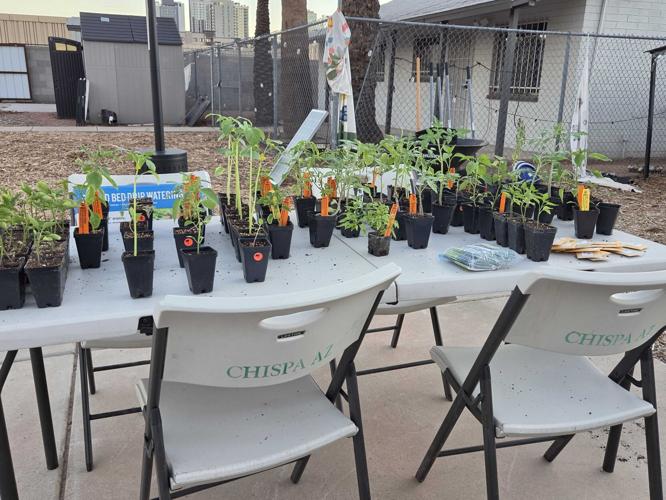
Chispa staff provided the tools and learning experience needed to begin beautifying their nine garden beds in their backyard. Chispa volunteers showed attendees how to throw out the dried dirt and mulch from this summer, dig a shallow hole to fill with new composted soil and fertilizer and place the transplant sapling of the new vegetable or herb in the allotted beds.
“We're here today at the garden to really promote a heat mitigation strategy, along with increasing our food systems. We just really wanted to bring people together to get their hands dirty and learn more about soil, compost, mulch — all the things needed in order to have a good community garden at home,” Bueno said. “They're really beneficial because you get to really learn how to grow your own food, so you know exactly where your food is coming from. Nowadays, you know, we have so much pesticides, and then with the price of food going up, being able just to [get] a little bit better control of what we're growing and also just bring it back to our native roots and really try to hone in on that nutrition.”

Chispa Arizona hosts a garden beautification workshop during Latinx/e Conservation Week at their headquarters in Phoenix, Ariz. (Analisa Valdez/CALÓ News)
According to local non-profit Growing To Give, “approximately 13.1% of Arizonans live in food deserts, and the real number may be higher when accounting for underserved and unhoused populations.”
Having a workshop on planting heat-resistant, edible plants like tomatoes, sweet potatoes and rosemary, as well as various chiles and peppers, furthers Chispa Arizona’s mission to educate their community on how to grow their own sustainable food supply amidst mass food recalls nationwide and statewide food deserts where “access to fresh food requires time, transportation and resources that are not always available,” especially for Arizonans who live in a climate where temperatures regularly surpass the 100 degree mark.
While Latinx/e Conservation Week came to a close on Sunday, Arizona’s environmental advocacy groups and non-profit organizations hold events, workshops and learning opportunities year-round, turning conservation into action.

Chispa Arizona hosts a garden beautification workshop during Latinx/e Conservation Week at their headquarters in Phoenix, Ariz. (Analisa Valdez/CALÓ News)
“You don't have to have all of these resources to really make a difference in being [an] environmentalist,” Torres said. “I think that a lot of the time environmentalism can be categorized as a very white elitist action, and as Latinos or Latinas, it's embedded in our culture, verdad. We're using containers over and over, passing down clothes, sharing food and community so it doesn't go to waste. And I think this is a really good example of people coming together to connect, but also to help one another learn and make sure to take care of our planet.”








(0) comments
Welcome to the discussion.
Log In
Keep it Clean. Please avoid obscene, vulgar, lewd, racist or sexually-oriented language.
PLEASE TURN OFF YOUR CAPS LOCK.
Don't Threaten. Threats of harming another person will not be tolerated.
Be Truthful. Don't knowingly lie about anyone or anything.
Be Nice. No racism, sexism or any sort of -ism that is degrading to another person.
Be Proactive. Use the 'Report' link on each comment to let us know of abusive posts.
Share with Us. We'd love to hear eyewitness accounts, the history behind an article.