
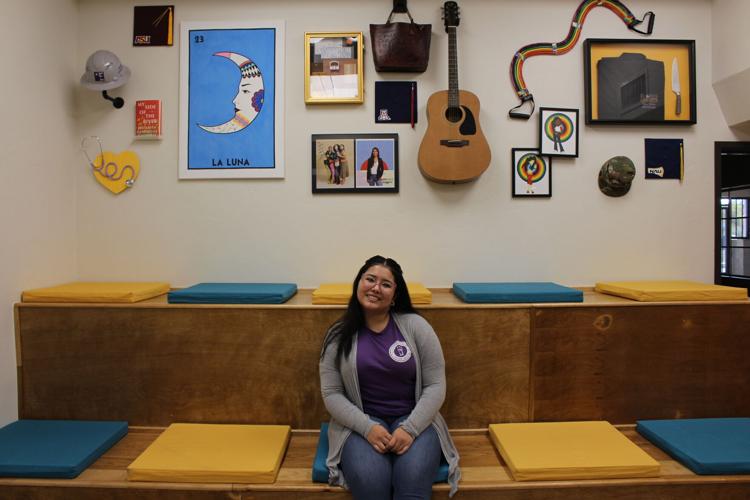




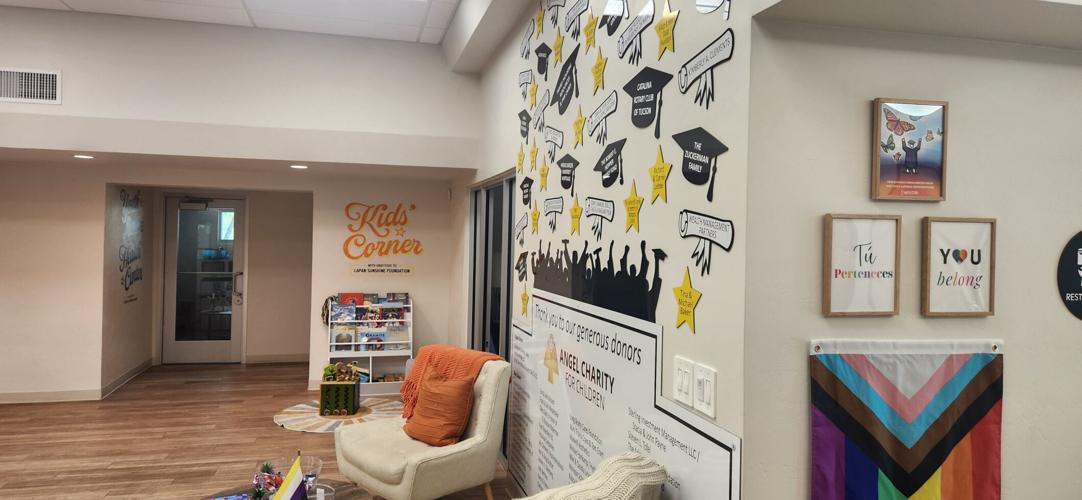


Rashel Olalde, a senior development coordinator in annual giving for Youth On Their Own, poses for a photo in front of the organization's alumni wall in Tucson, Arizona. (Stephanie Casanova/CALÓ News)
TUCSON – Rashel Olalde was six years old when her family sold everything they owned in their Cottonwood home, packed up what they could in their Ford Explorer and drove almost 1,500 miles south of the U.S.-Mexico border. She didn’t understand why they moved to Mexico or why they were struggling to make ends meet there when they had lived a comfortable life in Arizona.
It would be years before she learned that her dad’s tax preparer blackmailed him, threatening to report him to Immigration and Customs Enforcement (ICE). Her parents decided to pack their things and bring her and her brother to Mexico, both of whom are U.S. citizens.
Her dad couldn’t find decent-paying construction work like the kind he’d done for years in Arizona and eventually taught himself welding and found a way to provide for his family. Still, her family was hit hard financially.
They first lived in Michoacan, near Mexico City, where her dad is from, and a few years later moved north to her mom’s home state of Tamaulipas, which borders Texas. Olalde began high school here but would soon face a decision that changed her entire world.
To help financially unburden her family — including her parents and her three younger siblings — she accepted her aunt's offer to move with her to Tucson and attend high school.
“I wanted to ease their burden,” she told CALÓ News. “But I also wanted to pursue my education and dream of a bigger future for myself.”

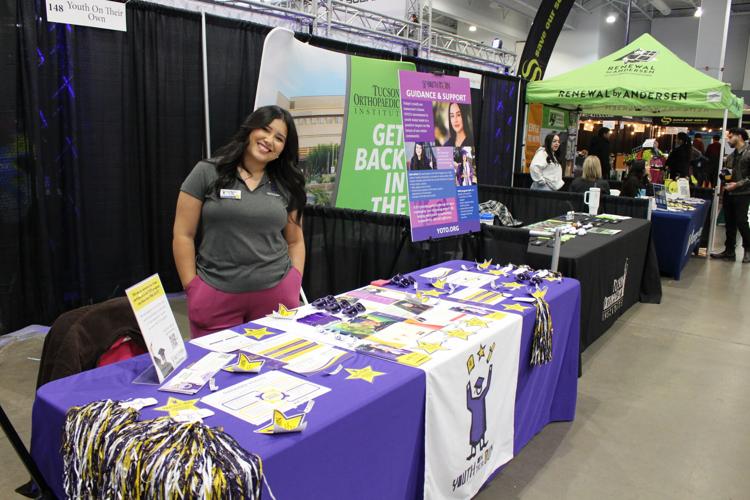
Rashel Olalde, a senior development coordinator in annual giving for Youth On Their Own, shares information about the organization during the El Tour De Tucson expo at the Tucson Convention Center on Thursday, Nov. 20, 2025. (Stephanie Casanova/CALÓ News)
But moving back to a place she once knew as home came with unique challenges for Olalde. Her immediate needs weren’t always met; she didn’t have her parents to advocate for her and she struggled with depression.
Thanks to the support of Youth On Their Own (YOTO) and of trusted adults, she overcame those hardships. It’s what led to her becoming the senior development coordinator in annual giving for the Tucson-based organization.
Helping teens experiencing homelessness and family separation
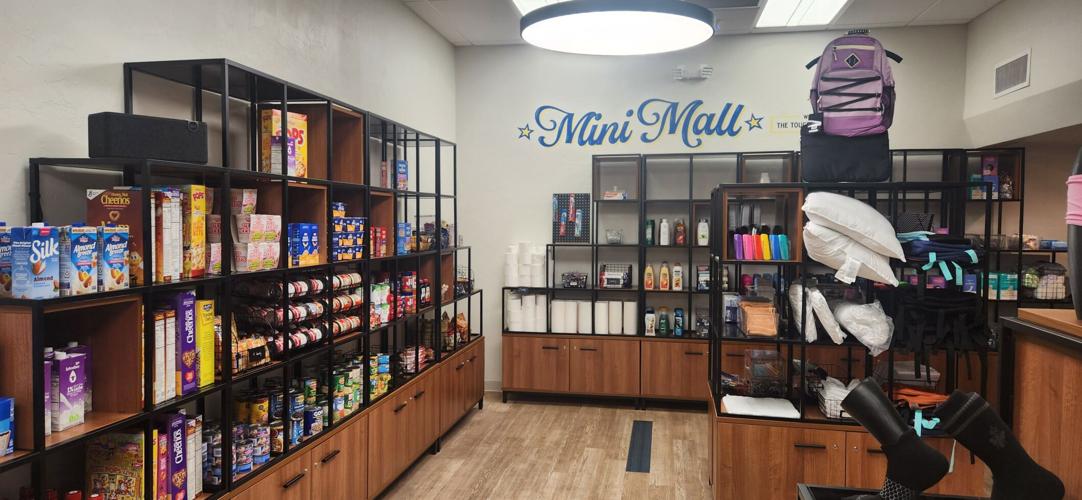
The nonprofit supports students experiencing homelessness as they finish high school. Beneficiaries get stipends and access to a “mini mall” with items like food, household goods and school supplies to help them meet their basic needs. The organization also helps with transportation, housing referrals, healthcare and mentorship.
Youth On Their Own defines homelessness based on the federal McKinney-Vento Homeless Assistance Act, which includes children who live with non-family members due to loss of housing or economic hardship, children who live in motels, trailer parks, campgrounds, shelters or are abandoned in hospitals. It also includes children living in cars, public spaces or abandoned buildings.
The organization helps students in grades 6-12 who are “without the care of a long-term parent or guardian.” They connect with children by partnering with local middle and high schools, which refer the children to the program. Much like Olalde’s situation, which is not unique among those who have been part of Youth On Their Own.
In the memoir “My Side of the River,” author Elizabeth Camarillo Gutierrez shares a similar story to Olalde’s.
She writes that she was 15 when her parents were forced to move back to Mexico after their visas were not renewed. Gutierrez decided to stay in Tucson to pursue her education. Throughout high school, she couch surfs, moves into a “cuartito” — a shed-turned-bedroom in her uncle’s backyard — and is supported by Youth On Their Own.

Youth On Their Own, an organization based in Tucson, Arizona, helps teenagers and young adults experiencing homelessness and family separation. (Stephanie Casanova/CALÓ News)
When Bethany Neumann, YOTO director of development and communications, read “My Side of the River,” the story was a familiar one. Neumann doesn’t work directly with youth in the program, but she has heard stories from alumni who were born here, their parents having to leave the country unexpectedly and adjusting to stay in the U.S. without their parents.
She said it’s difficult for teenagers and young adults to adjust to their parents suddenly not being there, with parents having to make the difficult decision to uproot their child or leave them in a home they’ve always known.
“It's actually quite common,” Neumann said. “Usually the youth themself is a citizen and their parents are not and are unable [to become a citizen]. It often makes it a little bit easier for the youth, because they at least have a parent that cares about them. It's just they can't be here.”
Their staying behind also generates extra costs for the people who care for the teens when they are left behind, Neumann said. That’s where Youth On Their Own comes in, helping to make sure they can have some stability in an otherwise unstable situation.
Youth who don’t graduate high school or get a GED are 4.5 times more likely to experience homelessness, according to a study by Chapin Hall, an independent policy research center at the University of Chicago. Similarly, those experiencing homelessness are less likely to finish high school or get a GED, the study found.
Another Chapin Hall report from 2020 found that offering “direct financial assistance” to youth experiencing homelessness, along with providing other supports, can help them find stability and “exit homelessness.”

The Youth On Their Own Mini Mall offers youth experiencing homelessness free items to meet their basic needs. The organization accepts donations for non-perishable and canned food and toiletries to help meet the youth’s basic needs. (Stephanie Casanova/CALÓ News)
With an increase in immigration enforcement this year, Neumann said she’s worried there will be a decrease in young people asking for support due to the administration’s aggressive tactics, which have reportedly led to a decrease in youth in mixed-status families attending school.
“We want to be here for any youth that needs our support,” she said. “And we hope that there wouldn't be a situation that would make them feel unsafe asking for help.”
Nationally, more than four million U.S. citizen children — which account for nearly 6% of that population — live with at least one undocumented parent, according to research by the American Immigration Council, a nonprofit that, among other work, conducts research to “promote fair and rational immigration policies.”
In Arizona, 116,700 children — or 7.6% — who are U.S. citizens live with at least one undocumented parent, according to the American Immigration Council.
While the organization doesn’t ask beneficiaries about their immigration status or whether immigration issues led to their unstable housing situation, Olalde said she has heard stories of people in the program who have been separated from their parents due to deportations or due to their parents moving back to their home country.
“It's unfortunate to see that they're going through this. I don't think any young person should have to be in a whole country without their parents and without that type of support,” Olalde said. “You can just tell the difference from those who do have their parents to those who don't and for people like me who don't have their parents, I feel like we're forced to grow up a lot quicker than most people.”
‘Things get better’
In 2015, Olalde said goodbye to her dad and her brothers in Tamaulipas and boarded a bus with her mom to Nogales, Sonora, where her aunt met them and whisked Olalde off to Tucson.
She wiped away tears as she remembered that trip to the U.S.

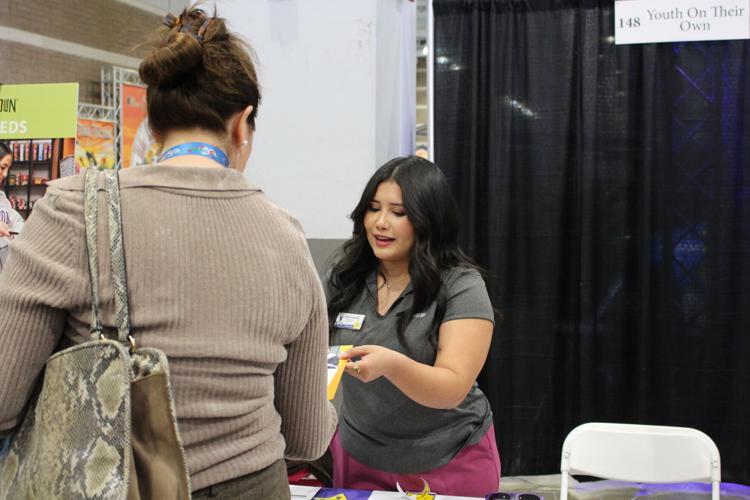
Rashel Olalde, senior development coordinator in annual giving for Youth On Their Own, poses for a photo during the El Tour De Tucson expo at the Tucson Convention Center on Thursday, Nov. 20, 2025. She credits the nonprofit with helping her get through high school and into college. (Stephanie Casanova/CALÓ News)
“I did become pretty depressed being here by myself,” she said. “I went through severe depression — I want to say, like, moderate to severe depression — the first two years. I remember my sophomore year was really hard. Junior year was even harder. I would be in class and I just started crying for no reason.”
When she felt she couldn’t confide in her aunt to get her the mental health support she needed, Olalde turned to her high school social worker.
“Like a lot of YOTO youth, just because we're staying with someone doesn't mean that we're being cared for by that person,” she said. “The most that the person that we're staying with is doing for us is just providing us a roof over our head, so we're not sleeping on the streets, literally. And that is pretty critical.”
There were instances when the two would clash over religion and gender roles, leading Olalde to leave and couch-surf with friends periodically. She said she’s grateful that she was given a place to stay with her aunt, but “I wasn’t truly cared for in the way that my parents had cared for me.”
She learned to adapt to life’s circumstances, but it was those same experiences — and her desire to unburden teens in similar situations — that led her to the work she’s doing now with YOTO.
“Things get better,” Olalde said. “There comes a time where you make peace with yourself and what you went through, and you really just start looking forward to all the good things that are going to happen to you in the future.”
Stephanie Casanova is an independent, bilingual journalist from Tucson, Arizona, covering community stories for over 10 years. She is passionate about narrative, in-depth storytelling that is inclusive and reflects the diversity of the communities she covers.











(0) comments
Welcome to the discussion.
Log In
Keep it Clean. Please avoid obscene, vulgar, lewd, racist or sexually-oriented language.
PLEASE TURN OFF YOUR CAPS LOCK.
Don't Threaten. Threats of harming another person will not be tolerated.
Be Truthful. Don't knowingly lie about anyone or anything.
Be Nice. No racism, sexism or any sort of -ism that is degrading to another person.
Be Proactive. Use the 'Report' link on each comment to let us know of abusive posts.
Share with Us. We'd love to hear eyewitness accounts, the history behind an article.