
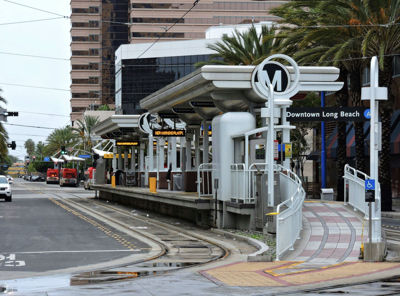

The Los Angeles County Metropolitan Transit Authority (LA Metro) and the Los Angeles Department of Transportation (LADOT) are looking to give South Los Angeles and other L.A. County residents free pre-paid debit cards for transportation usage and various transportation costs.
The Mobility Wallet (MW) pilot program looks to offer aid to residents who do not have access to a car. Participants will receive a prepaid debit card with up to $1800 in the fall of 2024, with a one-time refill six months later. With the card, low-income residents will be able to pay for public or private transportation such as LA Metro buses, trains, bike shares, Metrolink, and Amtrak, as well as other services like Uber and Lyft.
According to LA Metro, there will be approximately 2,000 applicants chosen for this type of subsidy. To qualify, participants must be at least 18 years old, live in L.A. County and meet annual income requirements. To begin, a one-person household should have an annual income of $48,550 or less. Income eligibility changes depending on the number of people in the household. The mobility program card can be used and shared amongst different family members within the household.
“Metros and LADOT’s Mobility Wallet program is helping low-income residents in LA get where they need to go,” Metro said in a statement.
According to the Los Angeles County Metropolitan Transportation Authority (LACMTA), the number of public transit riders has increased in the last year. During the 2023 fiscal year, the network amounted to some 270 million public transit riders, a year-over-year increase of around 6.6%, after numbers of about 36% because of the COVID-19 pandemic.
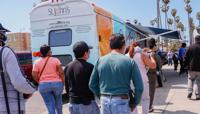
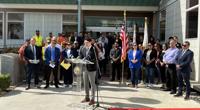
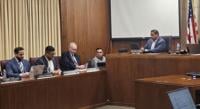
Hector Gutierrez, Metro’s senior manager of strategic innovation, said he was excited to announce the opening of the second phase of the Mobility Wallet pilot program. He also announced that LA Metro would be hosting workshops and pop-ups across L.A. County to connect people with this opportunity.
“It really has been a lifeline to support social connections, supporting the financial security of households in not thinking about transportation cost burden, and I think importantly, it’s also been a way to support access to opportunity,” Gutierrez said.
Community members and organizations such as Strategic Actions for a Just Economy (SAJE), Alliance for Community Transit-LA (ACT-LA) and Community Power Collective (CPC) continue to call for free public transportation in L.A.
During her mayoral campaign, Mayor Karen Bass vowed to make LA Metro a free transportation system. “As Mayor, Bass will reduce wait times, increase vehicle speeds and expand the transit network so that Los Angeles, with or without a car, enjoys access to all the city has to offer,” as stated on her campaign website. “She will also make sure that no Angeleno ever has to pay to ride a bus or Metro train again, saving working families thousands of dollars every year, and giving all Angelenos the freedom to get around their city without worry.”
Almost two years later, that promise has not been granted.
“Universally fare-less public transportation in Los Angeles County benefits all Angelenos,” ACT-LA states on its website. “It provides crucial economic relief to Metro’s passengers, the vast majority of whom are very low-income, immigrants, people of color, and essential workers. The savings to families can be spent on rent, health care, education, better food options, and other investments in community members’ health and livelihoods, ultimately benefiting the entire regional economy.”
A single ride, regardless of the destination, costs $1.75 on any LA Metro bus or train and includes free transfers for up to two hours, but free-transport advocates say these costs can quickly add up, especially for low-income families.
The program falls under Universal Basic Mobility, a program led by the City of L.A. to expand transportation options and provide mobility to all members of society regardless of age, ability, location, and socioeconomic status. The program is funded by the California Air Resources Board (CARB) grant through the City of LA and a Regional Early Action Planning (REAP) grant by the Southern California Association of Governments (SCAG). Specific funding for the Mobility Wallet pilot program was provided through the STEP grant, a $2 million investment from LADOT, and additional grant money secured by Metro.
Phase one of the mobility wallet, which launched last year, served approximately 1,000 subscribers. Those who applied for the first phase of the program will not be able to apply for the second phase.
According to Metro, of the 2,000 participants chosen, half will be from South L.A. and the remainder from other areas of L.A. County. All who apply will be put through a random selection process to ensure an equal chance of participation.
Applications for the Wallet pilot program are now open and will remain open until August 31, 2024. To sign up, visit metro.net/mobilitywallet4.





(0) comments
Welcome to the discussion.
Log In
Keep it Clean. Please avoid obscene, vulgar, lewd, racist or sexually-oriented language.
PLEASE TURN OFF YOUR CAPS LOCK.
Don't Threaten. Threats of harming another person will not be tolerated.
Be Truthful. Don't knowingly lie about anyone or anything.
Be Nice. No racism, sexism or any sort of -ism that is degrading to another person.
Be Proactive. Use the 'Report' link on each comment to let us know of abusive posts.
Share with Us. We'd love to hear eyewitness accounts, the history behind an article.