

Dr. Alberto J. Román is the chancellor of the Los Angeles Community College District

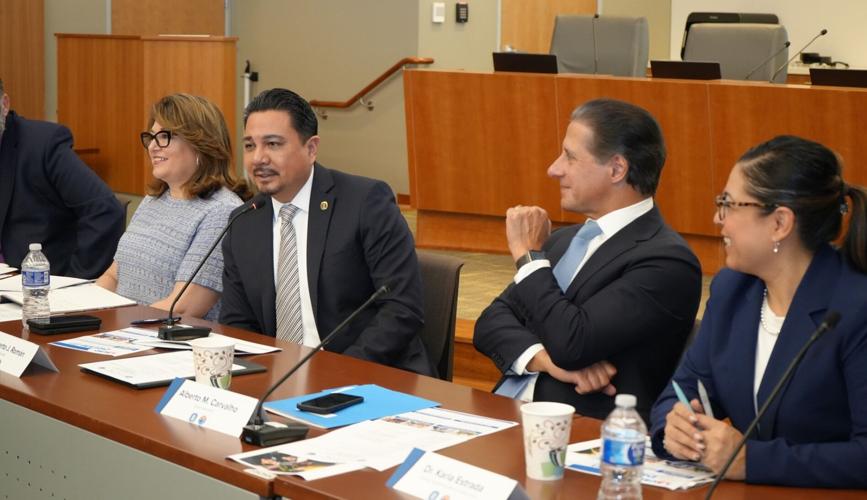
LACCD Chancellor Alberto J. Román during a meeting with LAUSD Superintendent Alberto Carvalho and their teams. (LACCD)
A few months have passed since Dr. Alberto J. Román was officially elected as the chancellor of the Los Angeles Community College District (LACCD), the largest community college district in California. He served as the interim chancellor from Nov. 2024 until his appointment in May 2025.
The role of a chancellor at a college or university is to set a strategic vision as the chief executive and oversee operations, finances, academics, public relations among other duties reported to the Board of Trustees.
Dr. Roman’s story of success is the epitome of the American dream and his new role debunks the idea of immigrants being seen just as criminals and rapists. He takes pride in the advocacy he’s constantly doing for the Latino, immigrant and undocumented communities, especially at a time when immigrants are being targeted and racially profiled.
“We need to tell our story, because our story is being told in a very inhumane and incorrect way,” he said. “As an immigrant now being the Chancellor of the largest community college district in the nation, I don't take their responsibility lightly.”
A story of resilience
Dr. Roman’s own background gives much more importance to his role as chancellor, representing about 210,000 students across the greater Los Angeles area.
He migrated with his family when he was eight years old from Durango, Mexico. Once they established in Los Angeles, the family struggled financially, and he and his sister found it difficult trying to adapt to the new country and a new language.

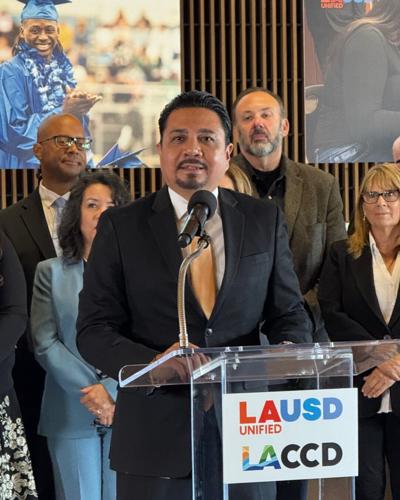
LACCD Chancellor Alberto J. Román. (LACCD)
“I remember people make fun of the fact that I didn’t speak English or my accent, and so it was tough to be here as an immigrant, as a first generation person that wanted to go to school,” he said. “But my parents really instilled in us the value of education.”
His parents' hard work and his efforts didn’t disappoint. Roman obtained his bachelor’s degree in Political Science at UC Riverside and his doctorate and master’s degree in Public Administration from the University of La Verne.
“So it's been kind of a calling of mine,” he said. “Now I have an opportunity to help people with similar lived experiences; who may be immigrants, undocumented, who went through all the challenges and barriers that I had.”
This lived experience helps him shape policy, develop programs, incorporate equity and diversity, and get more resources. He said all the work he does, despite the difficulties due to the current administration, is a commitment to the students.
The future of LACCD
Dr. Roman said he has several goals during his tenure as chancellor. However, some of them are paramount, starting with students completing their degrees. There is an estimate that about 50% of students are not persistent in the second year. And he keeps a close eye on the equity gap.
“Some of our students are not persisting and completing at the same rate. So our focus will be subgroups like our men of color, Brown and Black student males are not completing and succeeding at the same level,” he said.

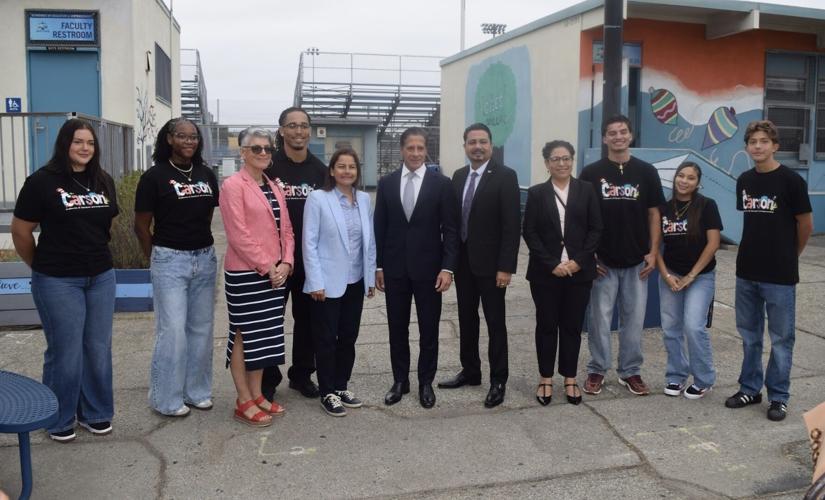
LACCD Chancellor Alberto J. Román and LAUSD Superintendent Alberto Carvalho visiting a school. (LACCD)
He also wants to make sure all the students that enroll in one of the nine community colleges complete their two-year degree. Once they graduate and receive their certificate they will be ready for a job or are to transfer to a four-year university.
“There are a lot of students who complete their AA degree, but don't transfer. And so we're trying to figure out what's going on there to make sure that more of them continue in getting their bachelor's degrees and their masters,” he said.
While the goals are big, the challenges are significant. Dr. Román said LACCD is losing approximately $6 million in federal funding that would go to some of the most underserved students, like students of color, low socioeconomic status, and first generation college graduates.
However, they are trying to mitigate the loss through grants or foundations and state funding. “Right now we have about $30 million in federal funds, and so far they've identified about $6 million [to take away],” he said.
The hopes of a better future
Despite the uncertainty of the future in regards to funding, the chancellor’s commitment to the students is clear; when they enter one of the LACCD colleges they are going to feel like home. By doing this, Román said it will eliminate cycles of poverty and the perpetual failing of not continuing with an education.
“This is a safe haven where we are not going to judge them based on the color of their skin. We're not going to judge them based on where they come from. Quite frankly, we see that as an asset and a positive thing in all of our nine campuses,” he said. “So I don't think there's a greater determinant to social and economic mobility than higher education.”
Students who are afraid to attend classes in person because of the immigration raids are encouraged to take classes online.
Dr. Román said the key to change these challenges is to educate more students who come from underserved communities and place them in key positions that will make important decisions.
“It’s a full circle, we start with one student, they go and get an education, come back and help the next student,” he said.






(0) comments
Welcome to the discussion.
Log In
Keep it Clean. Please avoid obscene, vulgar, lewd, racist or sexually-oriented language.
PLEASE TURN OFF YOUR CAPS LOCK.
Don't Threaten. Threats of harming another person will not be tolerated.
Be Truthful. Don't knowingly lie about anyone or anything.
Be Nice. No racism, sexism or any sort of -ism that is degrading to another person.
Be Proactive. Use the 'Report' link on each comment to let us know of abusive posts.
Share with Us. We'd love to hear eyewitness accounts, the history behind an article.