



(Photo: Paris Ghassemian)
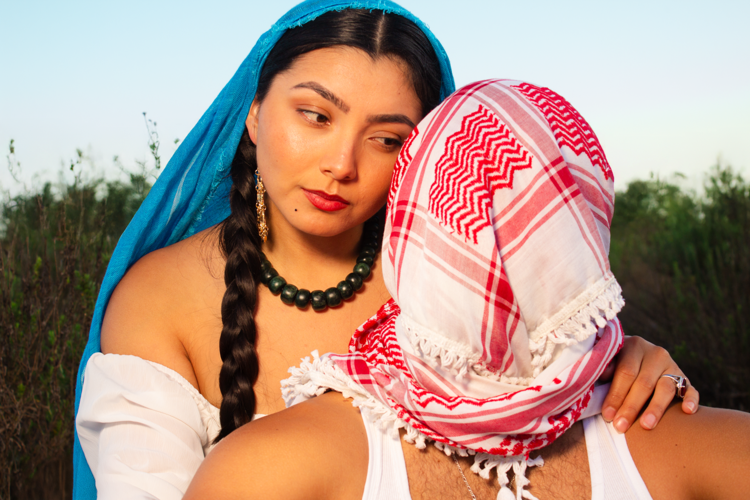
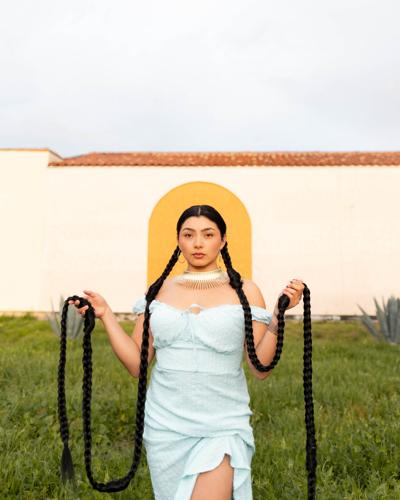
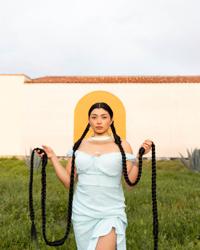
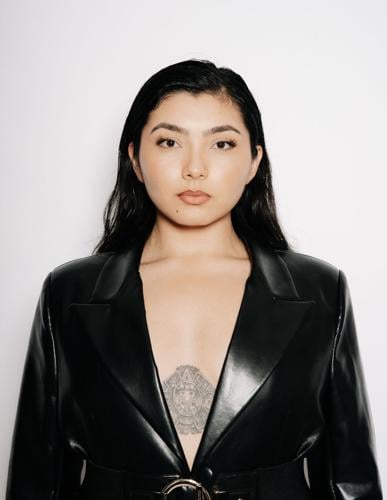
Chicana emcee Marissa Frausto, better known by her stage name Frosty, has earned the reputation of being one of the most versatile and promising artists in the tight-knit underground hip-hop scene.
Hailing from the O.C., an area known for punk and ska and less for hip-hop, the up-and-coming rapper/songstress has used her platform to incorporate a blend of various genres, styles, and philosophies, from decolonization to Indigenous empowerment and liberation philosophy, into her unique brand of hip-hop.
Frausto incorporates politics into her music, touching on such struggles as immigration, racism, white supremacy, and Palestine.
“I see so many parallels between the Palestinian and Native American genocide. When you look at the PLO (Palestinian Liberation Organization) and AIM (the American Indian Movement), the timelines aren't very distant,” Frausto said.
Modest roots

(Photo: Luis Edson)
Frausto was born into a third-generation Chicano (Mexican American) family in the late 90s. Although the family moved around the O.C. throughout her life, Frausto said that her early childhood proved to be a unique, often challenging experience. Particularly as a young, brown-skinned girl growing up in a county that is known for its whiteness, assimilation and for its affluence. “Navigating through that space definitely forced me to reflect on my identity,” Frausto said. “I never really felt like I belonged to this space, and I had to unpack a lot of internalized racism and Eurocentric beauty standards.”
From a young age, Frausto always had a very eclectic musical taste, an attribute she credits to her Chicano family, who would regularly play a mix of ‘old school’ hip-hop, funk, and oldies during her formative years. Her eclectic tastes didn’t come without their caveats, however. Frausto recollected an experience with her cousins as a teenager while listening to Wolfgang Amadeus Phoenix. “I was listening to them, and my cousins told me, ‘Why are you listening to white girl music?’” Frausto recalled. “I never really boxed myself in when it came to my music taste, and I think that you can hear that in my music as well. The boundless, borderless expression of my music is a reflection of not only my identity, but also growing up in Orange County.”
Strength in versatility
(Photo: Luis Edson)
Frausto adopted her moniker as a teenager, a play on her surname that was bestowed upon her by her peers in high school. “There were a handful of Marissas at my school, so they would just refer to me as Frosty,” Frausto recalled. Frausto got her start in the quiet confines of spoken word poetry circles and open mic nights. She eventually found a second home in Santa Ana, practicing at venues such as Cool Lab Project, where she performed spoken word pieces during her senior year of high school. “That's where I really first started with my spoken word poetry, which then evolved into me making my own music, and eventually finding a band,” Frausto recalled.
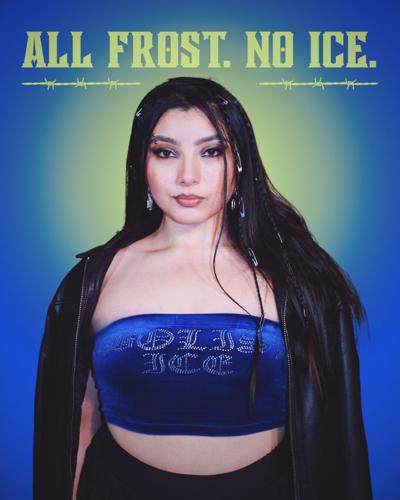
In 2019, Frausto released her self-titled debut, “Frosty,” a four-track soul-infused EP that showcased her affinity for soulful production. Frausto soon followed up with her debut mixtape, “All Frost No Ice,” in 2021. An eclectic project whose title was a play on words referring to her own stage name and a jibe at Immigration and Customs Enforcement (ICE). The project featured a sonic collage of sounds that blended elements of soul, R&B, acoustic guitar, Spanish lyrics, and more traditional boom-bap-inspired hip-hop production. Frausto released her second full-length project, “Extracelestial Systems,” in 2024, where she continued experimenting with various sounds utilizing more contemporary production styles.

(Photo: Ed Ponce)
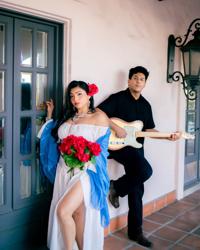
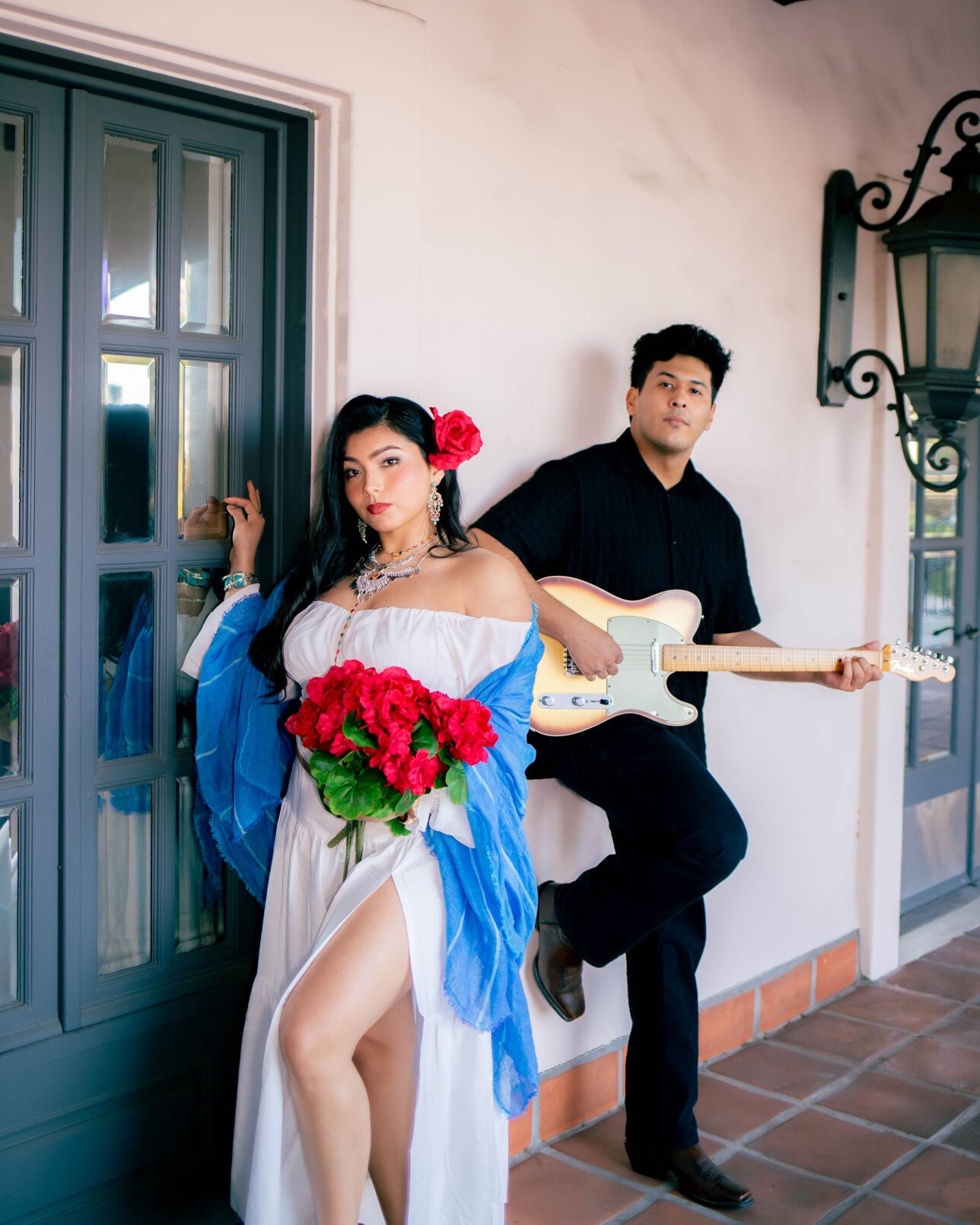
Last Spring, Frausto dropped her most recent outing, a Spanish-language Chicano-jazz EP, “Te Conocí (I Met You),” which she recorded with guitarist Oscar Rodriguez. The EP is entirely sung and features no rapping, a first for the O.C. emcee and a testament to her versatility. Ever evolving, Frausto describes her music as “eclectic, conscious, indigenous rap and R&B,” admitting the desire to avoid being pigeonholed or limited by labels.
“I never have been fond of boxing myself into one genre, because I love experimenting with different sounds,” she explained. “I don't want to make the same song over and over again, but sometimes you've got to say things three, four or five times for it to really hit.” Frausto has also pulled influences from a variety of performers, citing artists such as Lauryn Hill, Tupac Shakur, Amy Winehouse, and A Tribe Called Quest.
Frausto believes that versatility has been a key component to her growing popularity. “I think that having politically conscious lyrics and being able to express certain thoughts in both English and Spanish is powerful and something that I pride myself on.”
Black and Brown unity

(Photo: Kamy Mata)
Thus far, Frausto has garnered a dedicated, ever-growing fanbase online, boasting nearly 53,000 followers onInstagram alone and another 12,000 onTikTok. Next month, she plans to release her upcoming album “Mexica Cuicapicqui,” which translates to “Mexica composer of songs/poetry” in Nahuatl, and is a play on the term “MC,” Master of Ceremonies, and Mexica Cuicapicqui. “The album is centered on motifs of indigenous resistance, land back and native knowledge. It differs from my previous works because the decision to go all-in on this aspect of my identity and make indigeneity an integral part of the project took place before I even started the first song,” Frausto said.
For Frausto, the act of making revolutionary music is not only a means of creative expression in times of political unrest, but an active call for solidarity in an era where politicians and institutions from the local level all the way to the White House are still actively trying to suppress and disenfranchise communities of color.
“People will often refer to certain groups as ‘minorities’, but it's important to remember that globally we're not minorities. We're the majority Black, Chicano, Indigenous, Muslim and Asian. We are the majority. It’s white supremacy that is the growing minority here in America,” Frausto exclaimed. “That's why they’re escalating, being more aggressive with their tactics, and being more outright racist. Because they feel threatened and they know that they're the minority.”
Frausto expressed how intercommunal solidarity will be the key to resistance under an increasingly erratic and vindictive Trump administration. Especially as the federal government deploys increasingly violent ICE raids domestically and engages in more imperialist ambitions in Venezuela, Iran, and potentially more nations throughout the Global South.
“It is crucial for artists to speak up on the inhumane, cruel practices the United States is enforcing both at home and abroad. ICE’s continued militarization has killed and impacted several migrant communities around the nation. Solidarity is important; there's power in numbers and the concept of the tactic of divide and conquer is the oldest strategy in the playbook for the colonizer,” Frausto lamented. “It’s beneficial for all of us to unite together against white supremacy, capitalism, and not fall for the illusion of assimilation into this American system. Now is not the time to remain silent and watch as not only human rights but people’s lives continue to be decimated.”








(0) comments
Welcome to the discussion.
Log In
Keep it Clean. Please avoid obscene, vulgar, lewd, racist or sexually-oriented language.
PLEASE TURN OFF YOUR CAPS LOCK.
Don't Threaten. Threats of harming another person will not be tolerated.
Be Truthful. Don't knowingly lie about anyone or anything.
Be Nice. No racism, sexism or any sort of -ism that is degrading to another person.
Be Proactive. Use the 'Report' link on each comment to let us know of abusive posts.
Share with Us. We'd love to hear eyewitness accounts, the history behind an article.