
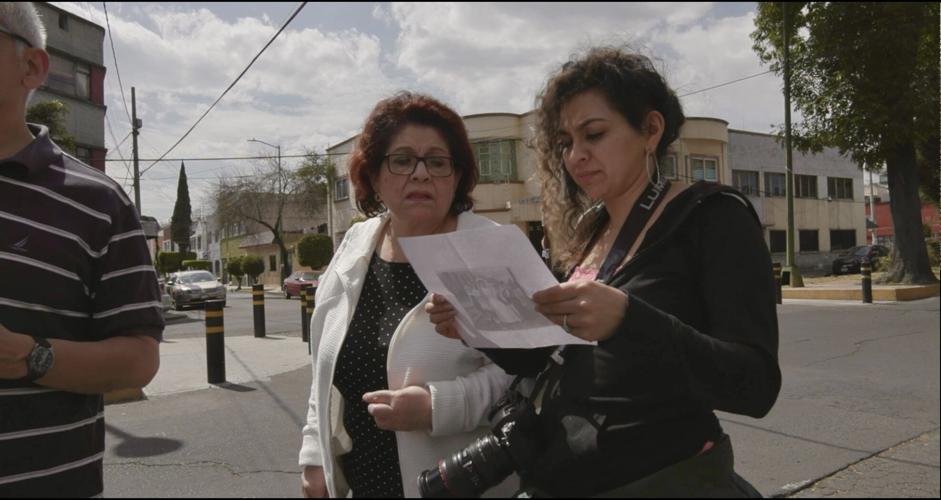






Colette Ghunim and her mother, Iza, search for a childhood home in Mexico City (Image credit: Traces of Home)
Mexican-Palestinian filmmaker Colette Ghunim opens “Traces of Home” with an intimacy that mirrors the journey behind its making. The film has already emerged as a standout at this year’s DOC NYC festival, where it won the Grand Jury Prize in the U.S. competition, signaling the arrival of a powerful new voice in personal, resonant storytelling.
The recognition at DOC NYC, the country’s largest documentary festival, signals a strong reception. “Traces of Home” is a co-production with Kartemquin Films and funded by Latino Public Broadcasting and the Sundance Film Institute. Attached to the project is Sara Maamouri, who also co-produced, co-wrote and co-directed Ghunim’s first feature film. It additionally garnered high-profile backing, with John Leguizamo and Melissa Barrera serving as executive producers.
With its world premiere now behind it, the deeply personal story continues to spark important conversations about identity, displacement, and the ripple effects of generational trauma.

Colette Ghunim celebrates with family and friends at the DOC NYC festival, where Traces of Home won the Grand Jury Prize in the U.S. competition.
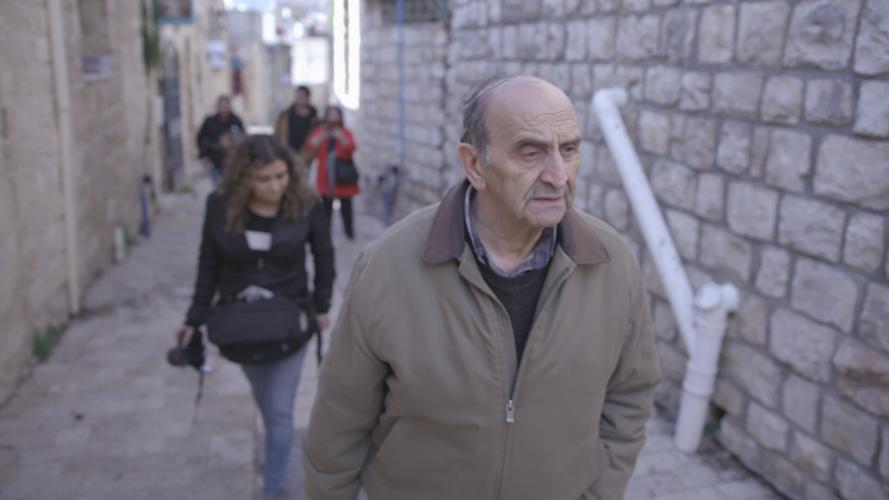
"Traces of Home" follows Ghunim as she embarks on a journey to reconnect with her ancestry. Growing up in the suburbs of Illinois, she often felt disconnected from her own cultural identity. The film documents her multi-year quest to track down her mother's childhood home in Mexico City and her father's childhood home in occupied Palestine. Ghunim’s brother, Ramsey, is also included in several interviews and details his own experiences growing up,
Beyond its central plotline, “Traces of Home” offers a profound narrative about healing from generational trauma through filmmaking. While filming, Ghunim navigates the struggles of reconciliation, gradually recognizing her parents as complex individuals who are on their own paths of growth and redemption.
Ghunim’s relationship with her mother, Iza, is especially central in her transformation as the two are opposites in many of their defining personality traits. While her father, Hosni, is depicted as more forgiving and in some ways similar to Ghunim, the story highlights a long-standing conflict between the mother and daughter.

Colette Ghunim shares a silent moment with her father Hosni, while they attempt to track the house his father built in occupied Palestine (image credit: Traces of Home)
Ghunim's transition into young adulthood was marked by both physical and mental changes that weighed heavily on her. Her father describes her as "cute and smart," while her mother refers to her as "bossy" and notes that she demanded a lot of attention as a child. She mentions during an interview that Ghunim always had a “Colette look,” which she describes as a trademark frown.
Despite the opposing dynamic, her mother is seemingly optimistic about retracing her roots and eager to participate in her daughter’s documentary. Ghunim’s endeavor to help her parents find their childhood homes is a project that ultimately pushes the filmmaker and her mother to have difficult but necessary conversations.
The documentary is a master class on vulnerability and examines the power of ancestry through a tapestry of childhood home videos, archival material, and quiet family moments. It doesn’t just trace geographic roots — it explores the emotional burdens often carried across generations. It also tests our ability to empathize and understand our parents through all their sacrifices and flaws.
In a moment marked by global displacement and rising anti-immigrant sentiment, “Traces of Home” resonated for its tender yet unflinching portrait of familial reconnection.








(0) comments
Welcome to the discussion.
Log In
Keep it Clean. Please avoid obscene, vulgar, lewd, racist or sexually-oriented language.
PLEASE TURN OFF YOUR CAPS LOCK.
Don't Threaten. Threats of harming another person will not be tolerated.
Be Truthful. Don't knowingly lie about anyone or anything.
Be Nice. No racism, sexism or any sort of -ism that is degrading to another person.
Be Proactive. Use the 'Report' link on each comment to let us know of abusive posts.
Share with Us. We'd love to hear eyewitness accounts, the history behind an article.