

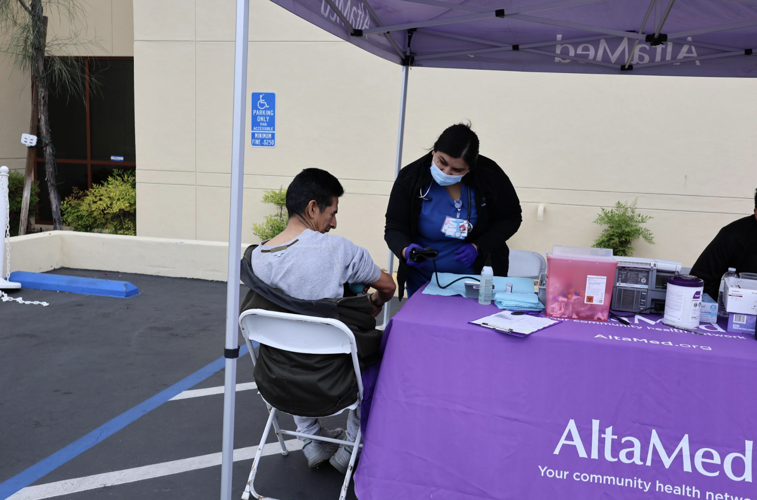


BMO has distributed $3 million through its L.A. Wildfire Recovery Funds to 32 nonprofit organizations throughout the LA region, one being AltaMed. Photo courtesy of AltaMed Health Services
The Los Angeles wildfires of 2025 tore through Los Angeles County, burning more than 40,000 acres, displacing nearly 200,000 people and economically affecting local safety net services.
Today, a year after the fires, the L.A. community continues to assess not only the physical damage left behind by the fires but also other destruction and injuries that are often not visible but that can cause devastating effects, such as worsened mental health.
Despite many families affected by the fires continuing their efforts to physically rebuild, many are still grappling with the emotional toll of losing their homes, jobs or family to the fires; being displaced; supporting their community; or rapidly aiding their neighbors and local communities.
To bring support to many of the people directly impacted by the fires, especially Latino communities that were disproportionately impacted, AltaMed Health Services is providing mental health services to individuals and families affected by the Eaton fire.
AltaMed launched its new San Gabriel Valley Behavioral Health Expansion Project, made possible through a $150,000 grant from BMO’s L.A. Wildfire Recovery Fund.
The project looks to provide trauma-informed care to individuals, reduce mental health wait times and offer culturally aligned mental health services for many Latinos who, in some way or another, were impacted by the Eaton fire, which has become the fifth deadliest and the second most destructive wildfire in California history.
Sharlene Risdon-Jackson, vice president of the AltaMed Foundation, said that although the fires happened last year, many people are just starting to feel the mental effects of them.
“The people directly impacted and tangentially impacted by this disaster had initial trauma associated with this. There's also what we call secondary trauma. Some might have experienced mental health implications initially and some within the first year or so,” she said. “The thing about mental health is there are coping mechanisms we learn to deploy to keep our mental and emotional stability in place so that we can persevere to the next day. It’s important for us as a trusted health provider to be able to help our community where they are.”
Mental health is one of the most pressing needs of fire-impacted communities, according to a 2025 Department of Angels and Embold Research study, which conducted interviews with nearly 2,000 individuals who lost homes or workplaces to local fires, including the Palisades and Eaton fires.
The research showed that eight in 10 wildfire survivorsreported worsened mental health and the recovery process, compounded by distress and displacement, especially challenging during what should be a season of comfort and joy.

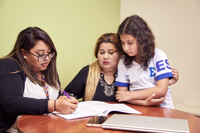
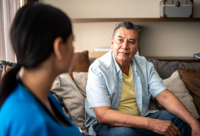
Mental health is one of the most pressing needs of fire-impacted communities. Photo courtesy of AltaMed Health Services
“When we talk about mental health, that term is pretty broad. There are so many aversions within that, a wide spectrum of what somebody could be struggling with, such as anxiety, depression, PTSD or many other challenges,” Risdon-Jackson said. “Our role is to help patients as they come in and place them in the appropriate care to make sure that they get the mental health support to uplift their family and to move their community and themselves forward.”
BMO has distributed $3 million through its L.A. Wildfire Recovery Funds to 32 nonprofit organizations throughout the LA region, one being AltaMed.
Halé Behzadi, vice chair of BMO in California, said the partnership with AltaMed came to be because they identified the health organization as a critical partner because of its deep roots in the community and its ability to respond quickly to health and social needs in the aftermath of the fires.
“When the wildfires hit, we knew we had to do something to help our community. We established the LA Wildfire Recovery Fund to offer organizations like AltaMed the resources to make a real impact on the ground in the wake of disaster,” Behzadi said. “As part of the grant-making process, we spent six months connecting with residents, local leaders and community groups to understand where support was needed most.”
Today, AltaMed serves over 500,000 underserved Southern Californians in L.A. and Orange Counties with comprehensive primary care, dental, senior and youth and mental health services. Although these services are available in all of their clinics, the mental health services, as a part of this grant, are specifically for people affected by the Easton fire in the San Gabriel Valley.
“The San Gabriel Valley mental health initiative is very specific to the Eaton fire, specifically because that's where our patient population lives. There were also the Palisades fires that we're all very familiar with, [but] we do not have clinics on that side of town. Our goal is to hone in on this particular community and provide a lot more services to achieve faster turnaround times for our patients,” Risdon-Jackson said.
She said the mental health services are not only available to people who lost their homes but also to anyone who has been impacted in other ways, including economically or emotionally.
“We are not turning anyone away. We do not require insurance. For those who are uninsured, we bill them on a sliding fee scale based on their ability to pay. These services are for those impacted, insured or not,” Risdon-Jackson said.
AltaMed was founded in 1969 as the East L.A. Barrio Free Clinic, a social justice organization committed to health equity for diverse communities.
Now, years later, immediately in the wake of the fires, AltaMed provided medical care at the Pasadena Convention Center, refilling prescriptions and ensuring families had access to essential health services.
Risdon-Jackson said their goals are to incentivize Latinos to care for their mental health, even if culturally it is a practice that many do not feel fully confident in.
“We know that Latinos prefer one-to-one interaction, not digitally and we have health workers and clinicians, many of whom have Latino backgrounds and are fluent Spanish speakers. These are the things that have gained us that trust from the community,” she said.
With the San Gabriel Valley Behavioral Health Expansion Project, AltaMed looks to provide trauma-informed care to more than 2,500 people impacted by the Eaton Fire. These services are now available at their San Gabriel clinics.
To book an appointment or learn more, visit https://www.altamed.org.






(0) comments
Welcome to the discussion.
Log In
Keep it Clean. Please avoid obscene, vulgar, lewd, racist or sexually-oriented language.
PLEASE TURN OFF YOUR CAPS LOCK.
Don't Threaten. Threats of harming another person will not be tolerated.
Be Truthful. Don't knowingly lie about anyone or anything.
Be Nice. No racism, sexism or any sort of -ism that is degrading to another person.
Be Proactive. Use the 'Report' link on each comment to let us know of abusive posts.
Share with Us. We'd love to hear eyewitness accounts, the history behind an article.