
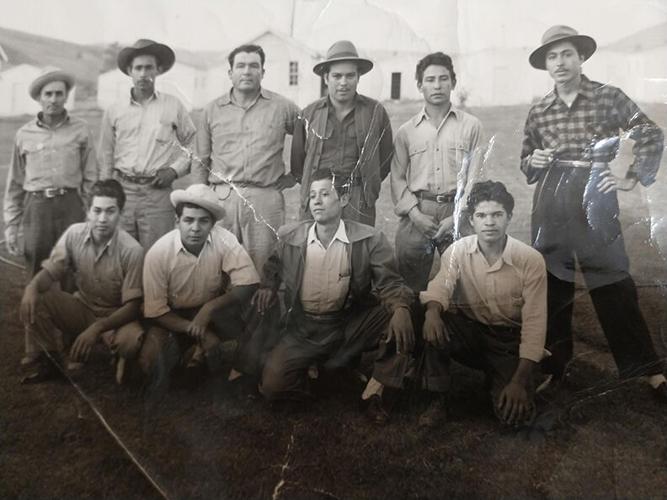



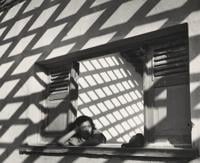
Barcero archives of Eugolio Salazar. Photo courtesy of Eugolio Salazar
The legacy and history of millions of men who participated in the Bracero Program, the largest guest worker program in United States history, takes center stage in “De Sol a Sol,” an archives exhibit being shown in Southeast Los Angeles.
The exhibit, curated by Latino artist and archivist Eric Magaña, offers a glimpse of a time when immigrant workers aided the country's labor shortage and stabilized the U.S. agricultural and railroad industries.
The Bracero Program, which lasted from 1942 to 1964, granted more than 4.5 million labor contracts to immigrant men from Mexico across 24 states, including California.
“I do this with a lot of love, care and respect,” Magaña told CALÓ News. “Preserving these stories is so important because many times they're forgotten or ignored. They're not really in school textbooks and not many people know about the Bracero Program. By elevating and posting our [own] stories, we're archiving them and [letting] everyone see how much [Braceros] contributed to this country.”

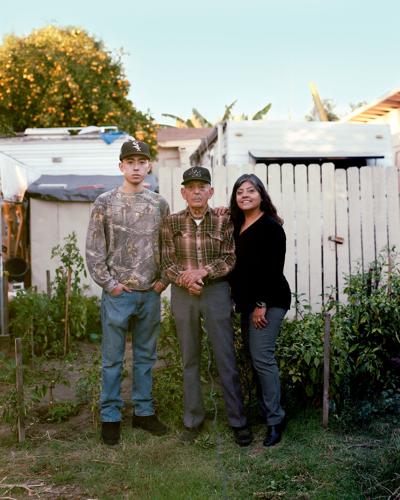
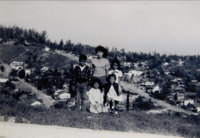
Jose Vargas and family. He was one of the million of braceros who worked in teh U.S. Photo courtesy of Jose Vargas
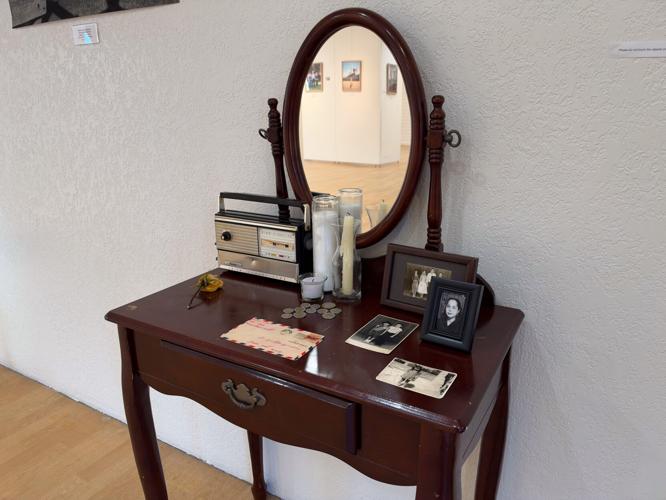
“De Sol a Sol” features dozens of photographs, letters and legal documents that belonged to braceros and their families. Magaña said the exhibit is possible through the numerous archival submissions from former braceros or their family members. “What you see in the exhibit are photos or documents that are oftentimes passed down through family generations,” he said. “After the family sends their documents over to me, we talk and they share any information that they wish to remember. It’s very special.”
For Magaña, the exhibit and the Bracero Program are more than an artistic endeavor; it is personal, as his grandfather was one of the millions of braceros who worked for years in Southern California.
He said the exhibit's origins stem from doing his own research and wanting to simply know more about the life of his grandfather, Martin Barbosa, who died in 2011.
“We don’t know much about his time as a bracero,” Magansa said. “We do know he worked in Coachella, California.”
Magaña's family immigrated to the U.S. from Jalisco, Mexico, a couple of years after his grandfather participated in the Bracero Program.
Before his death, Barbosa was diagnosed with Alzheimer's, which made it harder for him to recollect specific memories. Although Magaña was unable to find much information from his grandfather's time as a bracero, he has helped many families revisit some of the workers' history.
“I loved seeing the braceros who are in the exhibition come with their family. They would often stand near their photo and share about their experience. They get emotional,” he said. “Many of them just want to be remembered and recognized, to know that they were appreciated.”
The exhibit comes at a time when anti-immigration efforts like the growing federal immigration enforcement activity and ICE operations have endangered the livelihoods of millions of immigrants and families of mixed status.
Magaña said exhibits like this one remind us of the correlation between how immigrants were treated then and how, in many ways, things have not changed, even after the Bracero Program happened more than 80 years ago.
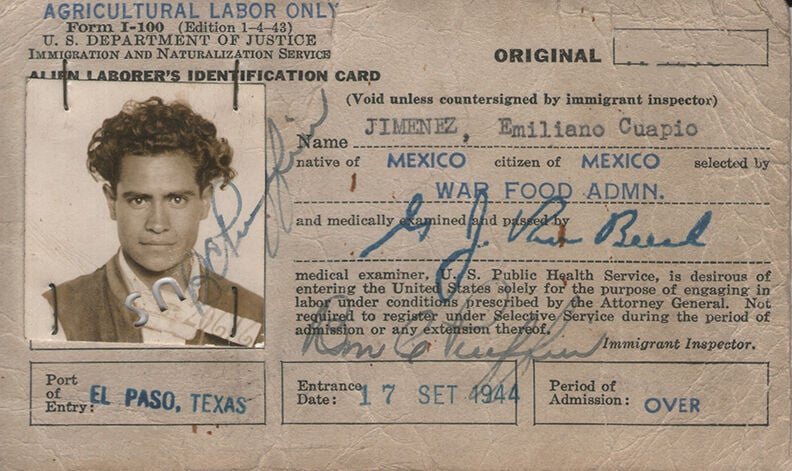
A working aithroization document part of "De Sol a Sol." Photo courtesy of Emiliano Cuapio
“I was hearing some braceros stories about how, even though they had permission to work here in the U.S. through the Bracero Program, some of them were still being deported. It’s kind of like [the U.S.] needed them for work, but also they wanted them to leave. That’s still going on today, feeling uncertainty each day, not feeling secure because anything could happen.”
Despite the program promising Mexican farm and railroad workers a minimum wage, decent housing, food and freedom from discrimination, many workers faced circumstances that Latinos are still disproportionately affected by, such as labor exploitation, intense physical labor, exposure to hard chemicals and wage theft.
In some cases, many of these workers were killed and never returned home.
As stated by the California Migration Museum, the treatment of some of these workers was so bad that the Mexican government intervened and banned some U.S. states from receiving braceros. In the 1940s, Mexico officially banned Texas from receiving bracero workers due to extreme violence, including the lynching of Mexican citizens along the border.
Texas Governor Coke Stevenson repeatedly pleaded with Mexico to lift the ban, but Mexico refused for several years, as stated by the California Migration Museum.
Magaña said his grandfather, Barbosa, also remembered some of the traumatic and racist treatment he endured during his time as a bracero.
“He would bring it up to my mom; he would mention a lot about being stripped down and being sprayed,” Magaña said.
Magaña was recently honored by the Norwalk City Council for his exhibit on an important chapter of U.S. history.

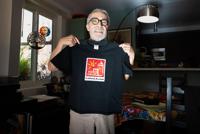
One of the many installations and archival photos part of "De Sol a Sol. Photo courtesy of Eric Magaña
Next Thursday is the last day to see the “De Sol a Sol" exhibit in person at the Norwalk Cultural Arts Center. After October 15, Magaña said the archives will continue to live in the place where it all started: Instagram.
Magana explained how, in 2021, before the exhibit, he created the Instagram page @bracerofamilyarchives to serve as an online hub for photographs and documentation of braceros who worked and lived in the U.S. He would make an open call to anyone who wanted to openly share any archives relating to braceros.
The page, which now has more than 6,600 followers, has preserved families' submissions for years now. “The page just became a natural, organic thing that people started to connect with,” he said.
Mangaña said the exhibit is dedicated to all the men who were part of the Bracero Program, who, while supporting their families, also stabilized and supported the U.S. economy.
“De Sol a Sol” is running Tuesday through Friday, 3-7 p.m., from now until October 15, 2026.




(0) comments
Welcome to the discussion.
Log In
Keep it Clean. Please avoid obscene, vulgar, lewd, racist or sexually-oriented language.
PLEASE TURN OFF YOUR CAPS LOCK.
Don't Threaten. Threats of harming another person will not be tolerated.
Be Truthful. Don't knowingly lie about anyone or anything.
Be Nice. No racism, sexism or any sort of -ism that is degrading to another person.
Be Proactive. Use the 'Report' link on each comment to let us know of abusive posts.
Share with Us. We'd love to hear eyewitness accounts, the history behind an article.