

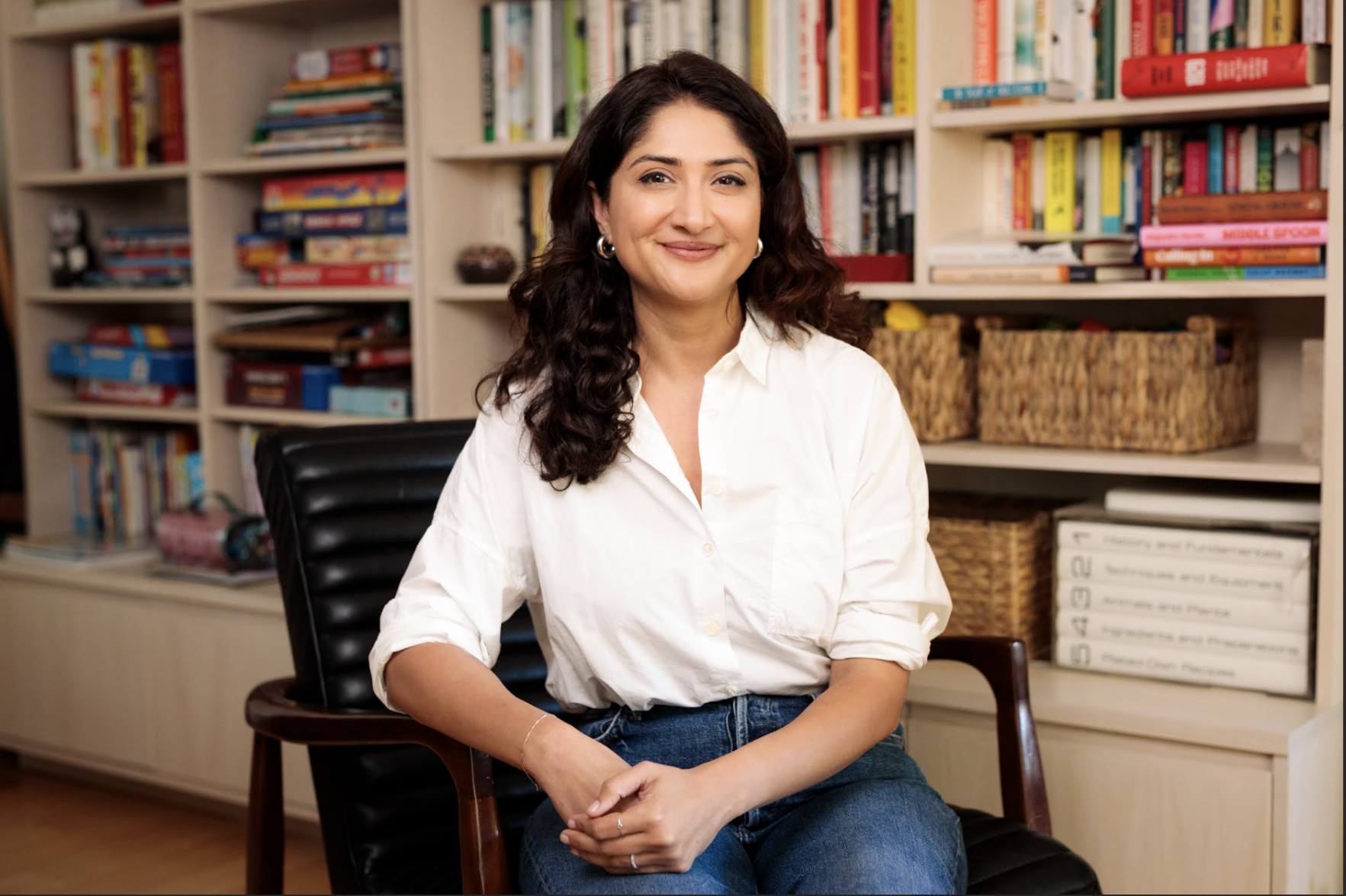
Faizah Malik, a housing attorney, is challenging incumbent Traci Park. Photo courtesy of Faizah Malik
Residents of Los Angeles’ City Council District 11 (CD-11), where the Pacific Ocean coastline meets the west side's urban feel, are witnessing one of the city’s most important council races in recent decades.
The district is the largest among the 15 in the City of L.A., stretching from the Santa Monica Mountains to Los Angeles International Airport, west of the 405 Freeway and covering neighborhoods like the Pacific Palisades, Venice, Mar Vista, Palms, Playa Vista, Playa del Rey and Westchester, among others.
In less than three weeks, registered voters will elect their next councilmember, who will represent them in city hall, create ordinances, approve the city’s budgets and set policies that govern services like police, fire, housing and infrastructure, among other things.
As the race for CD-11 enters its final stretch ahead of the June 2 primary, Faizah Malik, a housing attorney, is challenging incumbent Traci Park, a Democrat and former Republican, who has held the seat since 2022.
Malik, who is endorsed by the Democratic Socialists of America, L.A. chapter and is registered as a Democrat, has also worked for the New York City Council. She now serves as managing attorney for housing justice at Public Counsel, the largest provider of pro bono legal services in the U.S.
Malik, the eldest daughter of South Asian Muslim immigrants, attended public schools and graduated from Brown University and the University of Michigan Law School. She grew up in Orange County and moved to L.A. in 2017, where she has worked on tenant rights protections.
She sat with CALÓ News for a 40-minute exclusive interview where she provided details on her campaign, which is rooted in fighting for tenant protections, affordable housing, public safety and community-based solutions to homelessness in one of the wealthiest districts of L.A.
Representation
Despite the district being 60% white, she said she wants the district's leadership to represent all of its residents, something that, according to her, has not happened in the last four years.
"This district should have representation that represents the fullness of the district. Parks’s primary constituency has been the wealthiest in CD-11 and that's reflected in her donor base as well,” she told CALÓ News. “CD-11 tends to have a reputation as a district that is primarily white, wealthy and homeowner, but the west side was built by immigrant communities. My own family is Indian and Pakistani and there are a lot of Indian immigrants who live in CD-11. There's an Iranian community, a Japanese community. It's actually a very diverse district.”
She said that, like her, there are also thousands of families who rent living on the west side. “I don't want to live in a segregated city, economically or racially. I don't want the west side to be a place where only the wealthiest people can live.”
Despite being majority-white, she said there are plenty of Black, Asian, Indigenous and other communities of color, including Latinos with deep roots in the district.
She is referring to the late 19th and 20th centuries, when Mexican railroad workers, known as traqueros, made up nearly 60% of the railroad workforce in the Southwest and built the infrastructure that connected downtown L.A., playing a pivotal role in the overall development of the city.
“Our Mexican communities have historically built the west side and now they're being evicted and pushed out. I want a west side where everyone can have a future. I want us to have enough housing for everybody. I want people to have good-paying jobs so that they can afford to live here. I want our small businesses to be supported,” she said. “Those are things that impact everybody, but particularly marginalized communities that have not been served here historically.”
If elected, Malik would be the first non-white city council member for the district.
Housing and development
Malik said the housing affordability crisis is the number one challenge facing L.A. and its districts and is what is driving homelessness numbers to increase.
In CD-11, places like Venice have a significant, highly visible, unsheltered population. Malik says this is due to the high rents and limited low-income housing facilities in the district.
"A primary reason a lot of people oppose big apartment buildings is that they believe that they're all luxury apartments that nobody can rent and that they're like big ugly boxes that destroy the 'character of the neighborhood,' a phrase that has been weaponized to oppose housing,” she said. “At the same time, I do understand from historic communities the perspective of wanting housing that fits our needs. I want that for our communities: housing that's actually affordable.”
In 2024, Malik worked on the lawsuit against the City of L.A. for obstructing the construction of Venice Dell, a 140-unit affordable and supportive housing project in CD-11. The 100% affordable and supportive housing project has been in the works since 2016 and has yet to be built.
The lawsuit alleges closed-door sabotage and unlawful blocking of the project, specifically by Park and city attorney Hydee Feldstein Soto, who have opposed it since the start.
Malik has previously said that the mishandling of the Venice Dell is what also pushed her to run for office.
“Venice Dell is one project, but I've worked citywide to advocate for affordable housing as an attorney and we have always fought for the deepest affordability in all of the policies,” she said.
If elected, she said she would advocate for increased city transparency when it comes to new development in the form of a dashboard or digital portal where people would be able to access information on new housing developments, who they are for and how much money they are costing taxpayers.
The 2025 Palisades Fire
One of the biggest issues in the race is the 2025 Palisades Fire that destroyed parts of the district and economically impacted small businesses, homeowners, renters and workers.
The wildfire destroyed more than 6,000 structures in CD-11. More than a year later, construction and infrastructure restoration are underway and those most impacted are seeing a new business tax relief.
The recovery efforts will continue to be supervised by the new city council member, something that Malik said she will take very seriously.
“People feel a lack of accountability from the city for its failures. We didn't have adequate emergency planning, evacuation routes and the water reservoir was empty. There was no pre-deployment of the fire trucks from our council member,” she said. “There needs to be accountability and a plan about how we're going to fix those things. We're so focused on rebuilding quickly that we have dropped the ball on important infrastructure, emergency planning and climate resiliency planning.”
Malik said the lack of leadership from the city leadership and state legislators was felt heavily by community members.
“I’m focused on resident needs. Of course, we want to make sure our city processes are making it easy for people to rebuild, remediate their land, as well as making sure they get insurance — not just for homeowners, but for renters, workers, small businesses and our mobile home parks.”
Policing and public safety
Malik’s campaign has also been openly critical of the Los Angeles Police Department and its annual budget. She told CALÓ News she believes police, prosecution and imprisonment do not achieve real safety.
She said that while running for office, she learned that only about 12% of the 8,677 LAPD officers are deployed and patrolling the streets. “People think that the police budget is going to be used for patrolling. So much of our city's discretionary budget is going to the police, but not all of them are out on the street,” she said. “ We have 23 officers with guns and badges in media relations for some reason.”
Malik is talking about the 23 police officers in the media relations division, information provided by the Watch the Watchers public-records index created by the Stop LAPD Spying Coalition.
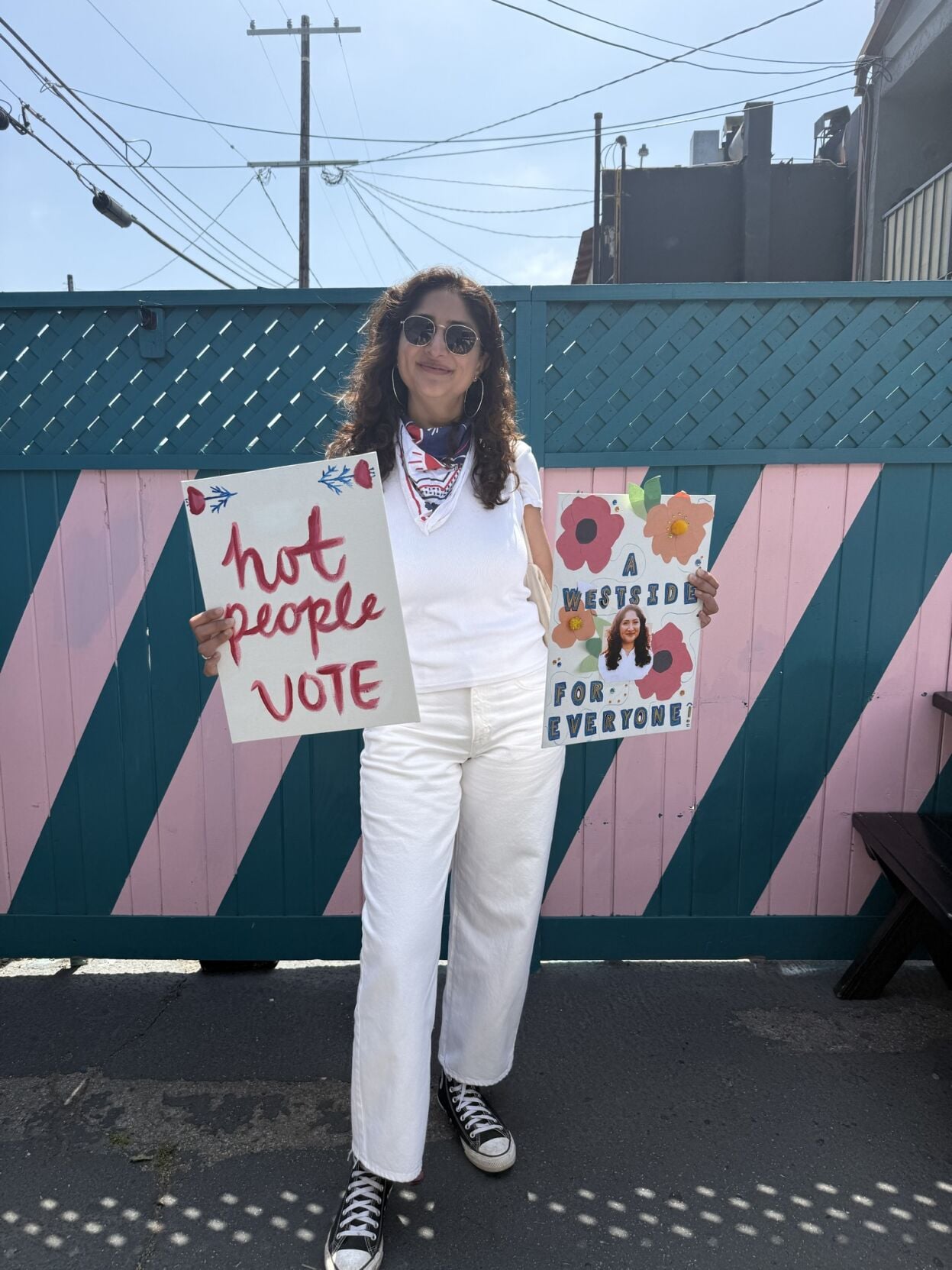
Malik, the eldest daughter of South Asian Muslim immigrants. Photo courtesy of Faizah Malik
She said that for her one of the biggest issues when it comes to police is that the department officers are set to handle tasks that are outside of their area of expertise, like responding to mental health calls and non-criminal calls, including those related to homelessness. She states that real and lasting community safety starts with ensuring access to stable housing and economic opportunities, as well as having food security and better lighting upgrades near high-traffic corridors.
Malik said she would like to see a revision of the police budget to prioritize patrols over responding to other needs that could be addressed by mental health professionals. “A lot of the calls that police respond to are for homelessness and that's not something they're equipped to do; those are jobs that we could have mental health professionals, [social workers or case managers] be doing,” she said. “We should be investing in the systems of care, our social safety net; that’s the infrastructure that creates safety. We have to get people to think about safety beyond post-harm policing, arrests and crime.”
Public Transportation
When it comes to public transportation in CD-11, Malik said she hopes more residents can soon make the switch from cars to city buses or trains, but understands that many do not feel safe and comfortable making the transition today. “ If we create a transit network that is accessible, frequent and fast, then people will eventually want to participate,” she said. The district today is served by a combination of transit operators, including LA Metro, Big Blue Bus and LADOT.
Malik, who used to live in New York, said she was a frequent subway user, but as a mother, that option in L.A. has felt less convenient and inaccessible, something she has also heard from other parents living in the district.
“Parents, who have been a focus group for me [as well as] important constituents here on the west side, say they do not take the buses or trains because they're worried about safety or how long a train might take,” she said.
Malik said another key component besides building public transit that is fast and safe, is investing in pedestrian infrastructure such as bike lanes, shaded bus stops and safe walkways. “We have to make the experience of public transit enjoyable; that's why we have to build street furniture and shade infrastructure so people will want to walk to transit. That's how I think we reduce car dependency,” she said.
Message for undecided voters
Registered voters can vote in person on June 2. Malik said she hopes to reach voters before the election, especially the many undecided voters.
“Our status quo is what we have right now with our council members, which is blocking housing, renter protections and solutions. The status quo is that our immigrant communities are being underserved. We need to be investing in affordable housing, in our streets and sidewalks and our community programs to create safety and stability and if we don't do those things, we are just going to keep being in the loop that we have been,” she said.
Early in-person voting in all Voter’s Choice Act counties begins on May 23. In addition, in-person early voting locations throughout California will open on Saturday, May 30.
June 2, election day, is the last day to vote in-person or to return a ballot by 8 p.m. Vote-by-mail ballots must be postmarked no later than June 2.




(0) comments
Welcome to the discussion.
Log In
Keep it Clean. Please avoid obscene, vulgar, lewd, racist or sexually-oriented language.
PLEASE TURN OFF YOUR CAPS LOCK.
Don't Threaten. Threats of harming another person will not be tolerated.
Be Truthful. Don't knowingly lie about anyone or anything.
Be Nice. No racism, sexism or any sort of -ism that is degrading to another person.
Be Proactive. Use the 'Report' link on each comment to let us know of abusive posts.
Share with Us. We'd love to hear eyewitness accounts, the history behind an article.