
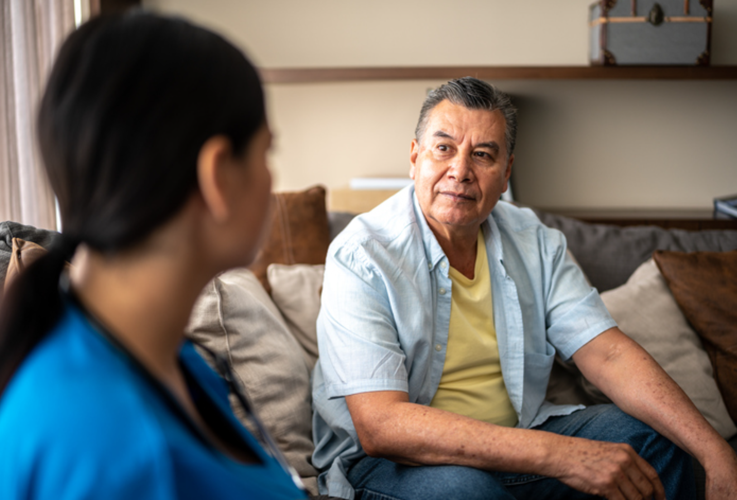



Changes to Medi-Cal are expected to impact millions of low-income Americans in the next few years. (Photo credit: California Budget & Policy Center.)
For the past two years, Latinx advocacy groups have been devising an ambitious plan to change the landscape of health equity for Latinx and Indigenous communities. Now, they are ready to begin pushing for their recommendations to become actionable policies.
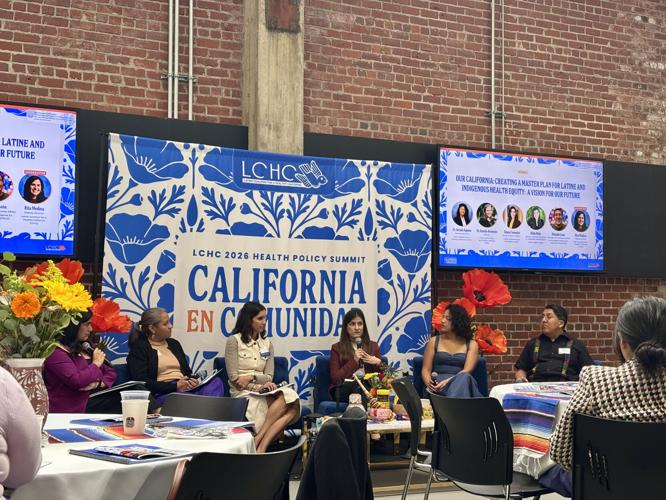
The Latino Coalition for a Healthy California (LCHC) brought together dozens of advocacy groups in the spirit of community last week to unveil the plan. The 123-page master plan includes nearly 90 recommendations ranging from restoring Medi-Cal access for undocumented immigrants to declaring health care a constitutional right.
“Those policy recommendations across health and social determinants of health are really practical. They're easy to engage with,” said LCHC Executive Director Seciah Aquino. “Ideally, this is something that all of us are unifying around … all the solutions will impact the greater good, and it will impact the greater population of California.”
The Latine and Indigenous Master Plan for Health Equity focuses on California’s approach to health care for Latine and Indigenous communities, though its policy recommendations could benefit more communities in the long run.

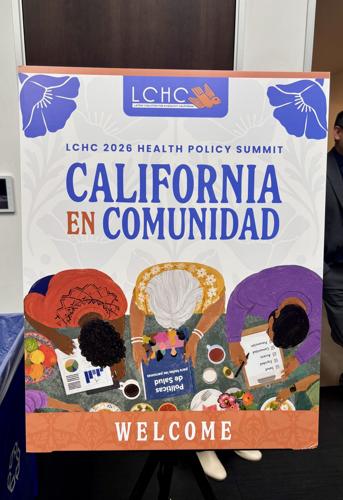
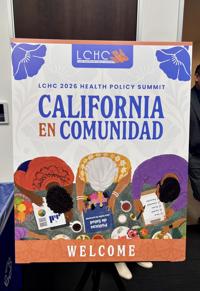
The Latino Coalition for a Healthy California hosted California En Comunidad on Oct. 20, a community event to unveil a new master plan for health equity in Latine and Indigenous communities. (Andrea Valadez / CALÓ News)
Aquino said the Latinx community has been on “defense mode” over the past few years, dealing with the effects of President Donald Trump’s violent mass deportation campaign. Multiple advocates said the community needs to take control of its health and wellbeing, instead of lawmakers simply telling them how it’s going to be.
That’s where the master plan comes in. It provides both short and long-term solutions to embed health equity in California’s DNA.
Barriers to care
Guided by listening sessions and existing research, advocates found Latinx and Indigenous communities reported the biggest barriers to accessing health care are high costs, lack of insurance, language barriers and an overall difficulty navigating the system on their own.
The number of uninsured Latinx adults in 2023 was three times greater than non-Latinx adults and two times greater for Latinx children, according to the California Health Care Foundation’s 2025 California Latino Health Almanac.
This issue is compounded by California’s recent Medi-Cal shakeup that cut access to Medi-Cal services across the board for undocumented immigrants.
Although the latest state budget has delayed most of these cuts for another year, if they are not reversed by July 1, 2027, an enrollment freeze for undocumented immigrants will continue and those who do receive coverage will lose the majority of their services and have new, higher premiums.
The master plan covers 11 policy areas to bridge that gap. Policy areas range from health care access (including dental, mental, reproductive and maternal and child health), aging/elder care and food security.
The policy recommendations are based on feedback received through both listening sessions and quantitative data.

The Latino Coalition for a Healthy California hosted California En Comunidad on Oct. 20, a community event to unveil a new master plan for health equity in Latine and Indigenous communities. (Andrea Valadez / CALÓ News)
Community voices are vital in this research to ensure that there is no "disconnect" in terms of programming and solutions, LCHC Policy Director Mar Velez said.
LCHC convened 16 advocacy groups throughout the state to conduct listening sessions in their communities, hearing directly from those impacted by the state’s health care system on what’s working and what’s not.
LCHC also partnered with the UCLA Latino Politics and Policy Institute (LPPI) to collect and analyze data on how these communities interact with California’s health care system.
“By partnering with community organizations, we are able to make sure that the products that we create are actually useful for people who need them to advocate to elected officials,” LLPI Director Amada Armenta said Tuesday.
Armenta added that research that is collected and created by community organizations and researchers that look like the people they are trying to help, is more effective.
Potential solutions
Some recommendations are simple enough to be put in motion as early as next year, Velez said, adding that others will take years of building “willpower,” both among the general public and lawmakers.
Bills that could be passed as early as next session, backed by data, include increasing the number of Indigenous reporters in health care and requiring health professionals to take cultural competency courses.
One recommendation for addressing Latinx barriers to health care includes redirecting the estimated $8.5 billion undocumented Californians pay in taxes from the General Fund to expand and restore Medi-Cal coverage for all Californians regardless of immigration status.
The next two recommendations under the health care umbrella may take some long-term heavy lifting.
LCHC recommends the state repeals the Medi-Cal enrollment freeze, which could be done through legislation or executive order. Potentially one of the most ambitious recommendations, the organization is calling for a state Constitutional amendment cementing health care as a human right.
Looking to the future, the master plan also recommends the state take steps to support what is expected to become a booming population of aging Latinx adults.
Latinx individuals are expected to be the fastest growing elderly population over the next two decades, according to the Public Policy Institute of California. Latinx elders are expected to make up 24% of California’s aging population by 2040.
The main recommendation for this category is to expand access to retirement benefits to all Californians, regardless of immigration status.
High hopes for Becerra
With a new governor set to take office next year, advocates see an opportunity to advance the plan's recommendations.
Xavier Becerra, the former U.S. secretary of health and human services, once told CALO News he would be a “health care governor,” and has expressed openness to working with advocates on reform, including requiring large corporations to contribute to Medi-Cal, according to reporting from POLITICO.
LCHC has been in talks with Becerra’s campaign since earlier this year, Aquino said, sharing policy proposals and potential executive actions.
“While we're supportive, we have high expectations,” Aquino said.
“We wanna give them the blueprint for his administration to have clear, practical solutions at their fingertips and be able to help us move that forward in the year and the years to come,” Aquino added.
While the Becerra campaign did not respond to a specific question on whether Becerra would be open to any of the executive order recommendations, campaign spokesperson Jonathan Underland said in a statement that if elected governor, Becerra will “continue fighting to ensure equity and access to quality affordable healthcare, as he has done throughout every stage of his career."












(0) comments
Welcome to the discussion.
Log In
Keep it Clean. Please avoid obscene, vulgar, lewd, racist or sexually-oriented language.
PLEASE TURN OFF YOUR CAPS LOCK.
Don't Threaten. Threats of harming another person will not be tolerated.
Be Truthful. Don't knowingly lie about anyone or anything.
Be Nice. No racism, sexism or any sort of -ism that is degrading to another person.
Be Proactive. Use the 'Report' link on each comment to let us know of abusive posts.
Share with Us. We'd love to hear eyewitness accounts, the history behind an article.