
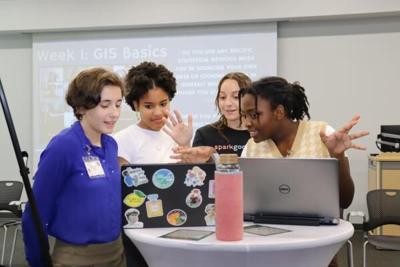
(StatePoint) Millions of people are concerned that artificial intelligence (AI) and other technological advances will take away the jobs people need to support themselves and their families. But a new study finds that many more afterschool programs are providing STEM (science, technology, engineering and math) education to prepare children and youth for the workforce of the future.
The study from the Afterschool Alliance, “Afterschool STEM Takes Off,” finds that 92% of parents of afterschool students now say their child’s program offers STEM learning – a significant increase from a decade ago. But access for students in rural communities and low-income families is lagging, and more than three in four children and youth whose parents want afterschool programs for them are not enrolled at all.
There has been a dramatic jump in parents reporting their children engage with STEM in their afterschool programs, from 69% in 2014, to 73% in 2020, to 92% – or 6.4 million students – today. A majority of families today (54%) report that their children engage with STEM in afterschool at least two or three times per week. But parents with low incomes report significantly less frequency than parents with higher incomes.
Rural families also face barriers to accessing STEM in afterschool, with 88% of rural families reporting that STEM activities are available in their child’s afterschool program, compared to 96% of urban parents. Rural parents also report less tech and computer science in afterschool programs than urban parents.
“STEM literacy is no longer optional. It’s the foundation of nearly every aspect of our world today. We’re counting on the next generation to ensure AI and other innovations are used responsibly and in ways that improve our lives,” says Afterschool Alliance Executive Director Jodi Grant. “Afterschool is an optimal setting for STEM education because it creates opportunities for students to explore their interests and see how hands-on engagement with STEM can solve real-world problems outside the school day. We are thrilled with the tremendous uptick in afterschool STEM learning.”
Most parents agree this is important. Three in five (61%) report satisfaction with the STEM offerings in their child’s afterschool program. Among the other findings:
• There were increases in STEM in afterschool from 2014 to 2025 in every state.
• Parents of boys and girls report similar levels of access to STEM in their child’s afterschool program, but parents of girls prioritize computer science, technology and engineering less than parents of boys.
• Parents prioritize STEM, and specifically computer science, more as their children age.
According to advocates, the following policy recommendations will continue the progress:
• Increase funding to meet the demand for afterschool and summer programs.
• Ensure afterschool programs are included as partners in legislation focused on education and training in emerging STEM fields.
• Increase targeted investments in computer science, technology and engineering offerings in afterschool programs.
• Increase investments in afterschool programs serving rural communities.
To learn more and read the full report, visit https://afterschoolalliance.org/AA3PM/landing/.
“We need to continue the progress and, most of all, ensure that millions more children and youth can access afterschool programs and the STEM learning opportunities they provide,” Grant says. “As long as 22.6 million students whose parents want afterschool programs for them are missing out, we have urgent unfinished business.”












(0) comments
Welcome to the discussion.
Log In
Keep it Clean. Please avoid obscene, vulgar, lewd, racist or sexually-oriented language.
PLEASE TURN OFF YOUR CAPS LOCK.
Don't Threaten. Threats of harming another person will not be tolerated.
Be Truthful. Don't knowingly lie about anyone or anything.
Be Nice. No racism, sexism or any sort of -ism that is degrading to another person.
Be Proactive. Use the 'Report' link on each comment to let us know of abusive posts.
Share with Us. We'd love to hear eyewitness accounts, the history behind an article.