
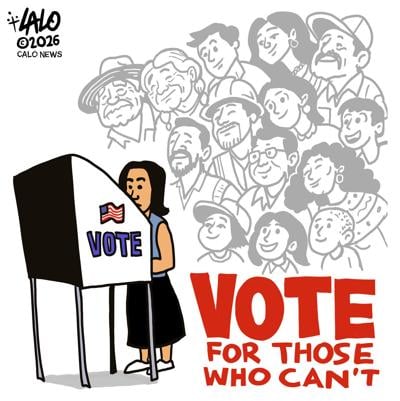

Vote for those who can't vote.
Yesterday, November 3, I worked 17 consecutive hours at a polling place in Southern California's Inland Empire. It was a long day, but one that reminded me why the right to vote matters so deeply. After spending much of October working at a vote-by-mail drop-off site, I witnessed something that left me both hopeful and deeply reflective: people were showing up and showing up with purpose.
I was especially happy to see so many young people, including first-time voters, making their way. There was something meaningful about watching this new generation participate in democracy, particularly at a time when our country is experiencing so much political division, uncertainty and unrest.
As the day unfolded, I heard people share why they were voting. Many expressed frustration with what they described as the circus coming out of the White House. Others spoke about the need for change, the pain they have witnessed in immigrant communities, and the disappointment of seeing a country move in a direction they never imagined when they cast their votes in previous elections.
Some came to defend democracy itself. Others simply wanted to move forward, hoping for something better, something more positive, something that would bring a sense of dignity and possibility back into our communities.
What struck me most was that despite their different backgrounds, ages and political experiences, so many people shared a common desire to have their voices heard.
One encounter will stay with me. A young African woman walked into the place with tears in her eyes. She shared that she was very emotional as she was there to vote in honor of her ancestors, people who had died fighting for the right and privilege to vote. Her words moved me deeply.
In that moment, the act of voting became much bigger than marking a ballot. It became an expression of memory, sacrifice, courage and responsibility. It reminded me that the freedoms we exercise today were not simply handed to us. Generations of people fought, marched, organized, suffered and even gave their lives so that future generations could have a voice in shaping their communities and their country.
And here we were, in a polling place, exercising that hard-won right.
It made me think about how easily we can take our vote for granted. For some, voting may feel like an ordinary civic responsibility. For others, it represents the culmination of generations of struggle. It is a privilege, but it is also a responsibility.
This morning, November 4, I woke up and began following the election results. I was encouraged by the political shifts taking place across the country and particularly moved by the historic victories of women of color who are breaking barriers that have stood for generations.
We are witnessing Indigenous women, Black women and Latina women stepping into extraordinary leadership roles. Deb Haaland’s election as New Mexico’s governor marks the first time a Native American woman will lead a state. Peggy Flanagan’s election to the U.S. Senate makes her the first Native American woman elected to that chamber. Georgia elected Keisha Lance Bottoms as the nation’s first Black woman governor, while Texas elected Gina Hinojosa as its first Latina governor.
These are not simply electoral victories. They represent generations of women whose voices, leadership, knowledge and contributions have too often been overlooked, excluded or denied access to the rooms where decisions are made.
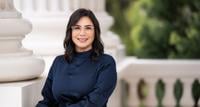
As a woman of color, a mother, a Mexican American and someone who has spent much of her life working alongside immigrant communities, I cannot help but feel the significance of this moment.
Representation matters. Who sits at the decision-making table matters. Having representatives who understand these intersecting realities matters. Representation is not simply about having a seat at the table; it is about whose lived experiences, histories and voices are present when decisions are made.
I also recognize that one election does not erase the challenges ahead. It does not undo the harm experienced by immigrant communities, repair every broken system or resolve the deep divisions in our country. Change requires more than casting a ballot every few years. It requires participation, accountability, organizing and the willingness to remain engaged long after election day.
But this election reminded me that democracy is not something that happens only in Washington, Sacramento or the offices of elected officials. Democracy happens in our neighborhoods, in our conversations, in the choices we make and in the moments when ordinary people decide that their voices matter.
Democracy happens when a young person votes for the first time, when someone shows up to honor ancestors who never had that opportunity, when a mother brings her hopes for her children’s future into a voting booth. When a community decides it is time for something different, better.
After 17 hours working to ensure people’s right to vote, I came home tired, but my heart was full.
May we never forget the sacrifices that made this right possible. May we never underestimate the power of showing up. And may we keep building a country where every voice is valued, every community is represented and everyone has the opportunity to help shape our collective future.
Our vote is our voice. And when we use it, we honor not only ourselves, but those who came before us and those who will come after us.




(0) comments
Welcome to the discussion.
Log In
Keep it Clean. Please avoid obscene, vulgar, lewd, racist or sexually-oriented language.
PLEASE TURN OFF YOUR CAPS LOCK.
Don't Threaten. Threats of harming another person will not be tolerated.
Be Truthful. Don't knowingly lie about anyone or anything.
Be Nice. No racism, sexism or any sort of -ism that is degrading to another person.
Be Proactive. Use the 'Report' link on each comment to let us know of abusive posts.
Share with Us. We'd love to hear eyewitness accounts, the history behind an article.