
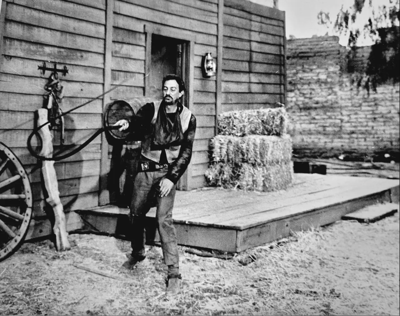
Dressed in black — pants, shirt, leather vest and a high-crowned cowboy hat — it was impossible not to recognize Mario Almada, the legendary “Mexican Vigilante.” While crossing a street in Tucson, a bus stopped at the intersection next to him. Within seconds, dozens of passengers recognized him and hurried off to surround him and hug him for the films that made Almada a beloved folk hero for Mexican audiences and especially cherished by working-class people.
“They would say, ‘thank you, thank you,’” recalls his eldest son, Mario Almada Ruiz. It was no surprise. For decades, entire generations grew up watching the Sonoran brothers, Mario and Fernando Almada Otero, riding among cowboys, police officers and bandits, forging a distinct style that would forever shape popular Mexican cinema.
Mario even ventured into a sub-genre of action films called “narco cinema,” where he fought against violence and drug traffickers.
The Almada brothers were not professional actors. They entered the film industry by chance. México seemed to need its own “Lone Ranger” on horseback who imposed justice on screen.
Mario and Fernando were naturals for that role. They knew the countryside, handled a whip skillfully, were expert horsemen and farmers in Huatabampo, a Sonoran town famous for its ties to the Mexican Revolution. That is where the legend began.
Mario’s eldest spoke in Tucson this month with educator Eleazar Ortiz about his book, “Mario Almada ‘La leyenda’: Una historia de película,” dedicated to his father’s life as a beloved icon of Mexican movies.
“It’s the first and only book written about him. It’s a biography that covers everything, from his childhood to his passing. My goal is to firmly establish his legacy,” Mario Almada Ruiz says.
That legacy includes more than 350 films, a number that made his father among actors with the highest number of leading roles in the world. “From the moment he started, he never stopped making movies,” he recalls.
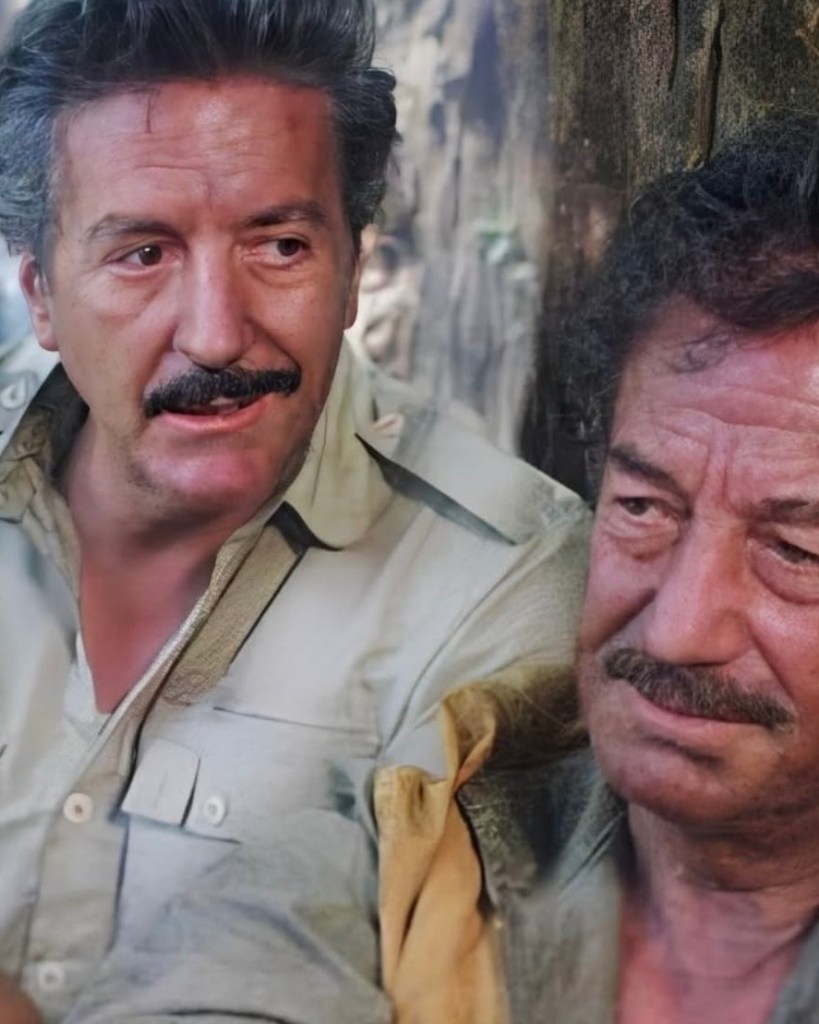
Brothers Mario and Fernando Almada Otero revolutionized popular Mexican cinema.
His cinematic perseverance and catalogue far exceeds U.S. Westerns star John Wayne and action star Chuck Norris, whom Almada was often compared to.
Almada entered film when many actors were already considering retirement. He was 42 years old and, according to his son, it happened by chance — an actor had an accident, and he filled a small role. Soon after came the opportunity that would change Almada’s destiny.
That breakthrough was “Todo por Nada” (1968). The film broke with the conventions of the Mexican Westerns of its time by introducing martial arts and telling a family revenge story filmed with raw realism in the Sonoran Desert, solidifying the vigilante archetype.
“It’s considered one of the top 20 films in national cinema,” Almada Ruiz says.
Other box-office successes followed. Among them was “El tunco Maclovio,” which earned Almada the Diosa de Plata, Silver Goddess in English, award for Best Leading Actor for his performance in the 1970 film. Over time, the story and his character became a popular reference in Mexican slang.
“It’s one of the films people liked the most,” Almada Ruiz remembers.
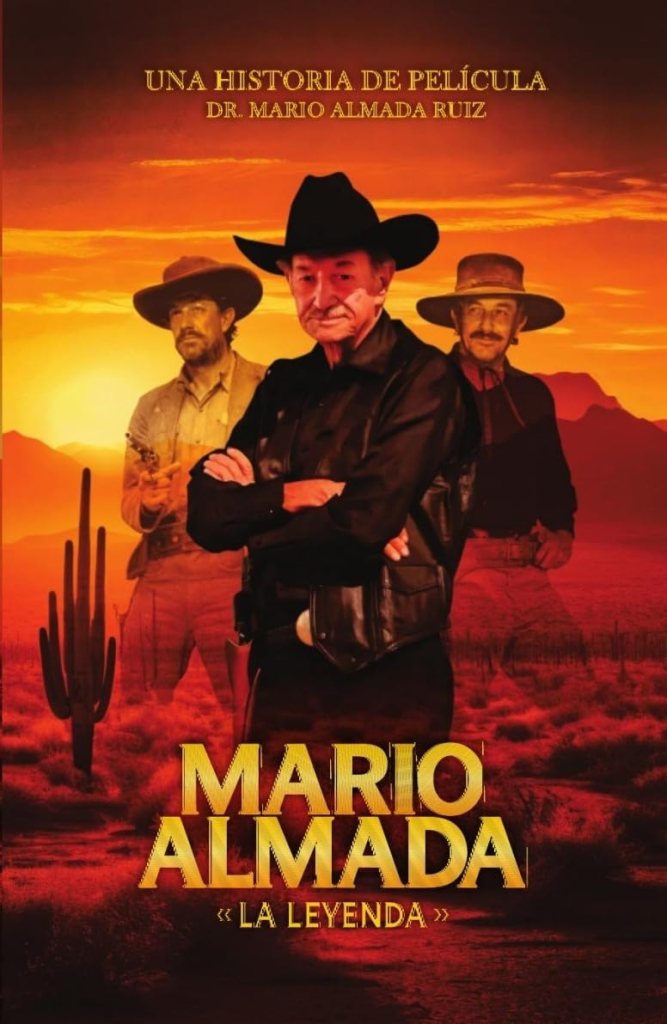
Biography of Mario Almada written by his eldest son and published in 2025
He also starred in several action films based on or inspired by the famous songs of Los Tigres del Norte.
Almada was still acting shortly before he died at the age of 94 in 2016. Two more of his films were released in 2017.
Many of his films were shot in San Antonio, Texas, where traffickers, sheriffs and borderlands intersected. That setting strengthened Almada's connection to the Southwest and its Mexican people.
“My father used to say that immigrants saw in him a vigilante, a hero,” his son remembers.
When asked if this happened because Mexicans wanted a Mexican vigilante, Almada Ruiz responds: Yes.
“That’s what they called him — the Vigilante,” he says. “And he was like that in real life too — very fair, very respectful toward women. He didn’t like to see abuse. In the hundreds of films he made, he never said a rude word.”
Nor at home. Almada Ruiz recalls that his father never yelled at them. “With us, he was a good father,” he says. They have six children in the family, four sisters and two brothers.

Mario Almada, the legendary “Mexican Vigilante” of cinema. Credit: Courtesy of Mario Almada Ruiz
Almada also had great friendships in the film world. Among them, his son remembers the actor Mauricio Garcés. At first glance, they seemed opposites — Garcés, with his silk robes and sophisticated on-screen style. Almada, the rugged cowboy with a thick mustache and leather vest.
“You wouldn’t think they’d get along so well,” he jokes. But the friendship was real. Garcés would pick him up in a large convertible, and together they would go out and have fun. “They really partied well,” he says.
Almada never stopped working. His final film appearance was at age 92 in “El Infierno.”
“He used to say he charged for wrinkles,” Almada’s son says, letting out his first and only loud laugh of the interview with Arizona Luminaria.
Almada died in México surrounded by his family — children and grandchildren who lovingly nicknamed him “cabelo.”
“He wasn’t sick, he didn’t even take medicine,” his son says. “He died of fatigue — the horse grew tired and he ran out of bullets.”
His ashes rest in his hometown of Huatabampo, in the Cristo Rey Catholic Church.
This article first appeared on AZ Luminaria and is republished here under a Creative Commons Attribution-NoDerivatives 4.0 International License.










(0) comments
Welcome to the discussion.
Log In
Keep it Clean. Please avoid obscene, vulgar, lewd, racist or sexually-oriented language.
PLEASE TURN OFF YOUR CAPS LOCK.
Don't Threaten. Threats of harming another person will not be tolerated.
Be Truthful. Don't knowingly lie about anyone or anything.
Be Nice. No racism, sexism or any sort of -ism that is degrading to another person.
Be Proactive. Use the 'Report' link on each comment to let us know of abusive posts.
Share with Us. We'd love to hear eyewitness accounts, the history behind an article.