
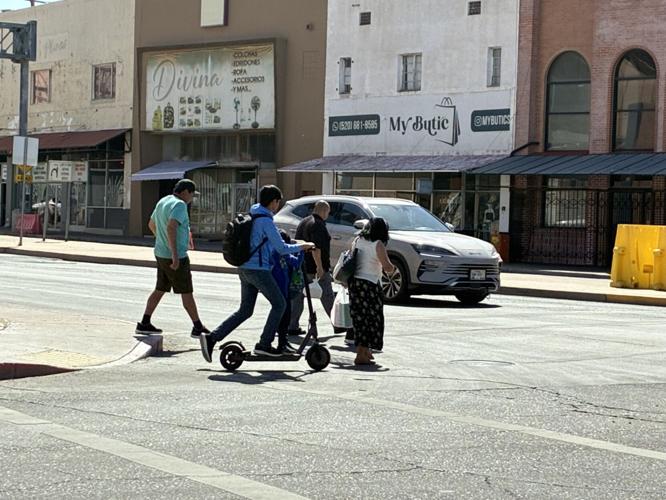






A pedestrian uses a scooter to travel from Nogales, Sonora to Nogales, Arizona. (César Barrón/CALÓ News)
NOGALES, Ariz. – Every morning, as dozens of motorists wait in long lines to cross the border between Nogales, Sonora, and Nogales, Arizona, a growing number of people have found a way to save time: using motorized electric scooters, also known as e-scooters.
Crossing the border on a scooter has become an increasingly visible trend among cross-border communities at the ports of entry in Nogales and other cities along the U.S.-Mexico border.
For many, it offers a way to save both time and fuel.
Brenda Yadira is one of them. She lives in Nogales, Mexico, and works at a school in Nogales, Arizona, just a block away from the Dennis DeConcini Port of Entry. She bought the scooter two months ago.

Brenda Yadira uses a scooter to travel from Nogales, Sonora to Nogales, Arizona. (César Barrón/CALÓ News)
“Before I had the scooter, I used to cross the border on foot, and it would take about two hours; on the scooter, it takes me about 10 minutes to cross,” she told CALÓ News while being interviewed just meters away from crossing the border.
In addition to saving time, she saves on gas. When she walked across the border, a tank of gas used to last her two weeks, whereas when she drove her car across, she would fill up the tank twice a week, she noted.
The motorized scooter cost her $330. Unlike other models, hers has a seat. She had previously bought a stand-up scooter—which she gave to her daughter—before purchasing the one with a seat. It is more comfortable, she remarked.
She added that it takes between two and three hours to charge, and the charge lasts up to four days.
Students who cross the border daily are also among those who have adopted this new mode of transportation.
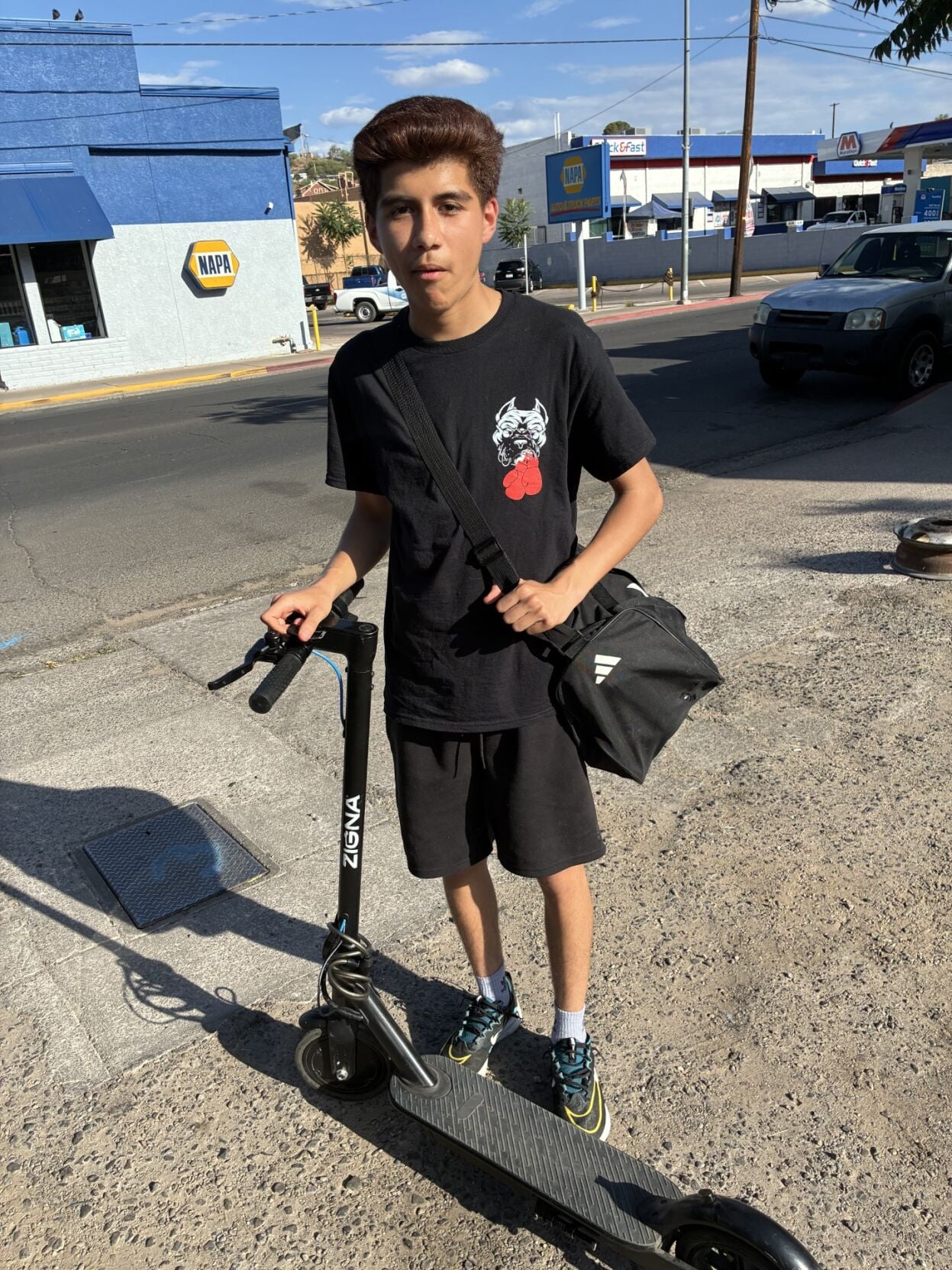
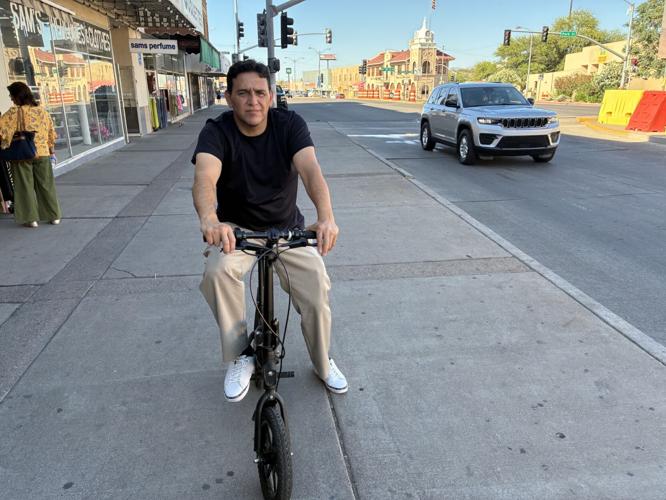
Mateo Dórame uses a scooter to travel from Nogales, Sonora to Nogales, Arizona. (César Barrón/CALÓ News)
Mateo Dórame, a 15-year-old student, uses a motorized scooter to travel from his home in Nogales, Sonora, to Nogales, Arizona, where he attends school in the mornings and goes to the gym in the afternoons.
“I cross on the scooter every day,” Dórame said. It takes him between 10 and 15 minutes to cross the border. Crossing on foot used to take half an hour—and sometimes up to one or two hours—but since buying his new mode of transportation five months ago, those long waits have become increasingly rare.
The young student told CALÓ News that his scooter cost five thousand pesos (approximately $290).
When crossing back into Mexico, loved ones sometimes wait to drive him home, but at other times he makes the trip on his scooter; his home is approximately four miles from the border crossing.
Dórame charges the scooter’s battery daily, and it lasts for about two hours. He uses it to commute between his home and school or the gym.
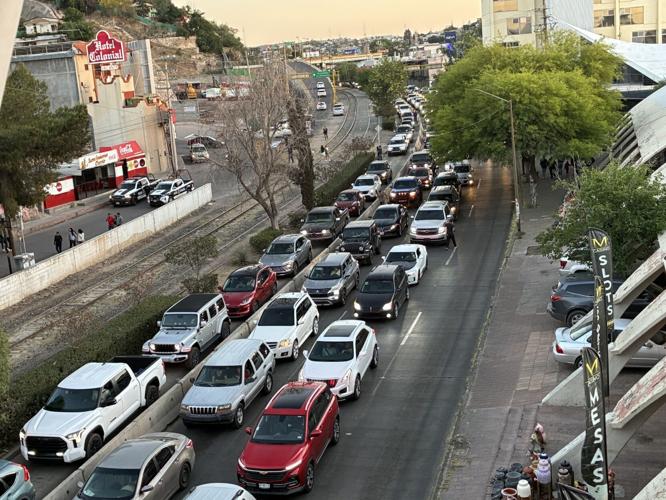
U.S. Customs and Border Protection (CBP) reports on its website that 3.7 million vehicles crossed through the Nogales ports of entry during the 2025 fiscal year. December saw the heaviest traffic, with over 324,000 crossings. During that season, motorists waited between two and four hours to cross into Arizona, according to surveys conducted by CALÓ News last December.

Three lines packed with cars wait to cross the border from Nogales, Sonora into Nogales, Arizona. (César Barrón/CALÓ News)
While motorized scooters have become more common, they are also subject to Arizona regulations.
In Nogales, Arizona, scooters must be ridden on the street alongside traffic, just like bicycles. They must be equipped with lights or reflectors to ensure visibility at night, said Officer M. León of the Nogales Police Department.
According to the department, under Arizona statute A.R.S. § 28-819, motorized scooters are generally treated the same as bicycles. Riders have the same rights and responsibilities as cyclists and are not required to hold a driver's license or carry vehicle registration or insurance.
Arizona law defines a stand-up motorized scooter as a device equipped with handlebars and a foot platform, capable of a maximum speed of 20 miles per hour. Additionally, A.R.S. § 28-812 requires cyclists—and, by extension, motorized scooter users—to obey traffic laws and traffic control devices when riding on public roads.
For frequent crossers, the duration of the trip makes all the difference.
José Enrique de la Rosa is another resident of Nogales, Sonora, who crosses the border; for about three months, he has been using a motorized scooter with a seat—something similar to a bicycle. When asked how long it takes him to cross the border using this new method, he replied: "If it takes me three minutes to cross, that feels like a long time."
He used to cross the border on foot, but in recent months—as wait times have grown significantly—he would have to wait up to an hour, and sometimes longer, to cross into the United States, José Enrique explained.

José Enrique de la Rosa uses a scooter to travel from Nogales, Sonora to Nogales, Arizona. (César Barrón/CALÓ News)
The scooter cost him $250, de la Rosa said, and he saves money by not having to buy as much gasoline.
The problem facing those who own this type of vehicle is that there are no repair shops for them in either Nogales, Sonora, or Arizona, de la Rosa noted. His accelerator has already broken down, and he has seen many others facing the same situation.
At other border crossings, such as Calexico, California, CBP announced on June 8 that, effective June 15, crossing via bicycle, e-bike, scooter, e-scooter, or similar modes of transport through vehicle lanes is prohibited to reduce the risk of accidents in processing areas.
Travelers using these devices may continue to enter the United States through pedestrian processing areas, where they will be safely inspected and processed, according to the CBP statement.
Although no such restriction exists in Nogales, the rise in the use of micromobility vehicles to cross the border reflects a new reality within the community.
An e-scooter can mean the difference between taking just a few minutes to cross the border and waiting in long lines of vehicles—sometimes for hours. E-scooters are transforming the way many residents experience the border crossing.












(0) comments
Welcome to the discussion.
Log In
Keep it Clean. Please avoid obscene, vulgar, lewd, racist or sexually-oriented language.
PLEASE TURN OFF YOUR CAPS LOCK.
Don't Threaten. Threats of harming another person will not be tolerated.
Be Truthful. Don't knowingly lie about anyone or anything.
Be Nice. No racism, sexism or any sort of -ism that is degrading to another person.
Be Proactive. Use the 'Report' link on each comment to let us know of abusive posts.
Share with Us. We'd love to hear eyewitness accounts, the history behind an article.