
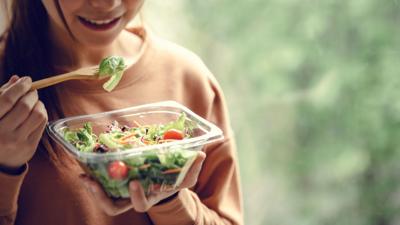


(Canva)
Growing up in a Latinx household, sugar-sweetened beverages were fixtures at birthdays, holidays and family gatherings. As I got older, I began warning my family: sugary drinks are linked to higher rates of diabetes and prediabetes, especially among Latinx communities, and our family history puts us at greater risk. The response was almost always the same:Es para la visita.It's for the guests.
Those encounters taught me something public health professionals know well: knowledge alone rarely changes behavior. Healthy choices are shaped by culture, relationships, affordability and the environments around us.
That lesson feels especially relevant now. Recently, U.S. Health and Human Services Secretary Robert F. Kennedy Jr. debuted “The Real Food Show”, a cooking program intended to promote the new Dietary Guidelines for Americans. The premise sounds familiar: make healthy food approachable and show families how to prepare nutritious meals on a budget. But as EatingWell reported, the 19-minute episode mixes useful nutrition advice with misinformation and claims. The irony is hard to miss as the federal government eliminates a public health program designed to provide evidence-based nutrition education. It is using a cooking show to fill the conversation.
For more than three decades, one of the nation's most quietly effective public health programs helped families navigate those barriers. In California, it was called CalFresh Healthy Living. Last summer Congress ended it, and the funding officially runs out on September 30.
Buried in the 2025 budget reconciliation law, the One Big Beautiful Bill Act saw the elimination of SNAP-Ed, the nutrition education arm of federal food assistance and the funding source behind CalFresh Healthy Living. The line item and staff disappeared. The consequences will not.
Diabetes has touched nearly every generation of my family. Tíos and Tías (uncles and aunts) were diagnosed young, and when I was 17 my abuelito (grandfather) died from complications of the disease. Years later, as a professional health educator, I found myself supporting that same education in rural California, where I learned CalFresh Healthy Living was never simply about telling people what to eat.
CalFresh Healthy Living worked on two levels. It taught practical skills: stretching a food budget, preparing affordable meals, reading nutrition labels and helping children build healthy habits. It also changed the environment where those choices happen by supporting school gardens, corner stores with fresh produce and safer spaces for physical activity. In public health, we call this policy, systems and environmental (PSE) change: the difference between telling people to eat healthier and creating communities where healthy choices are realistic.
CalFresh Healthy Living was rarely just a pamphlet. It was the garden planted with students, the Rethink Your Drink campaign, the community health worker who returned year after year, the slow, often invisible, work of changing the conditions that shape health.
The loss extends far beyond individual classes. A July 2026 study from the University of California Nutrition Policy Institute found SNAP-Ed was the primary funding source of nutrition and physical activity work in 87% of California's local health departments. Nearly half of those departments anticipate layoffs. More than four in five expect remaining staff to shift away from nutrition. One local leader described the result simply: the infrastructure built to prevent diet-related disease is "just crumbling."
This should trouble fiscal conservatives and progressives alike. The United States already spends more on health care than any other high-income nation while posting worse outcomes. And SNAP-Ed’s $536 million budget was a rounding error beside the $186 billion cut from SNAP itself. Eliminating it does not eliminate the cost of diet-related disease. Prevention becomes treatment. Upstream investment becomes downstream spending. We readily pay for hospitalizations, dialysis and amputations after the disease develops, yet hesitate to help people, like my abuelito, avoid them.
Weeks before the deadline, Rep. Brandon Gill of Texas spent a June committee hearing demanding to know whether Americans “need Coca-Cola to survive.” On the health effects of soda, he is not wrong. But that is the point. SNAP-Ed was the program working on that problem, the educator who taught a child to reach for water. You do not cut soda consumption by firing the people teaching families to drink less of it. An administration that promised to "Make America Healthy Again" eliminated the very program built to do it.
Critics point to a 2019 government watchdog report finding the USDA wasn’t effectively tracking whether its nutrition programs worked. Those who ran SNAP-Ed say the reporting system built since was working well. Either way, prevention is hard to measure. Its successes are the diagnosis delayed, the heart attack that never happens. But hard to measure is not the same as ineffective. An independent analysis of Illinois's SNAP-Ed estimated that every dollar invested returns between $5.36 and $9.54 in future savings.
Public health programs do not begin with funding. They begin with trust. Trust between schools and health departments. Community health workers who return to the same neighborhoods year after year. Nutrition educators who understand a family's culture, language and barriers, not just what is on their plate. Those relationships take years to build and only months to dismantle.
California is preserving what it can, toolkits, garden resources, and peer networks, so communities can continue some of this work, even as the wind-down dampens local capacity. These efforts matter, but they cannot replace the scale and consistency of a funded statewide program.
I still think about those gatherings where sugary drinks filled the table because "they were for the guests." Changing habits was never going to happen through one conversation. It took years of patient, community-based work—the work CalFresh Healthy Living supported. I wonder whether it might have given my abuelito more healthy years, and me more afternoons listening to his stories, more time simply being his granddaughter.
Prevention is measured not only in dollars saved, but also in moments families get to keep.







(0) comments
Welcome to the discussion.
Log In
Keep it Clean. Please avoid obscene, vulgar, lewd, racist or sexually-oriented language.
PLEASE TURN OFF YOUR CAPS LOCK.
Don't Threaten. Threats of harming another person will not be tolerated.
Be Truthful. Don't knowingly lie about anyone or anything.
Be Nice. No racism, sexism or any sort of -ism that is degrading to another person.
Be Proactive. Use the 'Report' link on each comment to let us know of abusive posts.
Share with Us. We'd love to hear eyewitness accounts, the history behind an article.