
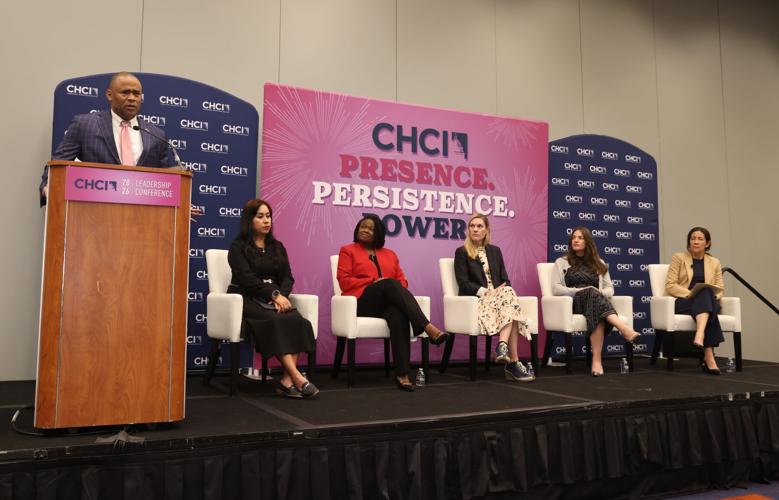




Congressman Marc Veasey (D-TX) provided closing remarks at the panel. (By CHCI)
Latino communities in the U.S. have been at the center of important advances in chronic disease prevention and treatment, but many are also unaware of how to benefit from emerging medical options.
For people unfamiliar with certain chronic conditions like obesity, it’s easier to criticize a person with weight problems than to try to learn the reasons that have led to their potential chronic condition.
To better understand obesity as a chronic disease in the Latino community, a group of experts recently offered insight during a panel at the Congressional Hispanic Caucus Institute (CHCI) annual leadership conference in Washington, D.C.
The overall adult obesity rate for Latino and Hispanic populations in the U.S. ranges between 36% and 45%, depending on the specific demographic subgroup, sex, and state data, according to the Centers for Disease Control and Prevention (CDC).
Some of the factors that may be influencing this prevalence are biological and physiological, according to one of the panelists, Dr. Karina Lora, associate professor with the Department of Exercise and Nutrition Sciences at George Washington University.
She said the mixed ancestry that Latinos have, like African American, European and American Indian, creates a genetic profile that predisposes Latinos to developing certain chronic diseases such as type 2 diabetes.
“Another factor is the compound effect of these genetic factors with diet, and then that creates an environment or a situation in which can increase the likelihood of the development of diabetes,” she said. “Social determinants of health factors such as access to education, access to healthcare, access to transportation, discrimination and immigration status. All of that creates multiple challenges for Latinos.”
The barriers to confronting the diagnosis
Dr. Victoria Bouhairie groups the barriers into three categories: education, access and stigma and bias.
Bouhairie, a senior vice president with the Obesity Association, a division of the American Diabetes Association, said education needs to come from both the healthcare provider side and the person living with obesity.
“From the healthcare provider side, there tends to be a lack of feeling comfortable providing obesity management,” she said. “In addition to the patient side, acknowledge that this is a chronic disease and this does actually need treatment.”

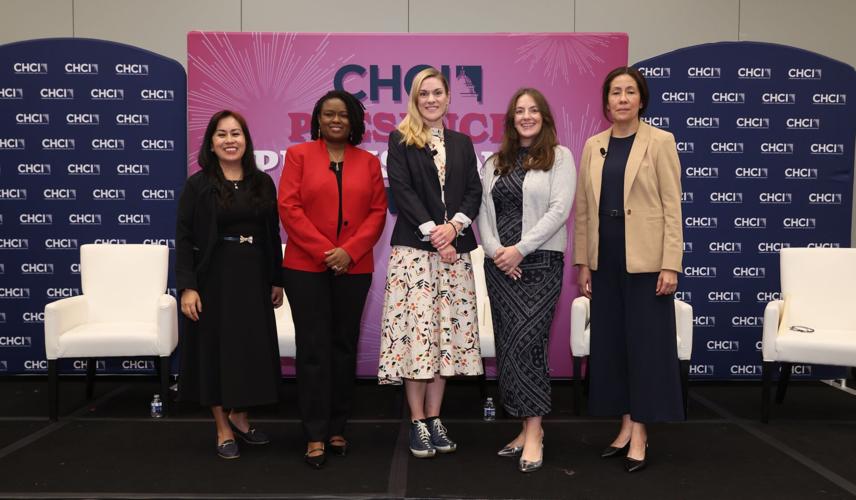
From L to R: Journalist Jacqueline García, Dr. Victoria Bouhairie, Dr. Tracy Zvenyach, Leslie Zelenco with KDCR Partners, and Dr. Karina Lora. (By CHCI)
Then there is access to quality obesity management, Bouhairie said, and that’s often hindered by systemic barriers or something more internal. She said that is where hesitation arises, due to stigma and bias that have existed in the past.
“Stigma and bias itself, where those living with obesity have had years and years and years of having to be stigmatized, " she said.
That could stem from childhood, Bouhairie added, from bullying to harassment well into adulthood. When they seek care, they may encounter implicit or explicit bias, which can discourage them from seeking additional care.
“So these barriers exist and these are things that we have to be cognizant of and try to really address for people,” she said.
The importance of creating policy around it
Dr. Tracy Zvenyach, vice president at Obesity Action Coalition, said several policy changes are underway. One of them, focused on Medicare, is being led by the Centers for Medicare & Medicaid Services (CMS).
The Medicare GLP-1 bridge program is offering coverage to the new class of GLP-1 medications. Glucagon-like Peptide-1 (GLP-1) is a prescription drug designed to mimic the natural Glucagon hormone to help with weight management.
“That is exciting for our patient community, not having had access before that. So we encourage people to make an appointment with their provider to see if they might be eligible for the program,” she said.
Another process change is state Medicaid plans or programs are trying to identify a pathway to coverage — either through this new balance program or by working directly with pharmaceutical manufacturers.
“State employee plans is another area we're trying to increase access to care,” Zvenyach said. She added that while there's a lot of talk about new GLP-1 medications like Ozempic and Wegovy as the next wave of innovations changing and saving lives, it is important to focus on the health part.
“A lot of the headlines that I see are focused on weight loss, and that's not actually what the goal is. The goal is improved health, the goal is quality of life and the goal is improved well-being,” she said. “So I'm hoping that that narrative changes in time with a better understanding of the disease and a better understanding of the process that we're not talking about weight loss.”
Advocating for more help among Latinos
While the month-long recognition honoring Hispanics living in the U.S. is a good celebration to highlight the accomplishments we contribute, it is equally important to recognize the lack of resources and help needed.
On Sept. 15 and 16, the CHCI kicked off Hispanic Heritage Month with their annual leadership conference in Washington, D.C. Under the logo of “Presence. Persistence. Power.” leaders from different sectors opened up conversations in different panels about important topics affecting Latinos in the U.S., including economics, education, politics, sports and more.
The session, “GLP-1s and Chronic Disease Care: Expanding Access and Improving Outcomes” at CHCI, had these experts elaborate more on education, care coordination and support systems to improve long-term wellness and help patients achieve successful treatment.
As a journalist with CALÓ News, CHCI invited me to moderate the panel on obesity as a chronic illness and access to care.







(0) comments
Welcome to the discussion.
Log In
Keep it Clean. Please avoid obscene, vulgar, lewd, racist or sexually-oriented language.
PLEASE TURN OFF YOUR CAPS LOCK.
Don't Threaten. Threats of harming another person will not be tolerated.
Be Truthful. Don't knowingly lie about anyone or anything.
Be Nice. No racism, sexism or any sort of -ism that is degrading to another person.
Be Proactive. Use the 'Report' link on each comment to let us know of abusive posts.
Share with Us. We'd love to hear eyewitness accounts, the history behind an article.