
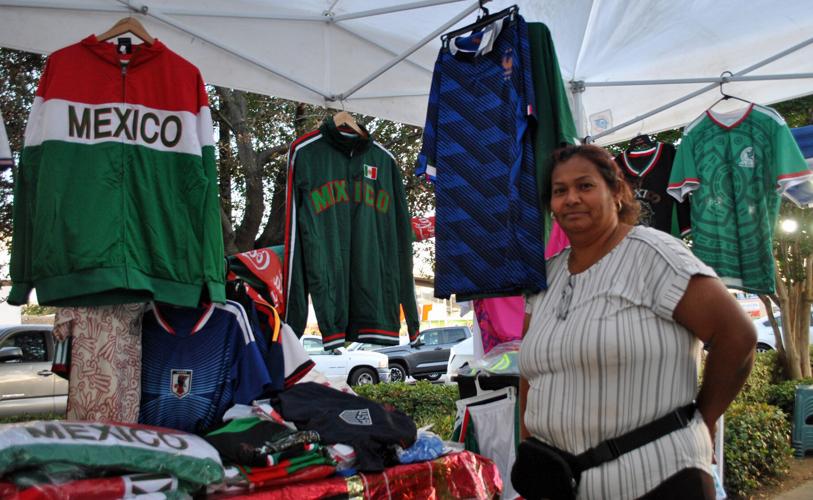
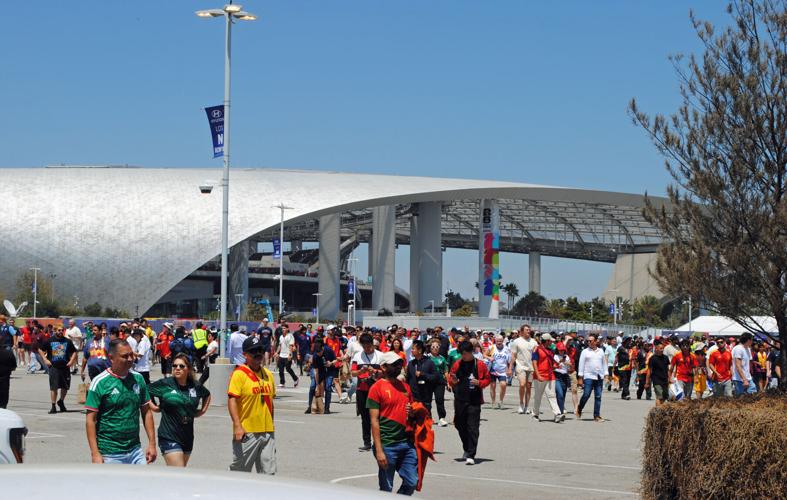

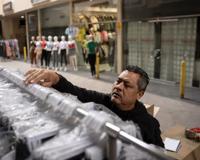
The makeshift stall operated by Tere Cazún on a Northeast Los Angeles sidewalk buzzed with customers seeking to snatch jerseys of Mexico’s soccer team when the 2026 World Cup kicked off on June 11, until England ended its spirited run 3-2 in the round of 16 at Azteca Stadium on July 5.
Cazún said she was thankful that El Tri, the team’s nickname, made it to the knockout stages. It increased the sales of jerseys to 50 or 60 pieces a day from an average of 10 before the tournament began.
Other shirts, like Team USA, Colombia and Argentina’s, were part of the offerings, but sold less than El Tri’s, she said.
Each jersey ran from $25 to $45, depending on size and garment quality, and she raised prices weekly so long as Mexico kept winning on the pitch.
“We’ve been doing good. It’s been the first time I’ve sold these products. Mexico’s shirts (were) hot items, and they gave us room to earn our bread,” said Cazún. “We ran out of stock, and the new items took longer than usual to arrive.”
The boost in sales was a welcome, though temporary development after a year of meager sales of women's dresses, toddlers’ wares and other products in the aftermath of ICE crackdowns against immigrants in Los Angeles, she said.
Like Cazún, hundreds of micro entrepreneurs in Los Angeles benefited from the rise in sales brought by the global soccer extravaganza, featuring non-official items such as key chains, pins, pennants, scarves, water bottles, horns and the coveted shirts at lower prices than FIFA-sponsored products.
On social media, videos promoted the message to “support the team, not Adidas,” which is the official brand for soccer jerseys.
Because of the merchandise’s nature, dozens of vendors at brick-and-mortar or street stalls turned down interview requests. Some said that they would catch the attention of police and prosecutors, who can confiscate counterfeit items and file charges against them, eventually luring U.S Custom and Border Protection (CBP) officers.

Alvaro Huerta, associate professor of urban planning and ethnic studies at Cal Poly Pomona, said there are winners and losers in large sports events like the World Cup, with European tourists bringing euros, restaurants selling beer and lots of Latinos working in the service sector.
Huerta said that Latino immigrants toiling in the informal economy had been “very adaptive” at selling flags and jerseys before Mexico started playing in the tournament, and underscored they are not doing anything harmful.
“Even in stores, and in a lot of places, they sell some knockoff products. To me, it’s part of what people do to get by. It’s a hustle. And I don’t see it as bad [as] selling drugs, or harmful things,” said Huerta.
He said customers buy what they can afford, and vendors take advantage of an opportunity. In East Los Angeles, sellers hawked jerseys and flags, and police did not stop them because they did not see them as child molesters, “or being in the Epstein files,” Huerta said.
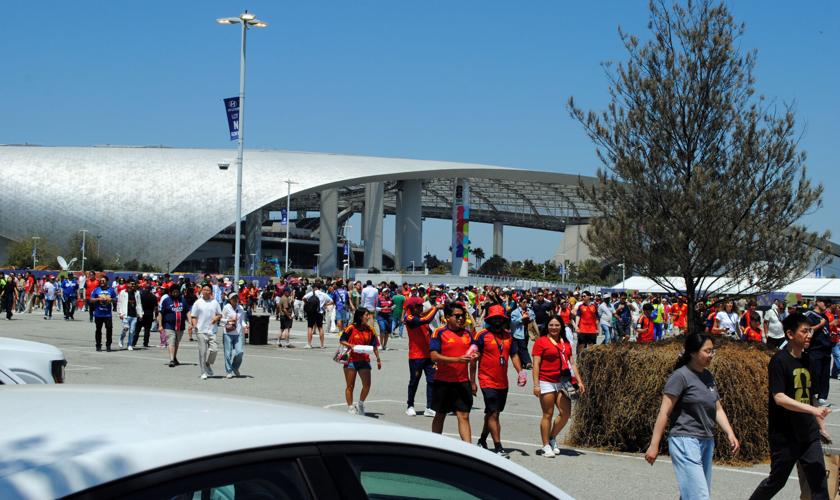
On the other hand, the Inglewood Police Department confiscated lots of unlicensed items near SoFi Stadium during and after the eight games held at the venue because they had been preparing along with event organizers, he explained.
“Inglewood has always been a city that has struggled. Now, they have this fancy stadium, and they have another one for the Clippers,” Huerta added. “For them to go after the little guy, at a time when immigrants are facing these hardships, I think it’s cruel. What makes them different from Trump?”
In a press release, CBP said that the agency has seized more than $29 million in FIFA-counterfeited items this fiscal year.
Darrel Sauceda, chairman and chief operating officer of the Los Angeles Latino Chamber of Commerce, said the 2026 FIFA World showcased two economies for the region’s residents.
The formal economy navigated with extremely expensive game tickets, higher lodging costs and spiked prices at dining and car rental places. The informal one, he said, was led by low-income vendors of products and foods catering to Latino and local residents.
“As for the local economy, these are poor communities. What are they going to sell? Raspados (shaved ice), tacos, etc.,” said Sauceda. “[The World Cup] was a celebration that brought local communities together.”

Sauceda said he was happy to see families getting together enjoying televised games at a watch party organized by the City of Los Angeles and the Consulate General of Mexico at LA’s Plaza de Cultura y Artes on Olvera Street.
“We do events for organizations, and the one thing that we have in mind is the experience,” he said.
Sauceda said that while folks selling unlicensed World Cup items pay taxes, most do not get reimbursement due to their status, but they are important members who help local economies thrive.
“I don’t think the undocumented are scared anymore. Women get that [because] they need to provide for their families to eat. They watch out for each other,” he said.
He criticized FIFA for running the World Cup as an event that prioritized ballooned profits, in coordination with companies that spiked prices on a gamut of goods and services, including the sale of official merchandise.
“We as a community made as much as we could,” Sauceda said. “It’s disheartening to see that corporate America sees Mexicans as cash cows.”
FIFA projects to generate $13 billion in the 2026 World Cup, according to an article published by North Carolina State’s College of Natural Resources.
The Los Angeles FIFA World Cup 26 Host Committee estimated the tournament would generate $892 million in related activities across the county, upgrading its projected $594 million windfall from fiscal year 2024-25.
Of the current figure, $515 million would be generated from visitors spending on dining, lodging, retail sales, transportation and entertainment, while $377 million are from aggregate tasks as businesses hired staff and bought more supplies.
A representative from the East LA Community Corporation, an organization that provides educational workshops to help micro entrepreneurs and street vendors comply with local and state laws, declined to comment.
The U.S. Census does not tally data on street vendors. According to a figure provided by community organizations to LA Public Press, there were an estimated 50,000 vendors in LA County before last June's ICE raids erupted in the city.






(0) comments
Welcome to the discussion.
Log In
Keep it Clean. Please avoid obscene, vulgar, lewd, racist or sexually-oriented language.
PLEASE TURN OFF YOUR CAPS LOCK.
Don't Threaten. Threats of harming another person will not be tolerated.
Be Truthful. Don't knowingly lie about anyone or anything.
Be Nice. No racism, sexism or any sort of -ism that is degrading to another person.
Be Proactive. Use the 'Report' link on each comment to let us know of abusive posts.
Share with Us. We'd love to hear eyewitness accounts, the history behind an article.