
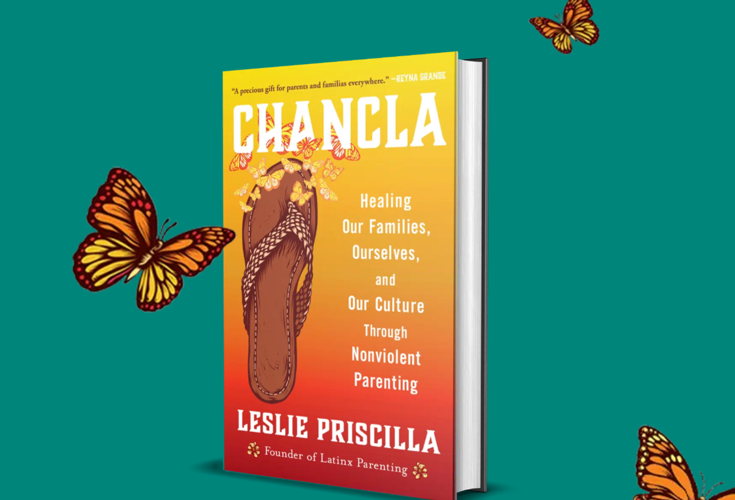


On Tuesday, August 18th, ‘Chancla: Healing Our Families, Ourselves, and Our Culture,’ was officially released by Little, Brown Spark. (Photo courtesy of Leslie Priscilla.)
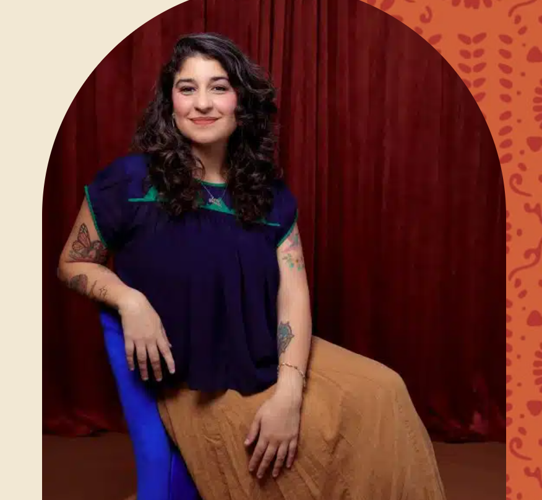
Leslie Priscilla, certified parent coach, family life educator and founder of Latinx Parenting, a bilingual organization, has launched her very first book, “Chancla: Healing Our Families, Ourselves, and Our Culture.”
Long before Priscilla decided to write the book, she knew for a very long time that this was one of the creations that she had to share with her Latino community. And although it took six years to finish ‘Chancla,’ it all started with her trying to heal from what she describes a traumatic childhood and adolescence.
As a first-generation Xicana and a mother, Priscilla went through her own process of figuring out how to raise her own children when she started having them. For several years she was teaching parenting classes to Spanish-speaking parents who reminded her of her own.
“In each of these groups, la chancla was consistently met with a chorus of laughter, but I kept noticing that many of the stories beneath that laughter weren’t funny at all. They were pretty tragic. I eventually recognized that those stories needed a home outside my classes and workshops,” she said.
Priscilla’s goal with her book is to invite readers for a conversation about what happens when love and fear coexist in the same household. She also explores the roots of violence in Latino culture, connection, self-reflection and ancestral healing.
Responses have been edited for clarity and brevity.

Leslie Priscilla founder of Latinx Parenting. (Photo courtesy of Priscilla.)
Why did you feel now was the right time to tell this story about what chancla means to Latinos?
“I didn’t write this book in a vacuum. The process began around the time George Floyd was murdered; it continued through the time we lost our beautiful little primos in Uvalde, and our family members to COVID-19 at higher rates than other demographics, and so many other terrible things that we have experienced as a collective since that year.
“I was writing about ending cycles of violence in our homes while watching violence being enacted against our community in real time, long-established family separation policies, ICE raids, harmful political rhetoric that treats Latino children as less than human, alongside images of kids experiencing the worst brutality I’ve ever witnessed in other parts of the world. I kept asking myself whether it was even possible to write about protecting children while watching them lose everything in my community and on the other side of the planet.
“And I was guided back to the truth that this work is all connected. I believe that when we are teaching our children that their needs matter, that their bodies belong to them, and that engaging in conflict doesn't require violence, at the same time we are preparing them to resist every system that tries to dehumanize them, which are the same systems that have done this to our parents and our ancestors for centuries. It felt urgent to put that down on paper now, not later.”
The chancla is often portrayed humorously in Latino culture. How do you hope this book encourages readers to look beyond the jokes and examine what it has represented for many families?
“La chancla has become a kind of celebrity in our culture through the fact that it's become its own meme and punchline. I really do understand the impulse behind the humor. Laughing about it together can meet many needs for belonging, coping and it can feel like a form of bonding and even relief. But I noticed pretty early in my career that no other group I worked with had this same shared emblem of punishment that brought people together in laughter quite like it did for Latine families. That discomfort stayed with me and I sought to understand it, along with my discomfort about it.
“What I hope readers take from the book is permission to do the difficult thing of embracing complexities and holding two things at once. I want people to recognize the purpose behind the humor, but not to overlook the potential or past harm that has resulted from our having normalized this as our way of parenting. We can love where we come from and at the same time be honest that a chancla flung in anger, or worse, has left marks that may not have faded, whether on our skin or somewhere deeper inside us. I want to be so clear that I'm not asking anyone to stop making the jokes overnight. What I am doing is asking readers to get curious about what's underneath the jokes, or what memories, fears or grief the joke might be covering for. I think that’s where the real conversation and the real healing begin.”
You emphasize compassion over blame when discussing how many of us were raised. Why was that approach so important to you, especially for parents grappling with guilt or generational trauma?
“Blame and shame keep us stuck in the mud. If healing meant putting our parents on trial and judging them for every decision they made while they were in survival mode, most of us would never start, because it's one of the hardest things to do to hold the truth that people who loved us also harmed us. Being stuck in these two binaries of either appreciating or blaming our parents is disorienting, and I have found that shame tends to fill the space where we don't yet have language for it. Again, my invitation is to learn to hold the complexity with compassion, even when it’s hard.
“Compassion makes room for the whole picture. It lets us say, ‘Mi mami hit me and she loved me fiercely and she was carrying wounds of her own that nobody ever tended to.’ Holding all of that at once is what actually allows healing to move forward, and we don’t have to boomerang back into guilt for either her, or us, for the times we may have resented what we’ve been through, if we did. I see this constantly with the parents I work with. The ones who get furthest in their healing are never the ones who blame themselves or their parents the hardest, they're the ones who learn to look at the whole big, beautiful, messy story with tenderness and awe. That's the only place real change can take root, because shame breeds more of the same behaviors we're trying to end, but compassion interrupts the cycle.”
How do you hope “Chancla” helps readers rethink the parenting beliefs and behaviors they may have inherited from previous generations?
“I hope readers walk away understanding that so much of what feels like ‘just how we do things’ in our culture is actually an inherited survival strategy that has been shaped in a significant way by colonization, displacement, dehumanization and by generations of our families who had to prioritize obedience and safety over connection because the stakes were often life and death. Once you can see chancla culture as something passed down rather than as something innately, unchangeably ours, despite how attached we may be to it, it becomes possible to examine it rather than just repeat it.
“I also want readers to walk away with actual tools to move forward, not just awareness. Understanding where a belief came from is only the first step. My intention with ‘Chancla’ is also to offer language, various points of reflection around our behaviors and those of our parents and families, and practices for building something different, so that the awareness doesn't just turn into more guilt with nowhere to go.”
The book explores healing not only for our families but also for "the child we still carry within ourselves." What does healing our inner child look like, and how can it transform the way we parent?
“In the book and in my work I call this our Inner Niñe, the version of us that still holds the emotional blueprints of our childhood. Healing that part of ourselves looks like learning to notice when an old wound is driving the car, so to speak, rather than our more conscious self, our inner parent. It asks whether I feel triggered by my child’s behavior because this is actually about them, or whether it is an old thorn that has grown from my own childhood trying to protect me from something that isn't even present anymore.
In practice, that can look like reparenting practices which I outline in the book. These include things like literally speaking to the child you once were and offering her the words she needed and didn’t receive. It can also look like journaling, therapy, somatic work or simply pausing before reacting to ask what you actually need in that moment. But this takes so much practice. Nonetheless, I know that when we tend to that Inner Niñe, we show up so much more regulated and present for the children in front of us. We stop needing our kids to behave a certain way to feel okay because we’re finally giving that wounded part of ourselves what it has always been asking for. It doesn’t mean we slip into permissive parenting, but it does mean we can engage in limit-setting with confidence, knowing it comes from a place of awareness and love.”
As the founder of Latinx Parenting, what conversations have you heard from families that reinforced the need for a book like “Chancla”?
“So very many. I think of the dads in my parenting classes who shut down when I brought up the research on adverse childhood experiences, insisting nothing that happened to them affected them, and then slowly, over the weeks, opening up about things they’d never said out loud before. Or, as I write in the book, I think of the formerly incarcerated young men in rehabilitation programs who told me quietly that no one had ever told them their behavior came from unmet needs rather than from being bad. This happened several times, and continues to happen in the groups I am privileged to speak with.
“I also think of those mamis who would laugh along when la chancla came up in class, and yet stay after our session to tell me, privately, what it had actually been like growing up in a home like that. Those conversations have happened over and over in different cities across the country and with different families. They all pointed to the same thing: our community needed a space to name this honestly, in our own language and on our own terms. I wrote this for these parents, and our familias, so that we don’t have to borrow a parenting philosophy that was never written with us in mind and doesn’t apply to the unique challenges we face in our comunidad.”
As readers finish “Chancla,” what is the one message you hope stays with them long after they’ve turned the last page?
“That it is never too late to change our blueprint and our lineage’s legacy. Healing isn’t a betrayal of where we come from; it’s a radical and revolutionary act of love that we can offer our family, our children, descendants, our ancestors and ourselves. We don’t have to choose between honoring our culture and protecting the hearts of the young humans in our families, or the little ones we still feel within us. We can definitely build something new that makes space for all of it.”




(0) comments
Welcome to the discussion.
Log In
Keep it Clean. Please avoid obscene, vulgar, lewd, racist or sexually-oriented language.
PLEASE TURN OFF YOUR CAPS LOCK.
Don't Threaten. Threats of harming another person will not be tolerated.
Be Truthful. Don't knowingly lie about anyone or anything.
Be Nice. No racism, sexism or any sort of -ism that is degrading to another person.
Be Proactive. Use the 'Report' link on each comment to let us know of abusive posts.
Share with Us. We'd love to hear eyewitness accounts, the history behind an article.