
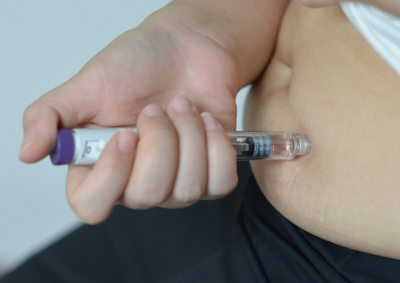


GLP-1 medications can help manage weight and prevent other high prevalence chronic conditions in Latinos. (Photo credit: Canva library.)
Latino communities in the United States face disproportionately high rates of obesity, with nearly one in four adults living with the condition. And while GLP-1 medications have changed the game in helping treat obesity and type 2 diabetes, access to these treatments remains unequitable, with cost and insurance limitations preventing many from receiving care.
The American Community Media (ACOM) hosted a briefing on the growing use of GLP-1 medications, with experts discussing their effectiveness, concerns about long-term use and the high costs that continue to limit access for many patients.
Understanding GLP-1
Sunita Sohrabji, moderator of the briefing, said GLP-1 medications were originally developed to treat Type 2 diabetes but have since become some of the most talked-about drugs in the U.S.. These medications include Semaglutide, marketed under the brand names Ozempic and Wegovy, and Tirzepatide, sold as Mounjaro and Zepbound.
“All mimic hormones that help regulate appetite and reduce the so-called food noise,” she said. She added that GLP-1s are currently a $130 billion industry in the U.S. with 29 million American adults using the medication.
Based on data from retail and mail-order prescription fills, NCHS states that spending on GLP-1 medications increased by more than 500% from 2018 to 2023.
Latino adults with diagnosed diabetes are more likely than any other major racial or ethnic group in the U.S. to use GLP-1 injectable medications, with 31.3% receiving the treatment, according to the National Center for Health Statistics.
Dr. Jena Shaw Tronieri, a psychologist researcher in Pynselvenia shared that people who want to lose weight to improve their health or quality of life may find it difficult to achieve with just dieting and exercising.
“It requires quite a lot of effort. You have to sort of actively choose to eat less than usual, and you have to do that consistently day after day regardless of whatever other demands you might face,” said Tronieri.
She pointed out that one’s body biology is not designed to help with weight loss but to help prevent starvation and that people using GLP-1 medication demonstrate how much effort is required for weight loss by changing biological signals.
Long term vs short term
Tronieri also shared that many patients described how different weight loss feels when using GLP-1s compared to dieting alone. She explained that those who are not under the medication usually diet and track their calories but struggle to fill full and feel the need to want to eat more.
However those who are using any form of GLP-1 medication notice that they're eating less and not thinking of food as much. “I’ve had some patients say to me that they didn't even realize how constantly they were thinking about food throughout the day until they started the GLP-1 medication and that food noise was suddenly gone,” she said.
Tronieri and her colleagues recently conducted a study in which they measured physical and mental changes to individuals under the GLP-1 medication to determine how long they last through the course of 60 weeks.
There were a total of two groups taking two types of different weight loss medications. Additionally patients were also provided with counseling support to help with the lifestyle changes to diet and exercise.
Every 20 weeks during treatment they measured appetite, food noise and the amount of food they consumed. Tronieri shared that participants that were under Semaglutide had much larger reductions in hunger, food consumption and food noise compared to a placebo.
And that these findings from the study showcased how Semaglutide continues to help people eat less even when weight loss slows down 40 to 60 weeks into treatment, emphasizing that GLP-1 medication is to be taken long term for maintenance.
Tronieri also pointed out that patients who decided to discontinue taking the GLP-1 medication regained the weight in the first year after they stopped taking it. She added that there was a negative effect on their mental health as well due to the guilt of their body weight increasing.
She said it’s crucial for people to understand that the physical and mental changes after the discontinuation of the medication is normal and expected.
Side effects
GLP-1 medications help target different areas of the body depending on the individual’s need. For example, Semaglutide, which is sold as Ozempic, treats Type 2 diabetes and Wegovy is used for obesity, the same prescription drug, just a different dose.
Even though research shows that GLP-1 treatment can help manage weight loss and diabetes, these medications do come with side effects, which include:
-Nausea
-Vomiting
-Constipation
-Diarrhea
-Dizziness
-Acid reflux
-Dehydration
-Hair loss
Many GLP-1 side effects are just temporary and are usually the worst in the beginning of treatment or when an increase of dosage is happening, according to GoodRX.
Barriers
On April 4, the Trump administration announced that Medicare and Medicaid will not cover anti-obesity drugs, including the GLP-1 class of medications. Historically, Medicare is barred by statute from covering weight loss drugs, but as part of the 2026 proposed rule for Medicare Part D prescription plans, the Biden administration planned to allow coverage of these drugs to all people with obesity on Medicare or Medicaid. Currently, Medicare Part D plans cover GLP-1 drugs for type 2 diabetes, sleep apnea and preventing heart complications.
Dr. Fatima Cody Stanford who is an associate professor of Medicine and Pediatrics at Harvard Medical School said that just this month CMS launched the Medicare GLP-1 bridge program, which if a beneficiary qualifies, is due to a BMI of 35 or higher or 30 or higher with a related health condition.
Cody said that those under the program can access one of three medications, Foundayo, Wegovy or Zepbound, for $50 a month compared to retail prices that can run from $300 to $900 a month.
Despite the price being a meaningful drop she said as of now the program is just a bridge and not a permanent fix because it's scheduled to end December 31, 2027. It also requires prior authorization from a physician to submit a request to CMS, and it has to be approved before a patient even fills a script.
She also added that this could create disparities in those trying to access the medication as the physician must know how to code, submit the request and have the time to navigate a “burdensome administrative process.”
Cody highlighted that communities with less consistent access to primary care are most likely to fall through the cracks of the program when it’s supposed to help them. “A BMI based eligibility cutoff also does not fully account for how body composition and metabolic risk can differ across populations,” she said.
Cody explained that even for those who have been prescribed the medication, the cost alone can be a barrier. Some health insurances only cover a partial amount of the medication, leaving patients with a deductible.
The overall usage of GLP-1s for obesity treatment still remains an issue in access for Latinos. According to the National Hispanic Medical Association, just 2% of eligible Latino patients access anti-obesity drugs because of cost and coverage gaps, leaving a big percentage of Latina women and men behind to fight the condition on their own.






(0) comments
Welcome to the discussion.
Log In
Keep it Clean. Please avoid obscene, vulgar, lewd, racist or sexually-oriented language.
PLEASE TURN OFF YOUR CAPS LOCK.
Don't Threaten. Threats of harming another person will not be tolerated.
Be Truthful. Don't knowingly lie about anyone or anything.
Be Nice. No racism, sexism or any sort of -ism that is degrading to another person.
Be Proactive. Use the 'Report' link on each comment to let us know of abusive posts.
Share with Us. We'd love to hear eyewitness accounts, the history behind an article.