
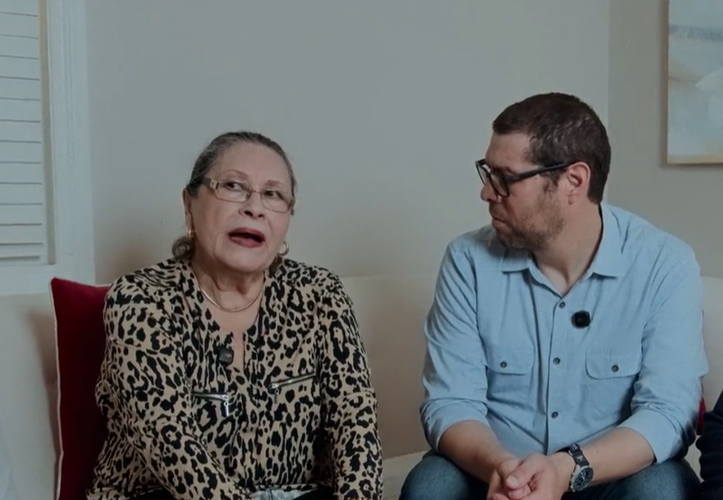


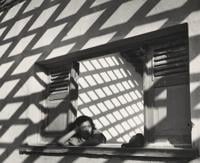
Ramona Carrasco Ibarra along with Guillermo Wightman. (Photo courtesy of Wightman.)
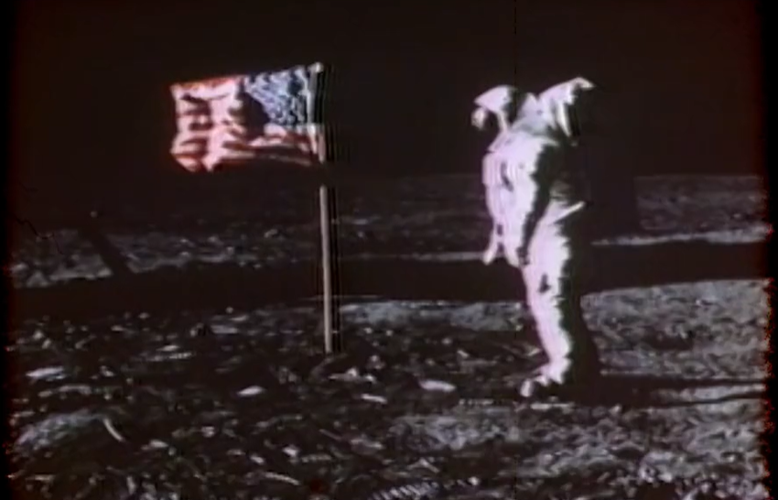
In 1968, 16-year-old Ramona Carrasco Ibarra worked alone in the summer for three months in a Los Angeles warehouse, constructing a 100-foot electrical test cable for a secret aerospace project without realizing it would later be recognized as part of history.
Ibarra, originally from Sinaloa, Mexico, was not an engineer and was far too young to fully understand what she was building. No one told her it was for a space flight to the Moon until the day it passed its final inspection. Hired through a temp agency, with no benefits or official badge, working under the supervision of a single person in a warehouse so quiet that the only sounds were her tools and meters.
While Ibarra focused on a crucial component that was needed for the Apollo 11 mission, the country was grappling with the aftermath of Robert F. Kennedy’s assassination and entering a year of war, protests and unrest. She also constructed the cable while enduring hardships many adults wouldn’t survive, facing abuse at home even as she delivered flawless precision work on the shop floor. Ibarra was largely raised by her maternal grandparents in Tijuana. Their home was crowded and marked by political tension, instability and fear.
The cable she built was a ground test harness for NASA’s Acceptance Checkout Equipment, the system used to verify Apollo spacecraft systems before launch. After nine others failed to land the job, Ibarra became the tenth candidate and the one who completed it. She personally tested every circuit twice, and a team of visiting engineers tested it a third time. It passed flawlessly. Then she went home and history forgot her name.
Today, acclaimed Colombian writer Guillermo Wightman refuses for Ibarra’s story to not be recognized and has launched a Kickstarter campaign for “A Cable to the Moon,” a narrative nonfiction book chronicling Ibarra’s life, from her childhood in Mexico and her crossing into the United States, through the abuse and instability she endured as a teen, to the precision electronics work that placed her at the heart of the Apollo program, and beyond. The campaign aims to fund final editing, legal review, design and publication.

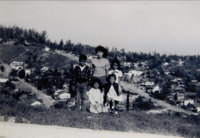
Ramona Carrasco Ibarra was too young and too far removed from positions of power to fully understand the significance of what she was building. (Photo courtesy of Wightman.)
The book goes beyond the story of the cable. It explores how Ibarra built a life and a career while carrying a decades-long secret, never seeking recognition, but also who was never asked to tell it. Part historical investigation, part immigrant story and part act of restoration, “A Cable to the Moon” sits at the intersection of migration, labor, gender, memory and the hidden workforce behind Apollo. It argues that the history of the space race is larger than astronauts, executives and official archives. It also belongs to the women, immigrants and working-class laborers whose hands helped turn ambition into achievement.
Journalist Wightman has spent three and a half years researching and writing the book since first hearing Ramona's story at a family gathering in 2022. He developed the manuscript late at night while balancing full-time work and family life. The project has grown to roughly 42,000 words, supported by extensive interviews, archival research and technical investigation into Apollo-era spacecraft checkout systems. Both the NASA History Office and the National Archives have reviewed his research and directed the search toward specific Apollo-era record groups where documentation of the cable may survive.
“One of the most incredible things for me was discovering that a close family friend I had seen at countless family parties for years was connected to the space race,” said Wightman. “I have always loved space, and although I studied journalism, I built my career in sales and marketing. I have always been drawn to unheard stories. What moved me most was the contrast at the center of Ramona's life: a sixteen-year-old who had migrated from Tijuana just two years earlier, who carried deep trauma and was being abused while building the cable, still created something with her hands that helped test the spacecraft tied to Apollo 11. Sometimes reality is more unbelievable than fiction.”
“A Cable to the Moon” revisits the Apollo era to uncover a human story long left in the shadows. Ibarra’s journey bridges Los Angeles, Mexico, and the Moon landing, highlighting how history’s greatest achievements are often built by those whose contributions go unrecognized—especially in underrepresented communities overlooked by mainstream media.
To support and learn more about the campaign, click here.






(0) comments
Welcome to the discussion.
Log In
Keep it Clean. Please avoid obscene, vulgar, lewd, racist or sexually-oriented language.
PLEASE TURN OFF YOUR CAPS LOCK.
Don't Threaten. Threats of harming another person will not be tolerated.
Be Truthful. Don't knowingly lie about anyone or anything.
Be Nice. No racism, sexism or any sort of -ism that is degrading to another person.
Be Proactive. Use the 'Report' link on each comment to let us know of abusive posts.
Share with Us. We'd love to hear eyewitness accounts, the history behind an article.