
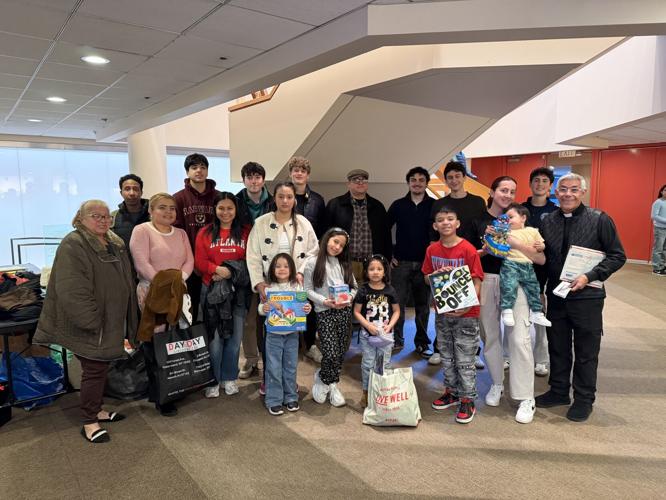





KidsKnowRights is a youth-led organization, and everything they publish on their site is free. (Photo courtesy of KKR.)
Senior high school student Ian Massaro is publishing free Spanish and English legal rights guides for Latino communities all the way from New York with KidsKnowRights, a youth-led nonprofit.
As the son of Argentinian immigrant parents, Massaro believes that his nonprofit is needed now more than ever in today’s political climate, where the Trump administration is constantly targeting vulnerable individuals in their own neighborhoods.
While having conversations about immigration with his parents, Massaro became genuinely curious about where they were getting their information about their rights. “They told me that it was like trial and error, and a lot of times they got taken advantage of because they didn't know what their rights were and weren’t,” he said.
When Massaro’s mother was just 19 years old, she landed her very first job as a waiter in Los Angeles. Without knowing any legal information about her rights, one day her wages were stolen because she had arrived late to her shift.
Having those conversations with his parents actually pushed Massaro to talk to people in his community, only to realize that they were also having similar experiences when it came down to knowing legal rights.

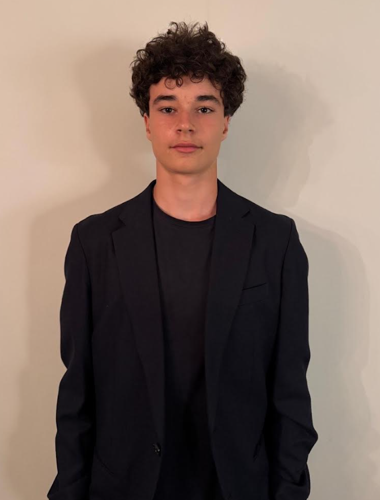
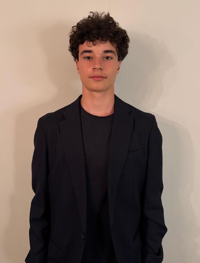
Ian Massaro is the founder of KidsKnowRights. (Photo courtesy of Ian Massaro.)
Massaro shared that a few years ago he spoke to a member from a different nonprofit, who had no idea he could obtain a drivers license due to his immigration status. “Even though he is not documented, he still has the privilege of being able to drive and get his permit and experience the joy of driving,” he said.
Utilizing those different experiences from Massaro’s own personal life, it was clear for him that it’s not always evident to individuals what their rights are.
Through his organization, his mission is to share accessible, clear and free information in a way that a person is not required to have a legal background in order to understand what their legal rights are. “Anyone from anywhere in any language should be able to understand what they can and can’t do in whatever position they’re in,” he said.
KidsKnowRights makes plain-language guides, pocket rights cards and workshops covering everyday situations like police stops, school discipline and housing. Massaro shared that currently the most frequent questions individuals have are currently about ICE.
“With the current political state of the country, it's about ICE and what it is, what can ICE do and what can’t they do,” he said. “I would say 99% of the people who are targeted have no criminal background and they had immigrated to this country and you know there’s no explicit reason why any enforcement agency should come after them.”
Massaro said that even though New York City is a sanctuary city, individuals are concerned about being detained by ICE agents, but it’s also pushing them to be educated on what their rights are.

Operations Manager, Manuel Raventos. (Photo courtesy KKR.)
Creating every guide and resource available in Spanish and in English for immigrant communities was crucial for Massaro.
“I know what it's like to have parents who don't really speak the language perfectly,” he shared. “Sometimes I can say the word perfectly in English, but I don't know the word in Spanish. And sometimes I know the word in Spanish, but I don't know it in English, so it's super important to be able to have both of those languages.”
Massaro said that growing up he served as a translator for his parents. “I always had to translate documents for my parents, but a lot of times, the documents only made sense to me in a certain language. So, being able to allow people to have access to both languages really ensures that the barrier is not the language,” he said.
In many Latino households kids become the translator for their family. According to an article by Refinery 29, there are more than 11 million child translators in the U.S.
Massaro said that by targeting people in the language they are most comfortable with, it helps individuals better understand the information they are obtaining instead of struggling to translate words with oftentimes unreliable translators online.
“With the prevalence of AI nowadays, translations often have literal translations that don't perfectly translate to a different language,” he said. “All of our language is purposefully dumbed down as [much as] possible without losing the important material.”

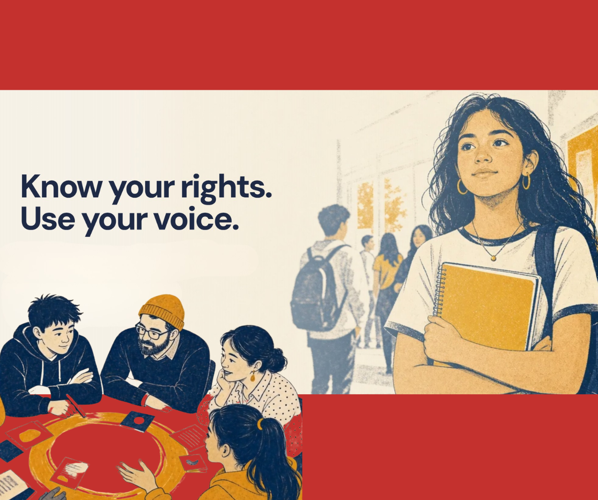
The nonprofit creates bilingual resources that give young people the knowledge to understand their rights and use their voices. (Photo courtesy of KKR.)
All of their material on their website is updated every other day. They also work closely with law firms to check their legal education and ensure it’s all accurate instead of spreading misinformation to Latino communities.
Massaro’s long-term vision for the organization is to be integrated into different school systems all across the country. He said that regardless of immigration status, socioeconomic levels or geographic location, he hopes that anyone reading the free material provided by the organization learns the importance of knowing their rights.
“One of the things that is part of living in the U.S. is that no matter who you are, where you are, where you’re from, you have rights and everyone deserves to know those rights because those are what the foundations of this country are. That's why so many people, including my parents, chose to leave their lives behind in Argentina and come over here because of those protections and because of those rights.”





(0) comments
Welcome to the discussion.
Log In
Keep it Clean. Please avoid obscene, vulgar, lewd, racist or sexually-oriented language.
PLEASE TURN OFF YOUR CAPS LOCK.
Don't Threaten. Threats of harming another person will not be tolerated.
Be Truthful. Don't knowingly lie about anyone or anything.
Be Nice. No racism, sexism or any sort of -ism that is degrading to another person.
Be Proactive. Use the 'Report' link on each comment to let us know of abusive posts.
Share with Us. We'd love to hear eyewitness accounts, the history behind an article.