




Children who serve as interpreters become the bridge between their family and the outside world. (Canva photo.)
Starting at a very young age, many immigrant children step into the vital role of language brokering, serving as an essential bridge between their families and the surrounding community, and despite recent data indicating that one in five pay for it with real psychological strain, research also reveals that this responsibility can contribute to academic achievement.
Language brokering is the informal practice where bilingual children translate and interpret for adult family members who do not speak the dominant language.
For many children of immigrant parents, acting as interpreters for their parents means taking on the responsibility of arranging and organizing medical appointments, translating school documents or navigating government and legal systems.
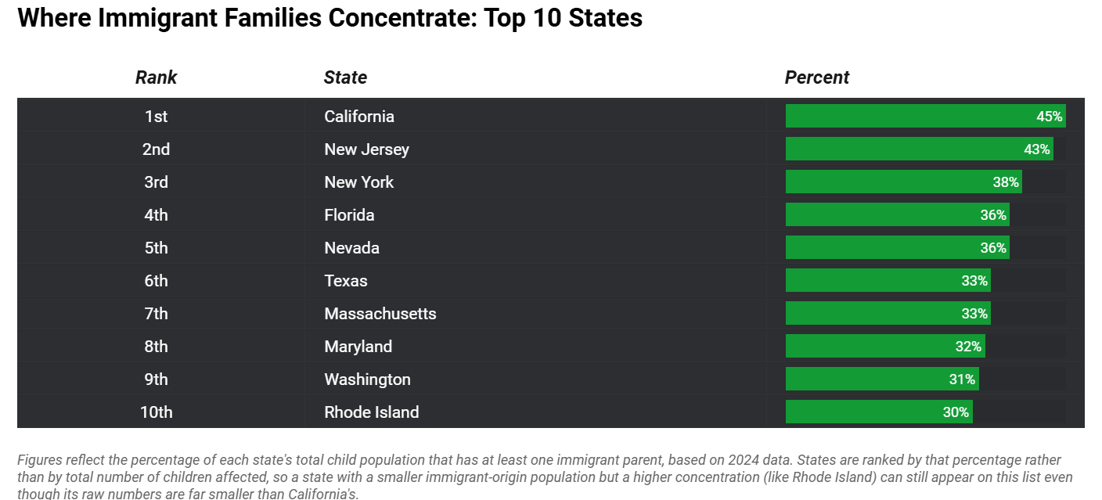
According to the U.S. Census Bureau’s American Community Surveys of 2024, almost 20 million U.S. children have at least one immigrant parent. California ranks among the top 10 states for immigrant families, accounting for 45%, followed by New Jersey, New York, Florida, Nevada, Texas, Massachusetts, Washington, and Rhode Island. Most are not new arrivals; over 40% have parents who have lived in the U.S. for over 20 years. According to the 2024 Census, Los Angeles County has the largest Latino population (49%) of any county in the U.S.

Research conducted by the Mendoza Law Firm also shows that around 32% of immigrant children under the age of nine are naturally bilingual, growing up using both English and another language before they even start elementary school. Spanish is the most common home language, followed by Chinese languages, Vietnamese, Arabic and Hindi.
Data also shows that more than 11 million children in the U.S. assume the role of a translator with no support from parents or mentors. Taking on this role can leave children frustrated as they navigate the complexity of language barriers on their own.
Another challenge immigrant children face academically is having parents with limited English who cannot help them with schoolwork. This can leave some students struggling alone while other children or older siblings take on greater educational responsibility at home.
Although this can strengthen family bonds, language skills and even create independence, it can also cause significant pressure, with research showing that 20% of child language brokers experience significant psychological distress due to high levels of responsibility.
In many Latino households, parents see their children as their only lifeline to help them navigate the challenges that come with the immigrant experience.
While these children take on the role of language brokers for their families, they sometimes cannot make sense of a language they know well because of complicated wording and the difficulty of translating.
While these children report real psychological strain, they may also be dealing with immigration-related anxiety. A 2025 Child Development Perspectives survey found that 27% of immigrant parents felt their children worried about something immigration-related happening to a family member. During President Donald Trump's second-term he has implemented rapid immigration policy changes focused on targeting undocumented immigrant communities.
The American Academy of Pediatrics identifies the fear of parental deportation and family separation as a type of toxic stress, warning that this can affect children’s physical, mental and behavioral health, regardless of their own status.
Despite these challenges, children of immigrants prosper even when such heavy responsibilities fall on them. Around 66% of immigrant children speak English fluently, and the majority complete high school at a rate comparable to their non-immigrant peers (92%).
As adults, second-generation Americans report higher median household incomes ($58,000) compared to the earned income by first-generation adults ($46,000). Additionally, lower poverty rates (11%) also reflect significant upward mobility for the second-generation compared to the first (18%), creating a positive shift not only for immigrant children but the community as a whole.
Resources
Latinx Parenting, a bilingual organization founded by Leslie Priscilla, certified parent coach and family life educator, has curated a list of mental health resources for families in need.
To check the list, click here.






(0) comments
Welcome to the discussion.
Log In
Keep it Clean. Please avoid obscene, vulgar, lewd, racist or sexually-oriented language.
PLEASE TURN OFF YOUR CAPS LOCK.
Don't Threaten. Threats of harming another person will not be tolerated.
Be Truthful. Don't knowingly lie about anyone or anything.
Be Nice. No racism, sexism or any sort of -ism that is degrading to another person.
Be Proactive. Use the 'Report' link on each comment to let us know of abusive posts.
Share with Us. We'd love to hear eyewitness accounts, the history behind an article.