
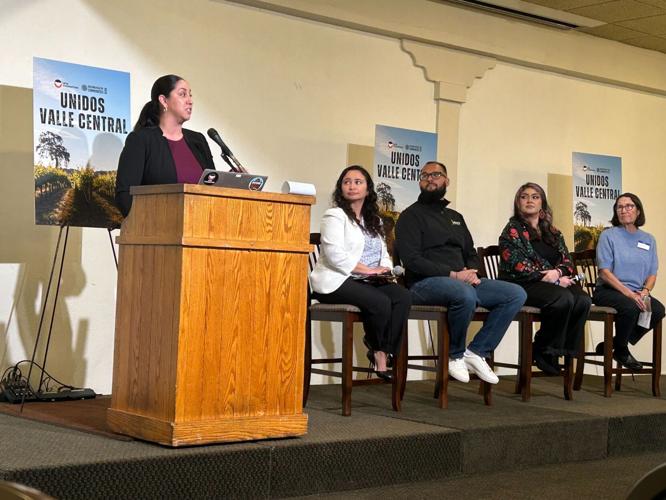
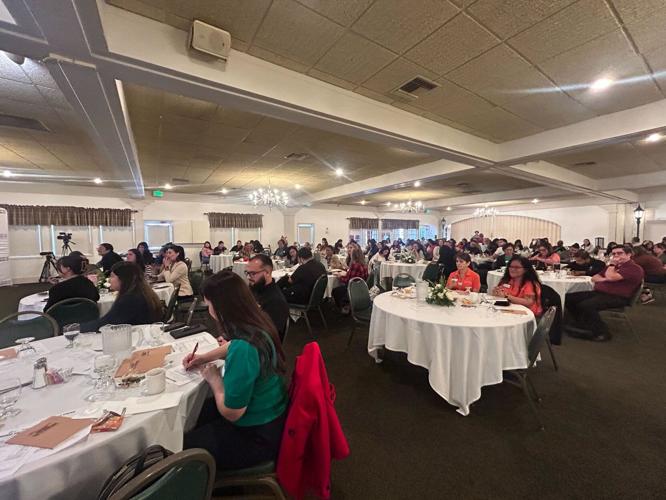


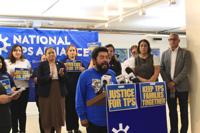
The summit, hosted by Building Healthy Communities in partnership with the UFW Foundation, brought together 200 dedicated leaders from across the Central Valley. (Photo by Amairani Hernandez.)
Last week, Building Healthy Communities (BHC), in partnership with the United Farmworkers Foundation (UFWF), hosted the Unidos Valle Central Summit, bringing together more than 200 leaders to strategize ways to support immigrant communities in Kern County amid concerns that immigration enforcement raids could occur again.
In January 2025, one day after Congress certified Trump’s election victory, El Centro Sector Chief Gregory Bovino sent 65 agents six hours north of the Mexico-U.S. border to conduct a raid that affected immigrant communities and agricultural businesses statewide, sparking a legal battle over mass deportation practices. The agents traveled over 300 miles to launch “Operation Return to Sender,” which was a week-long operation targeting predominantly Latino areas in Kern County.
“We were the testing ground for what is happening nationwide, across many cities and towns in the United States,” said Ambar Tovar with UFWF. She added that the summit was created to discuss and better understand the current state of immigration affairs for those working directly with impacted communities.
“We want to surface the realities people are facing, the legal barriers to access to services, civil rights concerns and the resilience communities show every day,” Tovar said.
Mayra Joachin with the American Civil Liberties Union (ACLU), described that in the Central Valley there is a combination of emotions that people are feeling. She emphasized that the reasons why individuals feel fear is due to the ongoing attacks against the immigrant communities and simply living in the unknown of what can potentially happen next.

“They will attempt to defy court orders, continue to conduct operations in ways that are unlawful and go after individuals even after those individuals have already been released,” Joachin said. She added that many people fear not only the enforcement operations themselves, but also the consequences that may follow, including the deportation of loved ones who are often held in difficult conditions while separated from their families.
Joachin also shared with the audience the continued resilience of community members coming together to push back, ensure people are aware of their rights and provide the tools needed to protect themselves against unlawful practices.
“People are coming together, even folks who previously were not involved in these spaces are wanting to support, wanting to lend a hand, looking for ways to get groceries for their neighbors or to accompany them to locations, and I think collectively, it is a way for us to be able to not only fight back, but also show to the government that we are all better when we stand together and when we protect everyone within our communities,” she said.
On Friday, California State Senator Sasha Renée Pérez (D-Pasadena) announced new legislation aiming to institute fines and revoke licenses of immigration detention facilities when they fail to meet health and safety standards.
The proposed law, SB 995, the "Masuma Khan Justice Act,"is named after a California woman who was detained in October 2025 at the California City Detention Facility, which was later targeted by a federal class-action lawsuit over alleged inhumane conditions in the facility.
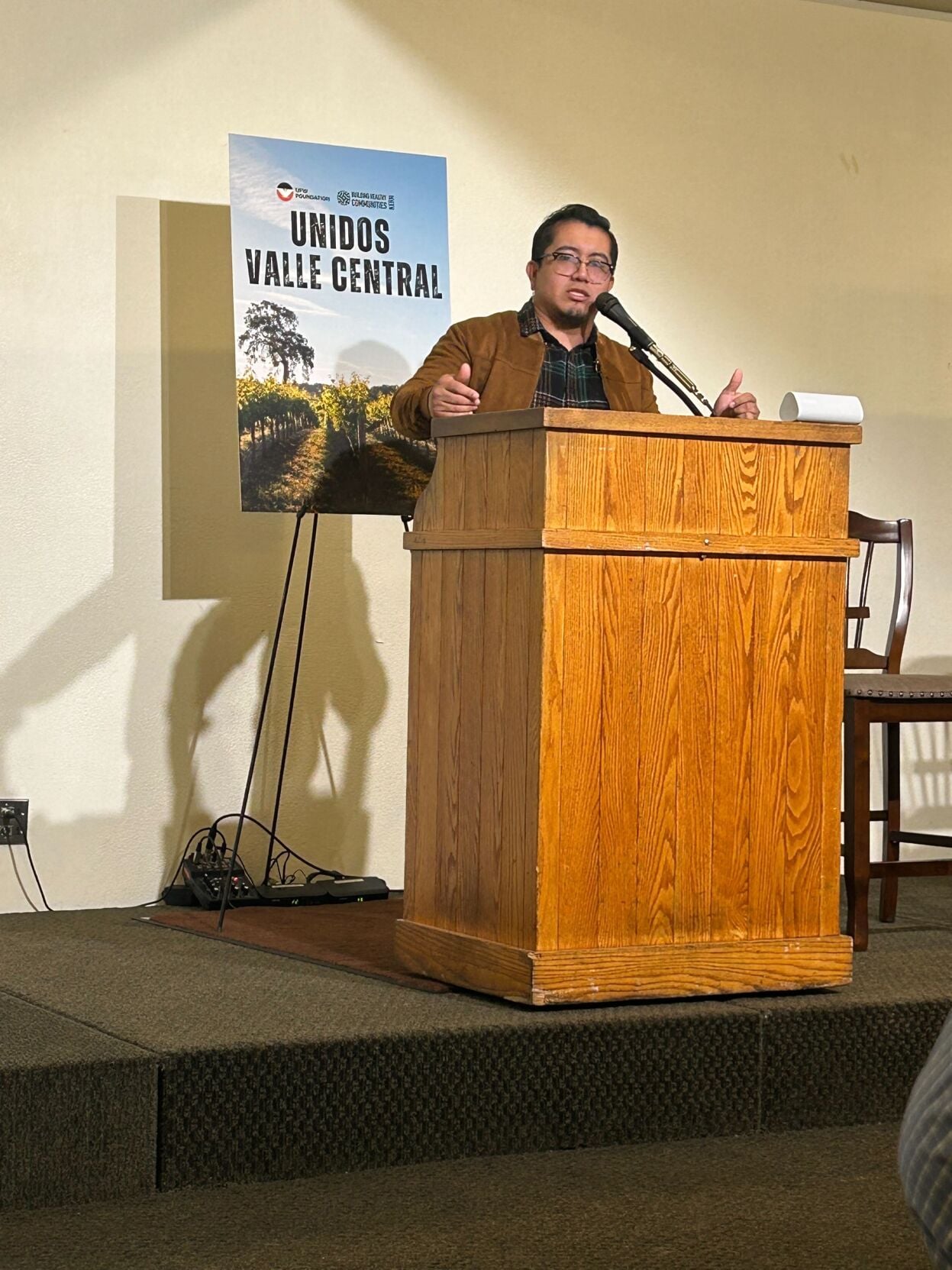
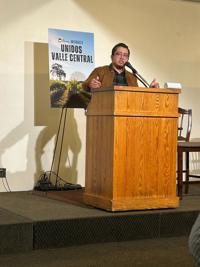
Milton Selis, a guest speaker who spoke about his experience in the California City Detention Facility. (Photo by Amairani Hernandez.)
California City, is located in northern Antelope Valley in Kern County, lies about 100 miles north of Los Angeles and spans roughly 203 square miles. The ICE detention facility sits on a desolate stretch of land roughly six miles from the city center, deep in an area often described as “the middle of nowhere.”
Before its opening, advocates had warned communities that this isolation could severely limit detainees’ access to legal representation, medical care and family visits, while also reducing transparency and weakening public oversight.
Milton Selis, a guest speaker at the summit, shared his personal and traumatic experience of being arrested during an immigration appointment for alleged violations. He spent 39 days in the California Detention Center, describing his treatment there as inhumane. Selis immigrated to the U.S in 2021, seeking asylum from Nicaragua. He was fleeing prosecution after speaking out against the government and fighting not only for his rights but for everyone's rights.
He recalled being in the detention center, often eating expired food and drinking tap water. He also shared that when he fell ill with the flu, he repeatedly requested to see a doctor but was never given that opportunity, receiving only an allergy pill instead.
Selis was released from the detention facility after 39 days only because his lawyer filed a habeas corpus petition. Upon his release, he shared that detainees are let go without personal belongings or any resources to return home.
Kern Welcoming and Extending Solidarity to Immigrants (KWESI) a nonprofit organization that visits immigrants in the Mesa Verde detention facility in Bakersfield and the Golden State Annex in McFarland, works to end the isolation of immigrants in detention and provide emotional support through letter-writing, while also providing them with the resources needed after post-release. Many of the people who KWESI volunteers visit are immigrants seeking asylum from persecution in their homelands.
Jeannie Parent, who is part of the nonprofit, shared that many of the detainees who call the organization are individuals who are depressed. She shared that people who are detained suffer physically and mentally, which leads to families suffering for their loved ones too.
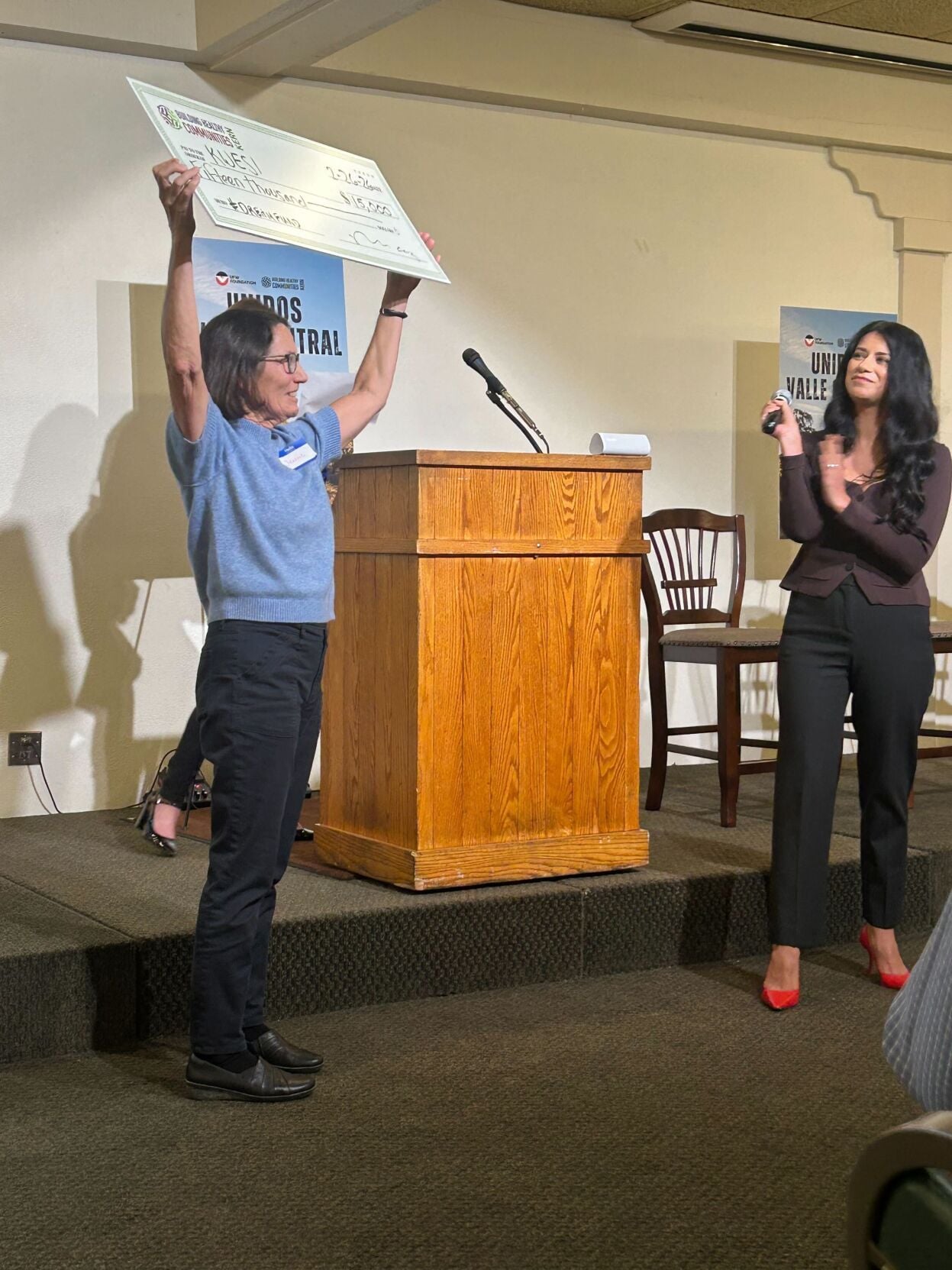
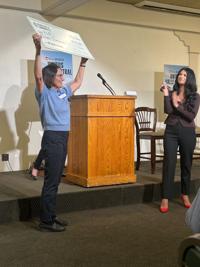
Jeannie Parent holding a check at the Unidos Valle Central Summit. (Photo by Amairani Hernandez.)
At the end of panel discussion, Reyna Olaguez with BHC - Kern granted Parent a $15,000 check for the ongoing work she is doing with the organization in supporting immigrant communities. “I’m really happy that we are able to help them out,” Parent said.





(0) comments
Welcome to the discussion.
Log In
Keep it Clean. Please avoid obscene, vulgar, lewd, racist or sexually-oriented language.
PLEASE TURN OFF YOUR CAPS LOCK.
Don't Threaten. Threats of harming another person will not be tolerated.
Be Truthful. Don't knowingly lie about anyone or anything.
Be Nice. No racism, sexism or any sort of -ism that is degrading to another person.
Be Proactive. Use the 'Report' link on each comment to let us know of abusive posts.
Share with Us. We'd love to hear eyewitness accounts, the history behind an article.